


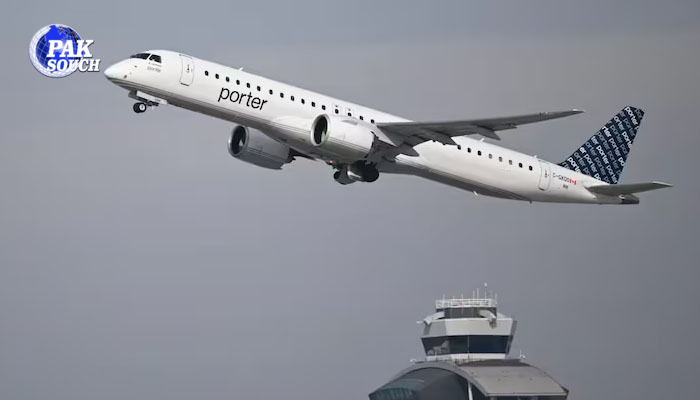
VICTORIA, British Columbia: A passenger flight from Victoria to Toronto was cancelled after a young child reportedly refused to wear a seat belt and remained standing on the aircraft seat, resulting in the plane being returned to the terminal and the child and his parents being removed from the flight.
According to reports in international media, the incident occurred on a Porter Airlines flight scheduled to travel from Victoria International Airport in British Columbia to Toronto. The aircraft had already left the terminal and was taxiing toward the runway when members of the flight crew noticed that a child was standing on his seat and was not wearing a seat belt.
The crew reportedly intervened after observing the situation and attempted to ensure that the child was safely seated and properly secured. The child’s parents also tried to persuade him to sit down and fasten his seat belt. However, despite repeated efforts by both the parents and airline staff, the child continued to refuse.
Because the child could not be secured in accordance with aviation safety requirements, the aircraft was eventually brought back to the terminal. The child, along with his parents and their luggage, was then removed from the aircraft.
The incident, which initially appeared to be a relatively minor disruption, ultimately caused the entire flight to be cancelled because of the time required to deal with the situation and complete the necessary procedures before the aircraft could depart again.
A spokesperson for Porter Airlines explained that the crew noticed the child while the aircraft was taxiing from the terminal toward the runway at Victoria International Airport. The airline said that numerous attempts were made to resolve the issue, but the child would not comply with the requirement to remain seated and wear a seat belt.
As a result, the aircraft had to return to the terminal. The child and his parents were offloaded from the plane, along with their baggage. Once the aircraft returned to the terminal, airline staff were required to make changes to the flight plan and complete additional administrative and operational procedures.
Those procedures took several hours. By approximately 12:30 a.m., the airport’s main runway had closed for the night. The closure meant that the aircraft could no longer depart, even after the issue involving the child had been resolved.
Consequently, the remaining passengers were unable to continue their journey to Toronto and had to spend the night at the airport.
The unusual incident highlights the importance of passenger compliance with aviation safety rules, particularly during taxiing, takeoff and landing. Airlines require passengers, including children, to remain properly seated and secured whenever seat-belt instructions are in effect. Flight crews are responsible for ensuring that these safety requirements are followed before an aircraft can proceed with its journey.
Although the immediate problem involved one child’s refusal to wear a seat belt, the consequences extended to everyone on board. The need to return the aircraft to the terminal, remove the passengers involved, revise operational plans and complete the required paperwork consumed enough time for the airport’s nightly runway closure to become a decisive factor.
For passengers, the incident meant an unexpected overnight stay at Victoria International Airport instead of the planned trip to Toronto. What began as a dispute over a child’s refusal to remain seated therefore resulted in a significant disruption to the travel plans of an entire aircraft full of passengers.
The incident also demonstrates how aviation procedures are designed around safety rather than convenience. Even when a situation appears manageable to passengers, flight crews cannot simply allow a person to remain standing or unrestrained while an aircraft is preparing for departure. Such requirements are intended to protect passengers and crew members in the event of sudden movement, braking or other unexpected circumstances.
While details about the child’s age and the family’s circumstances were not publicly disclosed, reports indicate that the parents and crew made repeated attempts to resolve the situation before the decision was taken to return to the terminal.
The cancellation serves as an unusual reminder that even a seemingly small disagreement aboard an aircraft can have major consequences. Once a flight is disrupted during the departure process, airlines may face a series of operational challenges, including passenger offloading, baggage handling, flight-plan changes, crew scheduling issues and airport operating-hour restrictions.
In this case, the closure of Victoria International Airport’s main runway at 12:30 a.m. ultimately prevented the aircraft from leaving that night.
The passengers were therefore left to spend the night at the airport, turning an ordinary journey from Victoria to Toronto into an unexpected and memorable travel disruption.
The episode has also attracted attention because of its unusual cause: a child’s refusal to wear a seat belt. While the situation may appear extraordinary, the airline’s response underscores the principle that safety requirements remain mandatory regardless of the circumstances or inconvenience they may cause.
About The Author