


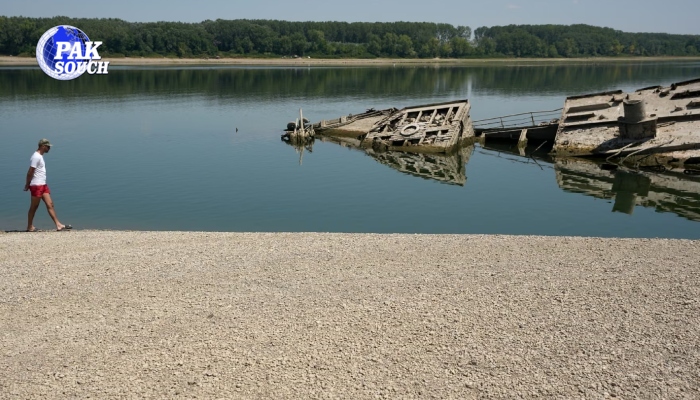
Europe is facing an intense heatwave and severe drought, with dramatically falling water levels in major rivers exposing the remains of warships sunk during World War II.
The Danube River has been particularly affected, with water levels falling to historically low levels in parts of Europe. The unusually dry conditions have not only disrupted river transportation but have also created additional pressure on the region’s energy infrastructure.
Among the most striking discoveries are the remains of German naval vessels dating back to the Nazi era. The vessels were deliberately sunk during World War II as Soviet forces advanced through the region. Their wrecks have remained underwater for decades, largely hidden from view.
The receding waters have now exposed parts of the vessels, providing a rare glimpse of wartime history that had remained submerged for generations.
Reports indicate that removing the wrecks is extremely difficult because some of the vessels still contain explosives or dangerous remnants of wartime ammunition. Authorities therefore face significant safety and logistical challenges in dealing with the exposed wreckage.
The unusually low water levels are also creating broader problems for Europe. The Danube is an important transportation route, carrying goods between several European countries. Reduced water levels can restrict the movement of commercial vessels, forcing ships to carry smaller loads and increasing transportation costs.
The drought is also affecting energy production. Rivers are essential for cooling power plants and supporting hydropower generation, meaning prolonged shortages of water can add pressure to already strained energy systems.
Scientists and climate experts have repeatedly warned that rising temperatures are increasing the frequency and severity of heatwaves and droughts in Europe. Extreme weather conditions can have consequences far beyond agriculture, affecting transport, energy supplies, ecosystems and historical sites.
The appearance of the Nazi-era warships is therefore both a historical curiosity and a visible reminder of the severity of the current drought.
As water levels continue to fluctuate, more previously submerged objects and structures could become visible along the Danube and other European rivers. However, authorities have warned that exposed wartime wrecks can pose serious dangers because of the possibility of unexploded ammunition and other hazardous materials.
The combination of extreme heat, drought, declining river levels and pressure on energy systems has raised concerns about the wider consequences of Europe’s changing climate. What has emerged from beneath the Danube is not simply a piece of wartime history, but also an indication of how dramatically environmental conditions can alter the landscape.
About The Author