

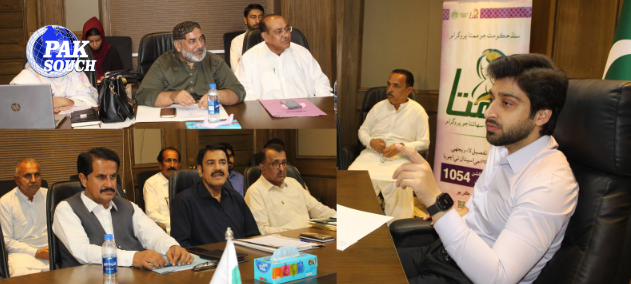
NAUSHAHRO FEROZE: A meeting of the District Coordination Committee, established under the Sindh Social Protection Authority to improve the implementation of the Mamtā Program, was held under the chairmanship of Deputy Commissioner Naushahro Feroze Muhammad Arsalan Saleem.
The meeting was attended by District Social Protection Coordinator Madam Kulsoom Joyo, District Manager PPHI Hidayatullah Memon, Additional Director Local Government Abdul Jabbar Tagar, Assistant Director NADRA Abid Hussain, Additional District Health Officer Dr. Hakim Ali Jokhio, Dr. Mukhtiar Ali Memon, Field Officer Mamtā Program Muhammad Iqbal Malik, and other relevant officials.
Addressing the meeting, Deputy Commissioner Muhammad Arsalan Saleem said that the Sindh government’s Mamtā Program would help improve the quality of life and healthcare facilities for women and children across the district.
He emphasized the need to make the program more effective and directed that women visiting health centers should be provided with the best possible facilities. He urged all committee members to play their role in creating awareness about the initiative.
The Deputy Commissioner instructed Local Government Department officials to promote awareness about the program through their union council-level offices. He also directed NADRA officials to install awareness banners at their offices and other public places to inform citizens.
He further advised that elected representatives and assistant commissioners of all tehsils should be contacted so they could contribute to spreading awareness about the program.
During the briefing, District Head of the Mamtā Program Kulsoom Joyo informed participants that registration of pregnant women and children under the age of two years is being carried out at 47 hospitals across the district.
She said that special counters have been established at PPHI-managed hospitals where women are being registered for the program.
She added that registered women will receive financial assistance of Rs41,000 per family to help reduce difficulties faced during childbirth. She said eligible women must be residents of Sindh districts other than Karachi and Hyderabad.
She explained that women must bring their identity cards, while a child’s B-Form is required in case of child registration. Beneficiaries will need to visit hospitals 16 times during different stages of the program.
Kulsoom Joyo said the initiative was launched three months ago and so far 16,185 women in Naushahro Feroze district have been registered, while the process of providing financial assistance will begin soon.
About The Author