

WASHINGTON, D.C.: The Embassy of Pakistan in Washington, D.C., organized a special webinar to mark Youm-e-Istehsal (August 5), bringing together diplomats, policy experts, academics, and community representatives to discuss developments related to Jammu and Kashmir and regional legal issues.
The webinar was held under the theme, “Challenges to International Law in South Asia: The Jammu and Kashmir Dispute and the Indus Waters Treaty.” It commenced with messages from the President, the Prime Minister, and the Deputy Prime Minister/Foreign Minister, reaffirming Pakistan’s stated commitment to extending moral, political, and diplomatic support to the people of Jammu and Kashmir.
Among the speakers were Dr. Farhan Mujahid, Secretary General of Kashmir Civitas; Ali Anar, President of the Foundation for American Security and Technology; Dr. Qamar Cheema, Executive Director of the Sanober Institute; and Pakistan’s Permanent Representative to the United Nations, Ambassador Munir Akram. The speakers discussed Pakistan’s perspective on the revocation of Articles 370 and 35A by India, as well as the broader implications of the constitutional changes in Indian-administered Jammu and Kashmir.
Participants also discussed regional water issues, with several speakers criticizing what they described as India’s use of water as a strategic tool and expressing concern over developments related to the Indus Waters Treaty.
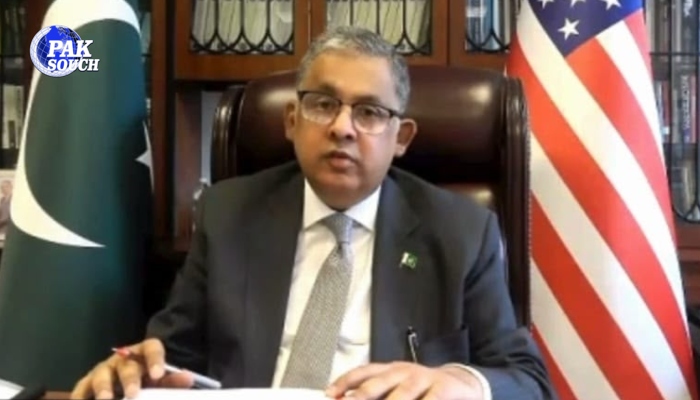
Addressing the webinar, Pakistan’s Ambassador to the United States, Rizwan Saeed Sheikh, said Pakistan considers India’s actions in Indian-administered Jammu and Kashmir, including alleged demographic changes, to be inconsistent with United Nations resolutions. He stated that Pakistan has consistently raised the Kashmir issue at the United Nations, the Organization of Islamic Cooperation (OIC), and other international forums.
Ambassador Sheikh further said that Pakistan believes a peaceful settlement of the Kashmir dispute, in accordance with relevant UN resolutions, is essential for lasting peace and stability in South Asia.
During the session, experts, scholars, and community leaders also expressed solidarity with the people of Jammu and Kashmir. Dr. Qamar Cheema emphasized the importance of water security, stating that access to water is fundamental to human life and describing any unilateral actions affecting shared water resources as a matter of international concern.
The webinar concluded with participants presenting recommendations aimed at promoting dialogue, adherence to international law, and regional stability. Speakers also urged the international community to pay attention to the human rights situation in Jammu and Kashmir and to support efforts toward a peaceful resolution of the longstanding dispute through diplomatic means.
About The Author