
Prime Minister’s Adviser, Senator Rana Sanaullah, has made it clear that the government now sees no possibility of resuming dialogue with the Pakistan Tehreek-e-Insaf (PTI). His remarks come amid rising political tensions following a recent social media post by PTI founder Imran Khan, which, according to government officials, has further complicated the political climate.
Speaking to the media, Rana Sanaullah said that the situation created after Imran Khan’s latest tweet indicated that matters had become even more complex. He stated that the PTI founder’s comments had pushed the political atmosphere toward greater instability rather than reconciliation. According to him, the government had shown willingness to hold talks, but the response from PTI leadership has not been constructive.
Recalling earlier developments, Rana Sanaullah said that the Prime Minister had extended an invitation to PTI to engage in dialogue within Parliament. He stressed that the offer was made in good faith and remains formally on the table. “The Prime Minister cannot withdraw the offer he made, nor has he withdrawn it,” Sanaullah clarified. However, he added that in practical terms, the environment is no longer conducive to negotiations because the PTI leadership has adopted a confrontational posture.
Before delivering his latest statement, Rana Sanaullah had previously encouraged the PTI leadership to sit down for talks, stating that democracy progresses through dialogue, not deadlock. He had argued that disagreements between political parties could only be resolved if both sides were willing to communicate and find common ground. His earlier message emphasized the importance of collective political responsibility, especially during a period when the country faces multiple challenges.
Despite this, he acknowledged in his recent remarks that the ground realities have drastically shifted. The tone and direction of PTI’s messaging, particularly from Imran Khan, has convinced the government that meaningful dialogue is no longer possible. According to Sanaullah, the PTI founder’s recent statements show that he is more interested in escalating tensions than fostering resolution.
The discussion around the possibility of political dialogue has been ongoing for weeks, with various government members expressing caution about engaging with PTI. The situation has been further complicated by internal divisions within PTI, legal challenges faced by its leadership, and rising distrust between political factions.
Information Minister Attaullah Tarar also reinforced the government’s position, stating firmly that PTI had missed its chance for constructive dialogue. He asserted that the government now sees no space for negotiation with what he described as “chaotic, extremist, or militant-minded” elements. Tarar emphasized that the government’s priority is stability, and that engaging with a party that “thrives on confrontation” would not serve national interests.
Tarar claimed that PTI’s approach over the past several months has been marked by inconsistency. He argued that the party makes public statements calling for dialogue while simultaneously launching accusations and using rhetoric that undermines political engagement. This dual strategy, according to government leaders, has created uncertainty about PTI’s actual intentions.
Political analysts note that the collapse of dialogue prospects marks a significant shift in Pakistan’s political landscape. Earlier efforts to reduce tensions included attempts by different political actors, including parliamentarians, to bring both sides to the negotiation table. Those attempts, however, failed to produce sustained progress. Analysts now believe that unless PTI adopts a significantly different tone, the government is unlikely to resume talks.
The government’s current stance reflects concerns about political stability, law and order, and economic recovery. Officials argue that continuous political confrontations and heated exchanges create difficulties for governance and distract from policy matters that require urgent attention. They also fear that street-level agitation from PTI supporters could lead to further unrest.
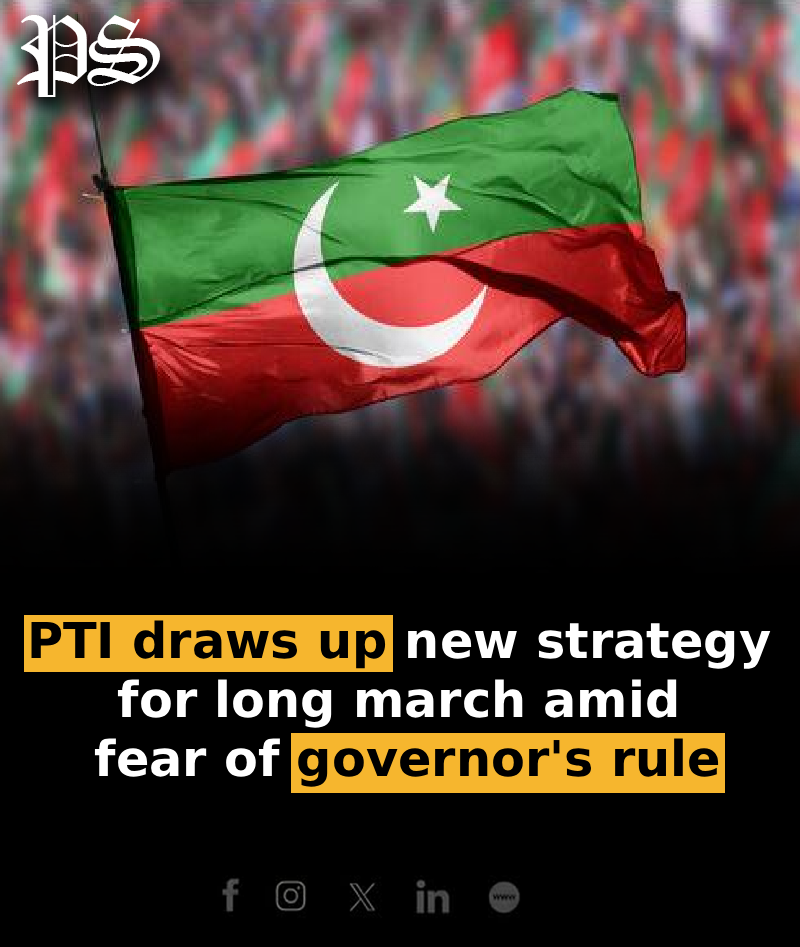
On the other hand, PTI officials maintain that they have been willing to engage in dialogue but accuse the government of using negotiations as a “public relations tactic” rather than a serious political effort. PTI lawmakers argue that the government’s rhetoric and actions contradict its stated desire for political reconciliation. They insist that any meaningful dialogue must include discussions about alleged electoral injustices, governance issues, and a roadmap for future political processes.
The tension between the two sides has been particularly pronounced since the events of May 2023, which strained relations between PTI and state institutions. While some political observers hoped that time would soften positions and create room for dialogue, recent developments—including Imran Khan’s tweet—suggest that the divide is widening instead of narrowing.
Despite the hardened positions, some analysts caution that political deadlock is not sustainable in the long term. They argue that all major political actors will eventually need to find a way to co-exist, especially considering Pakistan’s economic challenges and security concerns. For now, however, the government appears resolute in its position that PTI has squandered the opportunity for dialogue.
Rana Sanaullah’s remarks signal a decisive moment in the ongoing political standoff. While the Prime Minister’s formal offer of negotiations technically remains unchanged, the government’s practical stance leaves little room for immediate engagement. Unless the situation takes a dramatic turn, the possibility of meaningful dialogue between the government and PTI seems increasingly remote.