


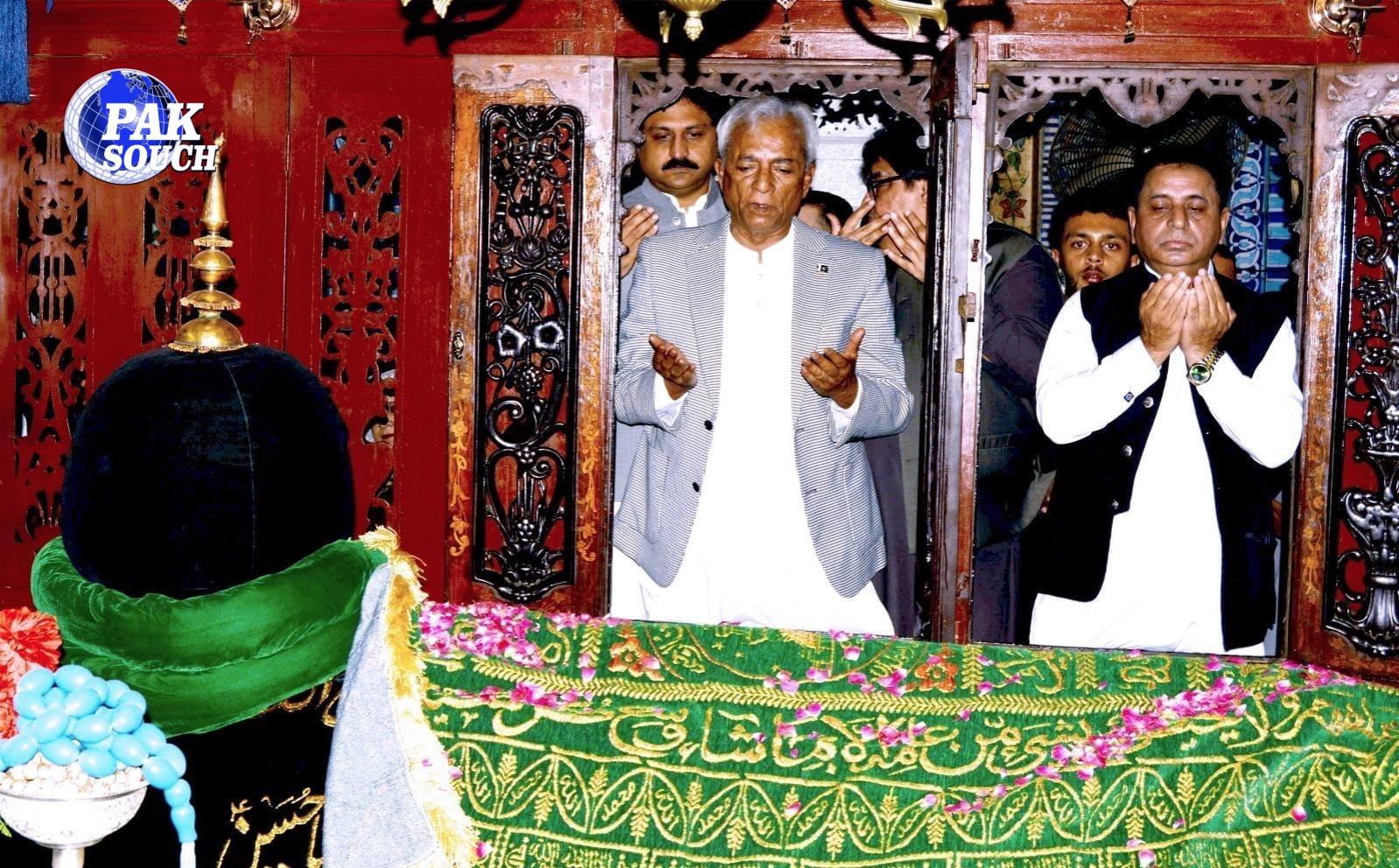
Bhitt Shah, July 29 (PID): Governor of Sindh Syed Muhammad Nihal Hashmi formally inaugurated the three-day 283rd annual Urs celebrations of Hazrat Shah Abdul Latif Bhittai (RA). On the occasion, he visited the saint’s shrine, laid a floral wreath, offered Fateha and prayed for the peace, stability, prosperity and development of Pakistan, as well as unity among the Muslim Ummah.
The inauguration ceremony was attended by Federal Minister for Religious Affairs Kheal Das Kohistani, Prime Minister’s Youth Programme Sindh Coordinator Fahad Shafiq, elected representatives, religious scholars, literary and cultural figures, government officials, devotees and a large number of visitors.
Addressing the gathering, the Governor said that the teachings of Hazrat Shah Abdul Latif Bhittai (RA) embody the timeless values of love, peace, tolerance, brotherhood, humanity and mutual respect. He noted that the great Sufi poet’s philosophy reflects the rich heritage of Sindh’s culture, spirituality and Sufi traditions, while his universal message continues to promote harmony, social cohesion and national unity.
Governor Hashmi emphasised the importance of introducing the younger generation to the teachings, poetry and spiritual legacy of Hazrat Shah Abdul Latif Bhittai (RA). He said that following the saint’s teachings could help build a peaceful, united, prosperous and progressive Pakistan.
He added that the annual Urs is not merely a religious and cultural event but also a celebration of the country’s Sufi traditions, national identity, spiritual values and cultural heritage. He expressed confidence that the message of Hazrat Shah Abdul Latif Bhittai (RA) would continue to inspire generations with the ideals of love, peace, tolerance and brotherhood.
About The Author