

Islamabad: The federal government has unveiled Pakistan’s first-ever four-year Hajj Policy, aimed at introducing long-term reforms, greater transparency, and improved management of Hajj operations. The estimated cost of the government Hajj package is expected to range between Rs1.2 million and Rs1.3 million.
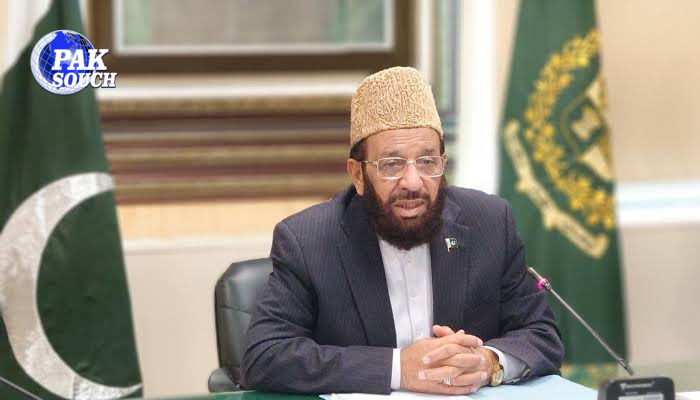
Speaking at a press briefing, Federal Minister for Religious Affairs Sardar Muhammad Yousaf said the new policy marks the beginning of fundamental and sustainable improvements in Pakistan’s Hajj arrangements.
“By the grace of Allah, we are presenting Pakistan’s first four-year Hajj policy today. This is the beginning of lasting reforms in Hajj management and reflects the special guidance of Prime Minister Shehbaz Sharif,” the minister said.
He explained that the policy had been developed on the prime minister’s instructions with a focus on technology, transparency, and practical implementation. According to the minister, the long-term framework is intended to bring Pakistan’s Hajj management in line with international standards.
One of the major features of the policy is the introduction of a registration and waiting list system for prospective pilgrims for the first time, enabling better planning and management of available quotas.
The minister said the existing 60:40 quota ratio between the government and private Hajj schemes would remain unchanged. The Ministry of Religious Affairs will continue to oversee regulation and monitoring of both sectors.
Under the new policy, applicants will be able to secure a place on the Hajj waiting list by making an initial payment of 10 percent of the package cost when submitting their applications.
Sardar Yousaf also announced that all procurement related to Hajj arrangements, whether in Pakistan or Saudi Arabia, would be carried out through a transparent process. Any remaining funds after the settlement of expenses would be refunded to pilgrims.
The minister said private Hajj operators would be evaluated not only on the basis of quota allocation but also on their performance and service quality. He added that the government would introduce a digital complaint and appeals system to ensure prompt resolution of pilgrims’ grievances.
He also said efforts would be made to improve Hajj training programmes so that pilgrims are better prepared for their religious journey.
According to the minister, the Hujjaj Protection Scheme will remain in place, providing continued safeguards for pilgrims.
Sardar Yousaf noted that the policy has been designed in line with Saudi Arabia’s Vision 2030, which seeks to modernise Hajj and Umrah services. He said the policy covering 2027 to 2030 would open a new chapter in Pakistan’s Hajj administration.
“Our objective is not only to make administrative arrangements but also to ensure that pilgrims are provided with a dignified and comfortable journey,” he said.
The minister estimated that the Hajj package would cost between Rs1.2 million and Rs1.3 million, although the final amount would depend on operational expenses and other factors.
He added that any increase or decrease in Pakistan’s Hajj quota would remain the prerogative of the Federal Cabinet, which has the authority to approve such changes.
The announcement follows the Federal Cabinet’s approval of the Hajj Policy and Plan for the coming years, with the government aiming to modernise Hajj operations while improving transparency, accountability, and services for Pakistani pilgrims.
About The Author