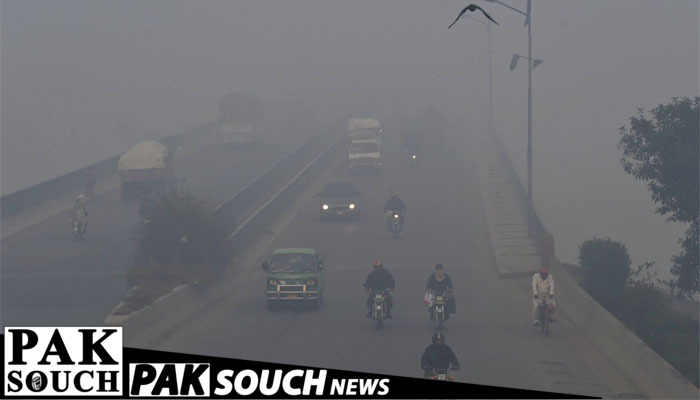
Air pollution levels across Punjab continue to remain dangerously high, with Lahore once again emerging among the world’s most polluted cities. According to global environmental monitoring data, Lahore recorded an alarming Air Quality Index (AQI) of 439 early in the morning, placing it second on the list of the world’s most polluted cities.
Severely Hazardous Air in Multiple Cities
The deteriorating air quality is not limited to Lahore alone. Several major districts across Punjab are experiencing hazardous pollution levels:
- Gujranwala recorded particulate matter levels as high as 808, indicating extremely toxic air.
- Faisalabad registered 507, also falling within the “hazardous” category.
These readings far exceed safe limits defined by the World Health Organization, posing significant health risks to residents, especially children, the elderly, and individuals with respiratory or cardiac conditions.
New Delhi Tops Global Pollution List
According to international environmental indices, New Delhi remains the world’s most polluted city today, with an AQI of 519 — even higher than Lahore. The Indian capital has been battling a prolonged smog crisis, similar to what Pakistani cities face during winter.
Health Risks and Urgent Need for Action
Experts warn that AQI levels above 300 are considered extremely hazardous, and prolonged exposure can lead to:
- Severe respiratory issues
- Increased risk of heart attacks
- Eye, throat, and skin irritation
- Long-term damage to lungs
Citizens have been advised to limit outdoor activities, wear pollution masks, and use air purifiers indoors whenever possible.
Punjab’s smog problem, fueled by industrial emissions, vehicle smoke, crop burning, and weather patterns, continues to intensify each winter. Environmentalists urge immediate government action, including stricter industrial checks, reduced traffic emissions, and effective anti-smog policies.