


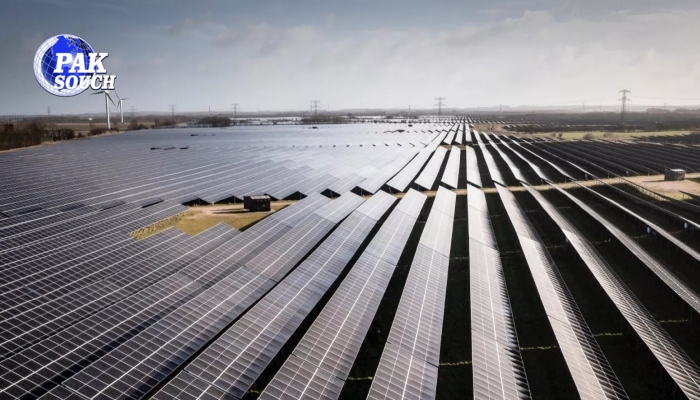
BRUSSELS: Solar energy has become the largest source of electricity in the European Union for the first time, marking a major milestone in the region’s transition toward clean and renewable energy.
According to a new report by energy think tank Ember, solar power generated a record 52 terawatt-hours (TWh) of electricity across the European Union in June 2026, accounting for 25% of the bloc’s total monthly electricity production. It is the first time that solar energy has supplied more than a quarter of the EU’s electricity in a single month.
The report highlights the rapid expansion of renewable energy across Europe, driven by increased investment in solar infrastructure, supportive government policies, and growing efforts to reduce dependence on fossil fuels.
Solar Overtakes Other Energy Sources
Ember’s analysis shows that solar energy emerged as the largest electricity source in the European Union during June 2026, surpassing all other forms of power generation.
The report breaks down the EU’s electricity mix as follows:
- Solar power: 25%
- Nuclear energy: 21%
- Natural gas: 15%
- Wind energy: 14%
- Hydropower: 12%
- Coal: 8%
The figures underline the changing energy landscape in Europe, where renewable sources continue to gain ground while coal’s contribution has steadily declined.
Rapid Growth in Solar Capacity
The report notes that the European Union has experienced remarkable growth in solar installations over the past several years.
Between 2021 and 2025, the EU’s solar generation capacity expanded by more than 20% annually on average. In 2025 alone, member states installed 65.1 gigawatts (GW) of new solar capacity, representing one of the strongest years for renewable energy development in the bloc.
Analysts say this sustained investment has enabled Europe to meet rising electricity demand while reducing greenhouse gas emissions and improving energy security.
Solar Helped Meet Demand During Heatwave
According to Ember, solar power played a particularly important role during the recent heatwave across Europe, when electricity demand increased sharply due to widespread use of air conditioning and cooling systems.
The report says abundant sunshine during the hot weather boosted solar electricity generation, helping power grids meet higher demand and reducing reliance on more expensive fossil fuel generation.
Experts noted that without the additional solar capacity installed in recent years, electricity systems across Europe would likely have faced greater pressure during periods of extreme heat.
Germany Leads Renewable Energy Expansion
Germany remained Europe’s leading country in renewable electricity generation, particularly in solar power.
The report states that 33% of Germany’s electricity came from solar energy in May 2026, marking the first time the country had reached that level.
In June 2026, Germany increased its solar share even further, with 36% of its electricity generated from solar power, reflecting the country’s continued investment in renewable energy infrastructure.
Germany has long been a leader in Europe’s energy transition through its Energiewende policy, which aims to replace fossil fuels and nuclear power with renewable energy sources.
Spain Also Reaches New Milestone
Spain also recorded a significant achievement in renewable energy generation.
For the first time, 34% of Spain’s electricity was produced from solar power during June 2026, according to the report.
Since 2019, Spain has added more than 40 gigawatts of combined wind and solar generating capacity. The expansion has increased clean electricity production while contributing to noticeable reductions in electricity prices for consumers.
Analysts say the country’s abundant sunshine and continued investment in renewable technologies have positioned Spain among Europe’s fastest-growing clean energy markets.
Transition Away from Fossil Fuels
The report emphasizes that Europe’s growing reliance on solar and other renewable energy sources is helping reduce dependence on imported fossil fuels while supporting climate goals.
The declining share of coal—now just 8% of electricity generation—illustrates the accelerating shift toward cleaner energy across the continent.
Energy experts believe continued investment in renewable technologies, battery storage, and modern electricity grids will further strengthen Europe’s energy resilience and help achieve long-term carbon reduction targets.
The latest findings demonstrate that solar energy is no longer a supplementary source of electricity but has become a central pillar of the European Union’s energy system, setting a new benchmark for the global transition to sustainable power generation.
About The Author