

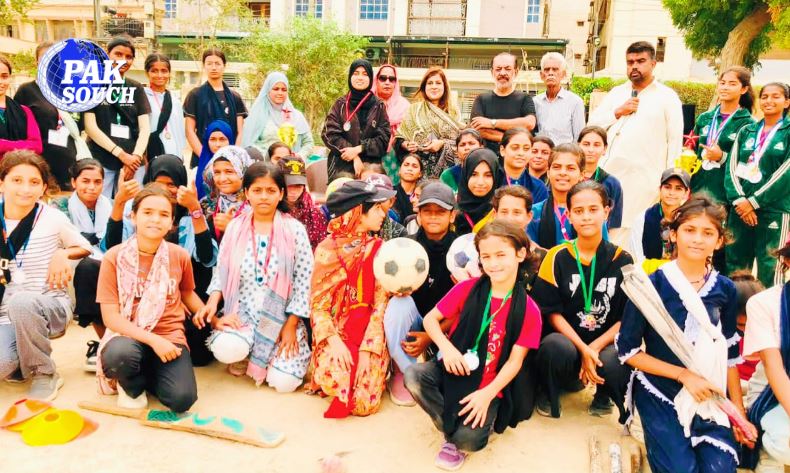
KARACHI: Sindh Government Spokesperson Syeda Tahseen Abidi visited the Salam Pakistan Armed Forces Free Sports Summer Camp 2026 as the chief guest, where she distributed sports uniforms and prizes among participating children and encouraged young athletes to continue pursuing sports with dedication.
The summer camp was organized under the patronage of Pakistan Peace Ambassador Aurangzeb Sultan and brought together children and young athletes participating in various sporting activities.
During her visit, Syeda Tahseen Abidi reviewed the sports competitions and interacted with participants, appreciating their enthusiasm and commitment.
Addressing the young athletes, particularly female participants, she emphasized the importance of sports in building a healthy, talented, and peaceful society.
“When sports grounds are vibrant, hospitals remain empty,” she remarked, highlighting the role of physical activity in promoting health and well-being.
She stressed that providing equal opportunities in sports, especially for girls, is essential to help them develop their abilities and represent Pakistan with pride at national and international levels.
Syeda Tahseen Abidi said that, in line with the vision of Pakistan Peoples Party Chairman Bilawal Bhutto Zardari, creating opportunities for young people through sports, education, and positive engagement remains one of the Sindh government’s key priorities.
She added that under the leadership of Chief Minister Sindh Syed Murad Ali Shah, the provincial government is taking practical measures to strengthen sports infrastructure, identify and nurture emerging talent, promote women’s participation in sports, and encourage healthier lifestyles across the province.
The spokesperson noted that initiatives such as summer sports camps play an important role in steering young people away from negative influences while promoting discipline, teamwork, confidence, and national unity.
She described the Salam Pakistan Armed Forces Free Sports Summer Camp 2026 as a commendable initiative and praised Aurangzeb Sultan and the organizing team for their efforts in providing young athletes with opportunities to learn, compete, and develop their skills.
Among those present at the event were Anisa Boghio, Secretary of Girls Guides Sindh; Nasser Hussaini, Vice President of PAWO; and Akbar Baig, along with other guests and organizers.
About The Author