In today’s world, the word “USB” is so common that most people hardly stop to think about it. We use USB cables, USB ports, and USB drives every single day. Whether we are charging our mobile phones, connecting a printer, or transferring files to a computer, USB has become such an integral part of modern life that it feels almost invisible. But have you ever wondered what USB actually stands for? And how did this technology become such an essential part of our digital ecosystem?
The answer is that USB stands for Universal Serial Bus. While the phrase may sound technical, its meaning is actually quite simple. The idea behind USB was to create a universal standard for connecting different devices to computers and later to many other gadgets. But to fully appreciate why USB was a game-changer, it is important to understand how things worked before its invention.
Computers as Input and Output Machines
A computer can be thought of as a highly advanced input and output machine. On its own, a computer cannot do everything. For example, if you want to print a document, the computer itself does not have the ability to produce a physical page. It needs a printer to carry out that function. The computer and printer have to communicate with each other, exchanging digital signals that tell the printer what to print.
Before USB, this communication between devices was messy and complicated. Printers connected using large, clunky parallel ports. Keyboards and mice relied on separate serial ports. External drives and other hardware often had their own special cables and connectors. Setting up a new device meant figuring out what kind of port it required and whether you had the right cable for it. For everyday computer users, this was frustrating and confusing.
The Arrival of USB
This is where USB came in. When the Universal Serial Bus was introduced in the mid-1990s, it revolutionized the way devices connected to computers. The goal was to replace the wide variety of existing ports with a single, standardized interface that could handle many different types of devices.
USB was designed to make life simpler for users and developers alike. With one common port, manufacturers did not need to invent a new connector for every device. Users no longer had to worry about whether they had the right kind of cable. Instead, they could rely on the same type of connector for keyboards, printers, external drives, cameras, and eventually, smartphones and other electronics.
The Expansion of USB
Over the years, USB evolved into much more than a way to connect a mouse or a keyboard. It quickly became a system for powering devices, transferring data, and even delivering audio and video signals. Today, USB can be found almost everywhere:
- Charging devices: From smartphones to electric vehicles, USB is the global standard for power delivery.
- External storage: USB flash drives and portable hard drives allow easy transfer and backup of data.
- Audio equipment: Headsets, microphones, and speakers often connect through USB ports.
- Peripheral devices: From printers and scanners to cameras and gaming accessories, most external devices rely on USB.
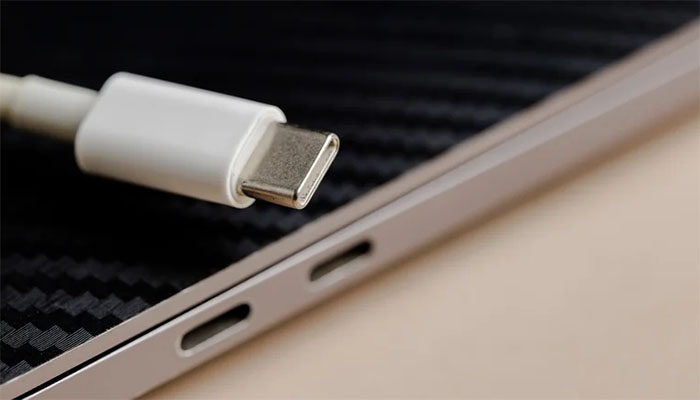
The technology has continued to improve, with faster speeds and more versatile designs. The introduction of USB-C has further simplified things by providing a single, reversible connector capable of handling data, video, and power at extremely high speeds.
Why USB Was Needed
One of the biggest problems USB solved was the chaos of multiple connector types. In the days before USB, each device often came with its own unique connector and cable. This not only cluttered desks but also created headaches for anyone trying to set up or troubleshoot their system.
USB provided a standardized solution. It made it possible to connect a wide range of devices using the same port type, ensuring compatibility across different computers and accessories. This standardization was a huge leap forward, making personal computing far more user-friendly.
The Evolution of USB Designs
The history of USB stretches back only a few decades, but in that time, it has undergone several major transformations.
- USB 1.0 (1996): The first generation, offering modest speeds suitable for keyboards and mice.
- USB 2.0 (2000): Faster transfer rates, making it useful for external storage devices.
- USB 3.0 and beyond: Huge improvements in speed and efficiency, supporting modern data-heavy devices.
- USB-C (2014): A universal, reversible connector that works with laptops, tablets, phones, and even large equipment.
Each new version has built on the same fundamental idea: simplicity, universality, and versatility.
Beyond Computers
While USB was originally created to connect peripherals to computers, its reach has extended far beyond that. Today, cars use USB for charging and media connections. Smart TVs come with USB ports for external drives. Even household appliances, from lamps to fans, sometimes include USB power options.
In many ways, USB has become the invisible backbone of modern digital life. It is a technology we often take for granted, yet without it, the digital world would be far more fragmented and complicated.
Conclusion
So, what does USB stand for? It is the Universal Serial Bus—a name that captures its true purpose: a universal connection system that simplifies how devices communicate and share power. From humble beginnings as a replacement for messy serial and parallel ports, USB has grown into a technology that powers and connects nearly every aspect of our daily lives.
Without USB, the modern digital ecosystem as we know it—where devices easily plug into one another, charge quickly, and transfer massive amounts of data—would simply not exist. What began as a technical standard has become a universal tool, shaping the way we use technology in the 21st century.