


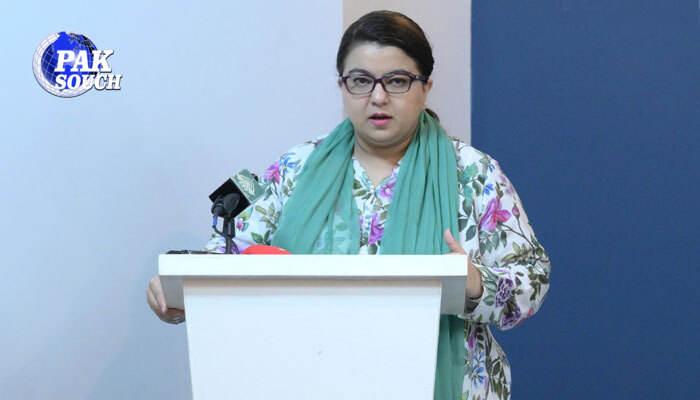
ISLAMABAD: Federal Minister for Information Technology and Telecommunication Shaza Fatima Khawaja has rejected concerns surrounding the proposed Telecom Bill, stating that the legislation will not permit the government or telecom operators to forcibly occupy private land or property for telecommunications infrastructure.
Addressing a joint press conference alongside Federal Law Minister Azam Nazeer Tarar, Shaza Fatima said the government considered it essential to brief both Parliament and the public about the objectives and provisions of the proposed legislation to dispel misconceptions and ensure transparency.
She explained that Pakistan’s existing telecommunications law had become outdated and no longer reflected the needs of the country’s rapidly evolving digital landscape.
“The purpose of the new Telecom Bill is to improve internet connectivity across Pakistan in line with the Prime Minister’s vision of expanding digital access and strengthening the country’s digital infrastructure,” she said.
The minister stressed that, as the federal IT minister, it was her responsibility to facilitate the provision of fast and reliable internet services throughout the country.
She noted that the proposed legislation remained before the National Assembly for six months, allowing lawmakers ample time to examine its provisions and propose amendments.
According to Shaza Fatima, the bill was also referred to a Senate committee, where further deliberations took place before moving forward.
“This is the beauty of democracy,” she said, adding that the legislative process involved consultation and scrutiny rather than rushed decision-making.
The minister revealed that the National Assembly eventually approved the bill after incorporating six amendments, reflecting the input received during parliamentary discussions.
Clarifying one of the most debated aspects of the legislation, Shaza Fatima said the bill primarily seeks to address issues related to housing societies that enter into agreements regarding telecommunications infrastructure but later fail to honor their commitments, creating obstacles to the provision of internet services.
She categorically rejected reports suggesting that citizens could be forced to surrender their private property for telecom installations.
“If a citizen does not want to allow telecommunications infrastructure on his or her private property, that is their legal right,” she said, emphasizing that the legislation does not authorize forced acquisition or occupation of privately owned land.
The minister added that appropriate categories and legal procedures regarding private properties would be defined under the new framework to ensure clarity and protect property rights.
Responding to criticism surrounding the proposed legislation, Shaza Fatima said both she and the Secretary of the Ministry of IT had been subjected to what she described as an unnecessary media campaign based on misinformation.
She said she had requested the Prime Minister to order an inquiry into the allegations and misinformation circulating regarding the Telecom Bill.
“We have every legal right to pursue action against the financial allegations made against us,” the minister said, indicating that legal remedies would be considered against those responsible for making unsubstantiated accusations.
Federal Law Minister Azam Nazeer Tarar, who accompanied the IT minister during the briefing, reiterated the government’s commitment to ensuring that the legislative process remains transparent and consistent with constitutional protections and citizens’ rights.
The government maintains that the proposed Telecom Bill is designed to modernize Pakistan’s telecommunications framework, facilitate the expansion of broadband and digital services, and remove legal and administrative hurdles that have slowed the development of communication infrastructure.
Officials say improved telecommunications infrastructure is essential for supporting Pakistan’s growing digital economy, expanding e-governance services, encouraging investment in the technology sector, and ensuring reliable internet access for businesses, educational institutions, and the general public.
The proposed legislation has generated public debate in recent weeks, with critics raising concerns about possible implications for property rights. However, the government insists that the bill neither authorizes the compulsory occupation of private land nor overrides constitutional protections relating to private property.
According to the Ministry of Information Technology, the primary objective of the bill is to establish a modern legal framework that balances the expansion of digital infrastructure with the protection of citizens’ legal rights, thereby enabling faster internet services and improved connectivity across Pakistan while maintaining due process and transparency.
About The Author