Maiduguri, Nigeria (International Desk): A brutal militant assault on a remote village in northeastern Nigeria’s Borno State has left more than 60 people dead, including at least seven soldiers, in one of the deadliest attacks in recent months. The violence underscores the persistent threat posed by extremist groups like Boko Haram and its offshoots, despite ongoing counter-terrorism operations in the region.
The Attack on Darul Jamal Village
According to reports from international and local media, the attack occurred late Friday night in the border village of Darul Jamal, an area already scarred by years of insurgency. Witnesses said that dozens of armed militants, many riding motorbikes, stormed the community and unleashed chaos.
The attackers indiscriminately fired on residents, stormed into homes, and torched houses. Eyewitnesses described scenes of horror, with families caught off guard as gunmen moved from house to house. Several survivors reported that women and children were among the victims.
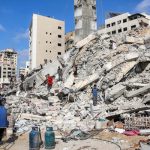
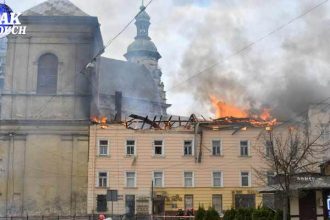
In addition to the loss of life, militants destroyed over 20 houses and set fire to at least 10 buses used by locals for transport and trade. The scale of destruction has left survivors homeless and stripped of basic means of livelihood.
Returnees Targeted
The attack carries a particularly tragic dimension, as Darul Jamal was only recently reoccupied. Many of the villagers had returned last month after years of displacement due to Boko Haram violence. For these families, the return symbolized hope of rebuilding lives, only to be shattered by yet another wave of brutality.
Community leaders expressed dismay that such an attack could occur so soon after resettlement efforts, raising concerns over the government’s ability to provide security for returnees.
Military Casualties
The Nigerian military confirmed that seven of its personnel were killed in the assault while attempting to defend the village. Soldiers stationed nearby engaged the attackers, but the militants, heavily armed and in large numbers, overwhelmed the defenses. Reinforcements eventually arrived, forcing the assailants to retreat, but by then, much of the village had been reduced to ashes.
Who Is Behind the Attack?
While no group has officially claimed responsibility, local sources and security analysts attribute the assault to factions of Boko Haram or its splinter group Islamic State West Africa Province (ISWAP). Both groups have carried out similar raids in Borno and neighboring states, often using motorbikes to strike remote, poorly protected communities.
Borno State, the epicenter of Boko Haram’s insurgency since 2009, has seen thousands of attacks, displacements, and kidnappings over the years. The region’s porous borders and difficult terrain make it vulnerable to militant infiltration.
Government and Military Response
A spokesperson for the Nigerian Army said that counter-terrorism operations have been intensified in recent months, but admitted that militant groups remain a formidable challenge.
“Our troops are making progress in dismantling terrorist hideouts, but these criminals are desperate and continue to target soft communities,” the statement read.
Officials also vowed to track down those responsible for the Darul Jamal attack. Air surveillance and ground operations have reportedly been launched in the surrounding forests, which are known militant hideouts.
Humanitarian Fallout
The massacre has sparked fresh displacement in Borno. Hundreds of survivors have fled Darul Jamal to nearby towns, fearing renewed attacks. Aid workers say the humanitarian crisis in the northeast is deepening, with more than 2 million people already displaced by years of conflict.
The destruction of homes and vehicles has also crippled local trade. Residents who had recently restarted farming and small businesses now find themselves back at square one, with nothing left to sustain them.
International Condemnation
Human rights groups have condemned the attack as another example of militants deliberately targeting civilians. Amnesty International urged Nigerian authorities to “prioritize the protection of civilians” and provide security for communities that have returned after displacement.
The United Nations Office for the Coordination of Humanitarian Affairs (OCHA) expressed concern that repeated attacks on resettled villages risk undermining the broader resettlement program. Without stronger security guarantees, displaced people may be unwilling to return to their ancestral homes.
The Long War Against Boko Haram
Since 2009, Boko Haram’s insurgency has killed more than 35,000 people and displaced millions across Nigeria, Niger, Chad, and Cameroon. The group initially sought to impose strict Islamic law in northern Nigeria but has since splintered, with ISWAP emerging as a dominant faction.
Despite military campaigns that have weakened the insurgents, both groups continue to wage guerrilla warfare, ambush military convoys, raid villages, and kidnap civilians. Rural areas, in particular, remain highly vulnerable.
Survivors’ Voices
Survivors of the Darul Jamal massacre recounted their trauma in interviews with local reporters.
One man said:
“We thought it was safe to return. We rebuilt our homes. Then, in one night, everything was destroyed. My brother and his family are gone. How can we live here again?”
A woman who fled with her children added:
“We saw our neighbors’ houses burn. We ran into the bush, hiding all night. We have lost everything again. We don’t know where to go.”
Conclusion
The attack on Darul Jamal illustrates the persistent fragility of peace in northeastern Nigeria. For families who had only just begun to rebuild their shattered lives, the massacre has reignited fear and uncertainty.
As security forces hunt the perpetrators, the tragedy serves as a stark reminder that the fight against Boko Haram and its affiliates is far from over. Unless civilian protection is significantly strengthened, communities will remain at the mercy of militants, perpetuating a cycle of displacement, despair, and destruction that has defined the region for more than a decade.