


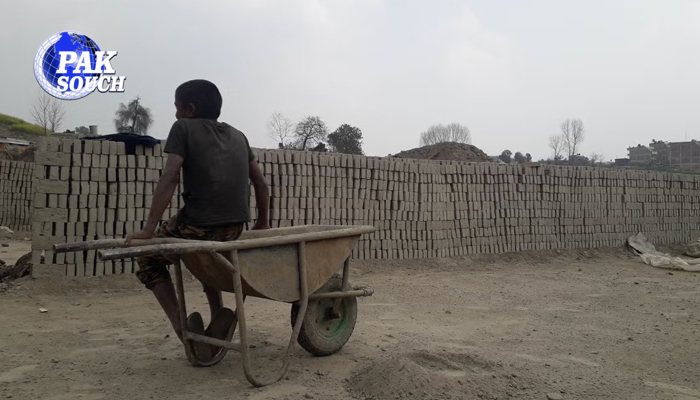
Islamabad: Nearly 10 million children in Pakistan are engaged in work rather than attending school, according to a report released by UNICEF and the Human Rights Commission of Pakistan (HRCP), highlighting the persistent challenge of child labor across the country.
The report reveals that more than 8 million children are involved in child labor, while over 6 million children are engaged in hazardous forms of work, exposing them to significant physical, mental, and emotional risks.
According to the findings, poverty remains the leading driver of child labor in Pakistan, forcing many families to rely on the income generated by their children to meet basic household needs. The report notes that child labor disproportionately affects children from low-income households and families where parents have limited educational backgrounds.
Researchers found that boys are significantly more likely than girls to participate in labor activities, including dangerous occupations that can threaten their health and safety. However, the report also points out that many girls perform unpaid domestic work, which often remains unrecognized in official labor statistics.
The study highlights that a large number of working children are employed in informal and family-based settings. These include labor on family-owned farms, agricultural fields, workshops, small businesses, and household enterprises. Because much of this work takes place within family environments, it often goes unnoticed and remains outside formal regulatory oversight.
Experts involved in the report stressed that child labor is not only an economic issue but also a major obstacle to education and social development. Children who work are far less likely to attend school regularly, limiting their future opportunities and increasing the likelihood that they will remain trapped in cycles of poverty.
The report further states that working children frequently endure long working hours, often under difficult and unsafe conditions. Many face risks of workplace injuries, exposure to harmful substances, extreme weather conditions, and physically demanding tasks inappropriate for their age.
Health experts cited in the report warned that child labor can have serious long-term consequences for a child’s physical and mental well-being. Working children are more vulnerable to illness, exhaustion, malnutrition, and developmental challenges. They are also more likely to experience stress, anxiety, and psychological pressure resulting from the responsibilities placed upon them at a young age.
The findings emphasize that hazardous child labor is particularly concerning because it exposes children to environments that can cause permanent injury or negatively affect their growth and development. Such work may involve operating machinery, handling chemicals, carrying heavy loads, or working in dangerous locations.
UNICEF and HRCP called for stronger efforts to address the root causes of child labor, particularly poverty and limited access to quality education. The organizations stressed the need for comprehensive social protection programs, financial support for vulnerable families, and policies aimed at keeping children in school.
The report also recommends improving enforcement of existing child labor laws and expanding educational opportunities in underserved communities. Greater awareness among parents and employers, it says, is essential to reducing child labor and protecting children’s rights.
Education advocates argue that investing in schooling is one of the most effective ways to combat child labor. Ensuring access to affordable and quality education can help children acquire skills, improve future employment prospects, and break intergenerational cycles of poverty.
Human rights organizations have repeatedly emphasized that every child has the right to education, safety, and a healthy childhood. They warn that unless urgent action is taken, millions of children may continue to miss out on educational opportunities and face lifelong social and economic disadvantages.
The report serves as a reminder of the scale of the challenge facing Pakistan and underscores the importance of coordinated efforts by government institutions, civil society organizations, international partners, and local communities to ensure that children are in classrooms rather than workplaces.
About The Author