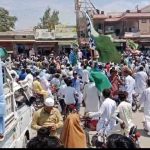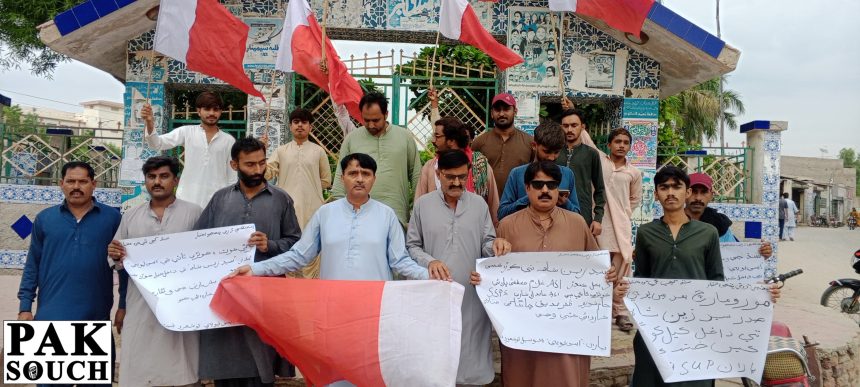
th Syed Zain Shah’s presence in Moro, where he was addressing a large public gathering attended by thousands of people.
They argued that the false implication of Zain Shah in the FIRs demonstrated the desperation of the ruling party to weaken his political influence. Leaders said his only “crime” was his consistent activism and strong voice against land grabs, misuse of Sindh’s water resources, and exploitation of natural wealth.
Denunciation of Political Victimization
Protest leaders vowed not to be intimidated by what they called “revenge politics.” They declared that such tactics would never silence the movement for Sindh’s rights.
“Zain Shah’s only fault is that he speaks for Sindh’s water, land, and resources. These FIRs are nothing but a political conspiracy to crush dissent. We will not bow down to this oppression,” the leaders announced.
They further warned that such authoritarian steps were an open attack on democratic values and would only strengthen the resolve of nationalist and opposition groups.
Call for Judicial Intervention
The protestors made an urgent appeal to Pakistan’s higher judiciary, particularly the Chief Justice of the Supreme Court and the Chief Justice of Sindh High Court, to take immediate notice of the issue. They demanded the judiciary ensure that the cases are investigated transparently and that political opponents are not wrongfully targeted under false charges.
Wider Political Implications
The protests reflect growing political polarization in Sindh, where nationalist groups frequently accuse the ruling PPP of using state machinery to curb opposition. The targeting of Syed Zain Shah, a vocal critic of the government, has amplified concerns about shrinking political space and suppression of dissent.
Political observers believe that the confrontation could further escalate if the government continues to pursue cases against SUP leadership. The party enjoys significant support in rural Sindh, where grievances over water shortages, land rights, and governance issues resonate strongly with local populations.
Unity Among Opposition Groups
The participation of leaders from multiple parties—including SUP, JST, PPP (Shaheed Bhutto faction), and Awami Sath—underscored a rare moment of unity among Sindh’s fragmented opposition. Their collective stance against the FIRs demonstrated a broader consensus against political victimization and highlighted concerns about the misuse of law enforcement for partisan purposes.
Conclusion
The protests in Naushahro Feroze sent a clear message to the Sindh government that opposition voices will not be silenced easily. The FIRs against Syed Zain Shah and 60 others have become a flashpoint for broader debates about democracy, rights, and political freedom in Sindh.
For now, SUP and allied groups remain firm in their resolve to resist what they see as oppression, warning that if their demands are ignored, they will intensify their struggle both politically and through mass mobilization.