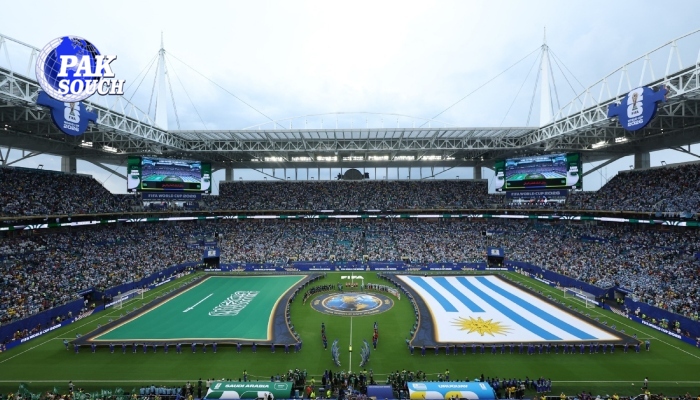
Doha: During the FIFA World Cup 2026-related proceedings, Saudi Arabia’s national flag reportedly received special handling compared to other participating nations, drawing global attention over its unique presentation during official ceremonies.
According to reports, while FIFA’s standard pre-match protocol typically involves laying out participating countries’ flags on the pitch, Saudi Arabia’s flag was instead displayed in a prominent elevated position rather than being placed on the ground like others.
Standard FIFA Protocol
Under usual FIFA pre-match traditions, flags of competing nations are displayed on the field as part of ceremonial arrangements. This practice symbolizes equal representation of all participating teams and is a widely recognized element of international football events.
However, in the case of Saudi Arabia, organizers opted for a different display arrangement, deviating from the standard pitch-based flag presentation.
Elevated Display for Saudi Flag
Reports suggest that Saudi Arabia’s flag was placed at a higher, more respectful display position within the stadium environment. The decision stood out during the event and quickly attracted attention from viewers and commentators around the world.
The distinctive presentation was noted as unusual compared to the uniform treatment of other national flags.
Reason Behind Special Arrangement
The primary reason cited for this different treatment is the presence of the Shahada (Islamic declaration of faith) inscribed on the Saudi flag.
Because the flag contains sacred religious text representing the core belief of Islam, special consideration is often given in how it is handled or displayed to ensure it is not placed in a manner that could be perceived as disrespectful.
This religious element sets the Saudi flag apart from most other national flags, many of which contain only symbols, colors, or emblems without religious inscriptions.
Respect for Religious Sensitivities
In international sporting events, organizers often take cultural and religious sensitivities into account when managing ceremonial protocols. This includes adjustments in how symbols, flags, or anthems are presented.
In Saudi Arabia’s case, the decision to avoid placing the flag on the ground is seen as consistent with efforts to respect its religious significance.
Global Attention and Discussion
The altered presentation sparked discussion among viewers and sports analysts, with many noting the intersection of global sporting traditions and religious symbolism.
While some viewed it as a procedural adjustment, others highlighted it as an example of how international organizations adapt protocols to accommodate cultural diversity among participating nations.
Conclusion
The handling of Saudi Arabia’s flag during the FIFA World Cup ceremonies highlights how global sporting events balance standardized procedures with cultural and religious sensitivities. The decision to display the flag in a raised position, rather than on the field, reflects the unique religious significance attached to it and underscores the importance of respecting diversity in international competitions.
About The Author