


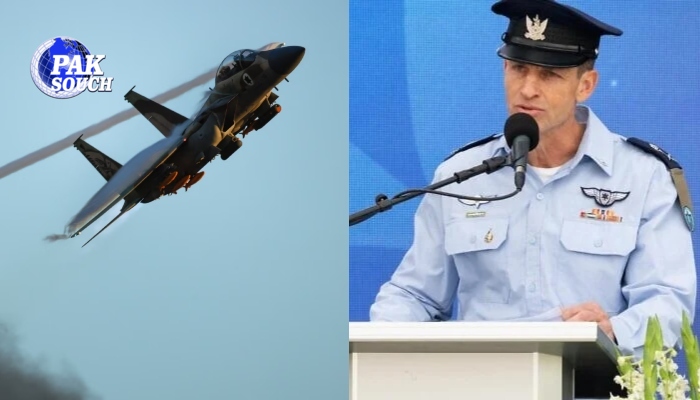
Tel Aviv: Israel was fully prepared to launch a major air operation against Iran on June 8, but the attack was canceled at the last moment following intervention from the United States, according to remarks attributed to Israeli Air Force Commander Major General Omer Tishler.
The revelation sheds new light on behind-the-scenes developments during a period of heightened tensions between Israel and Iran and highlights the significant influence of Washington on regional security decisions.
Israeli Air Force Ready for Large-Scale Operation
According to a report published by an Israeli newspaper, General Tishler disclosed that after a temporary ceasefire and renewed tensions between Iran and Israel, the Israeli Air Force had finalized preparations for a large-scale strike against Iranian targets.
The planned operation reportedly involved the deployment of a substantial portion of Israel’s air power and was intended to target hundreds of sites inside Iran.
Military units and air force squadrons had reportedly completed operational preparations and were awaiting final authorization to proceed with the mission.
Hundreds of Targets Identified
The report stated that Israeli forces had selected numerous targets across Iran for the proposed operation. These targets were said to be part of a broad military plan designed to significantly degrade Iranian capabilities.
While specific details regarding the intended targets were not disclosed, the scale of the operation suggests that it would have been among the most extensive Israeli air campaigns ever contemplated against Iran.
Security analysts note that an attack of such magnitude could have dramatically escalated tensions across the Middle East and potentially triggered a wider regional conflict.
Attack Halted Just One Hour Before Launch
According to General Tishler, the mission was canceled only one hour before it was scheduled to begin.
He reportedly said that the order to halt the operation came while squadron commanders and pilots were in the final stages of mission briefings.
The last-minute decision surprised many within the military, given the extensive preparations that had already been completed.
US Intervention Played Key Role
The Israeli newspaper reported that the planned attack was suspended after US President Donald Trump communicated a firm message to Israeli Prime Minister Benjamin Netanyahu.
According to the account, Trump warned that if Israel chose to proceed with the strike, it would have to do so without American backing.
General Tishler was quoted as saying that the operation was called off because Washington made it clear that Israel would be on its own if it launched the attack.
The reported message underscored concerns within the United States about the potential consequences of a large-scale military confrontation with Iran.
Concerns Over Regional Escalation
Observers say that a direct Israeli strike involving hundreds of targets could have sparked a major regional crisis, drawing in multiple countries and threatening international shipping routes, energy supplies, and broader Middle Eastern stability.
The United States has traditionally supported Israel’s security, but American administrations have also sought to prevent conflicts that could escalate into wider regional wars.
If the reported account is accurate, Washington’s intervention appears to have been motivated by concerns that such an operation could undermine diplomatic efforts and destabilize an already volatile region.
Importance of US-Israel Coordination
The reported incident highlights the close strategic relationship between the United States and Israel, particularly on issues involving Iran.
Although Israel maintains the capability to conduct independent military operations, major security decisions often involve extensive consultations with Washington due to the potential regional and global implications.
Analysts note that American diplomatic, military, and political support remains a significant factor in Israel’s strategic calculations.
No Immediate Official Response from Iran
Iranian authorities have not publicly commented on the reported claims regarding the canceled operation. Likewise, official details about the alleged targets and operational planning remain limited.
Given the sensitivity of military matters, many aspects of the reported operation may remain classified.
A Glimpse Into Regional Tensions
The disclosure by the Israeli Air Force chief offers a rare glimpse into the intensity of military planning that can occur during periods of heightened regional tensions. It also illustrates how diplomatic intervention at the highest levels can influence decisions that may have far-reaching consequences.
Whether the planned operation was permanently abandoned or merely postponed remains unclear. However, the report suggests that the Middle East came within hours of witnessing a major military escalation that could have significantly altered the regional security landscape.
As tensions between regional powers continue to evolve, the episode serves as a reminder of the delicate balance between military preparedness and diplomatic restraint in one of the world’s most strategically sensitive regions.
About The Author