

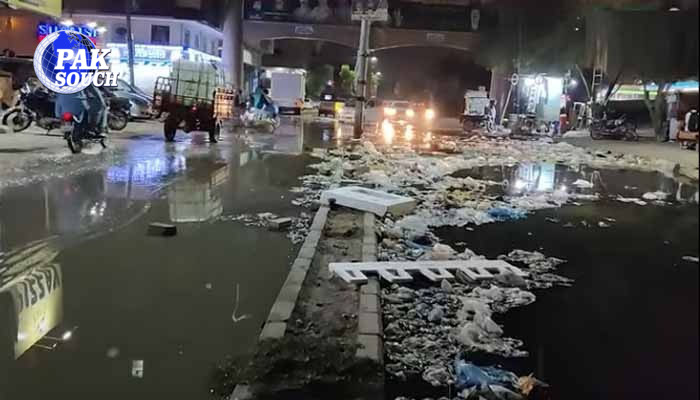
KARACHI: Residents of Karachi’s Shamsi Society have raised serious concerns over what they describe as prolonged administrative failure and municipal negligence, as stagnant sewage water, damaged infrastructure, and deteriorating roads continue to affect daily life in the area.
According to local residents, Shamsi Society and its surrounding neighborhoods have been facing significant civic problems for an extended period. The situation has worsened due to the breakdown of the sewerage and drainage system, leaving large portions of roads and streets submerged in dirty water for weeks.
Residents say the overflowing sewage has created unhygienic conditions throughout the locality, causing foul odors and increasing fears of disease outbreaks. The accumulation of wastewater has not only disrupted routine activities but has also raised concerns about public health, particularly among children, elderly citizens, and individuals with existing medical conditions.
Damaged Sewerage Infrastructure
Local sources report that the area’s sewerage infrastructure has deteriorated significantly over time. Burst sewerage lines and damaged underground pipelines have resulted in continuous leakage of wastewater onto roads and residential streets.
The problem is not limited to Shamsi Society alone. Neighboring Rifah Aam Society is also experiencing similar difficulties due to aging and damaged sewerage networks.
Residents claim that underground sewerage lines running beneath the main road of Rifah Aam Society have been in poor condition for years and have now broken at multiple locations. As a result, the road surface has suffered extensive damage, with cracks, depressions, and uneven sections appearing in several areas.
Roads Damaged by Underground Leaks
The deterioration of underground sewerage lines has directly affected road infrastructure. Continuous seepage of wastewater beneath the surface has weakened road foundations, causing sections of the main road to collapse and deteriorate.
Motorists, motorcyclists, pedestrians, and public transport users face daily challenges while traveling through the affected areas. Residents say the damaged roads increase the risk of traffic accidents and vehicle damage.
In addition, dust generated from broken road surfaces has become another major concern. Community members report that airborne dust is contributing to respiratory problems, allergies, and other health issues among local residents.
Recently Completed Road Work Already Affected
Residents expressed disappointment that recently completed development work has already been compromised.
According to reports, the Karachi Metropolitan Corporation (KMC) recently completed the installation of paver blocks on the main road in Rifah Aam Society as part of infrastructure improvement efforts. However, the benefits of the project have reportedly been undermined due to the failure of underground sewerage lines.
Locals say that despite the investment in road improvements, the continuing sewerage problems have caused the newly developed road sections to deteriorate rapidly, raising concerns about the effectiveness and sustainability of public infrastructure projects.
Risk of Water Contamination
One of the most alarming concerns highlighted by residents is the possibility of contamination of drinking water supplies.
They allege that damage to underground sewerage lines has also affected nearby water supply pipelines. As a result, sewage water may be mixing with clean water lines in certain locations.
If confirmed, such contamination could pose serious health risks, including the spread of waterborne diseases such as gastroenteritis, typhoid, hepatitis, and other infections.
Public health experts often warn that damaged water and sewerage infrastructure can create conditions where harmful bacteria and contaminants enter drinking water systems, particularly in densely populated urban areas.
Residents Demand Immediate Action
Residents of Shamsi Society and nearby neighborhoods have appealed to municipal authorities and relevant government departments to take immediate notice of the situation.
They are calling for urgent repairs to damaged sewerage lines, restoration of affected roads, and a comprehensive assessment of underground utility infrastructure to prevent further deterioration.
Community members argue that temporary solutions are no longer sufficient and that long-term rehabilitation of the sewerage and drainage system is necessary to resolve recurring problems.
They have also urged authorities to inspect water supply lines to ensure that drinking water remains safe and free from contamination.
Need for Sustainable Urban Management
The ongoing situation in Shamsi Society highlights broader challenges facing Karachi’s urban infrastructure, including aging utility networks, inadequate maintenance, and delayed response to civic complaints.
Residents believe that timely intervention by municipal authorities can prevent further damage, reduce public health risks, and improve living conditions for thousands of people affected by the crisis.
As complaints continue to mount, citizens hope that relevant departments will respond swiftly and implement lasting solutions to restore proper sanitation, safe roads, and reliable public services in the area.
About The Author