


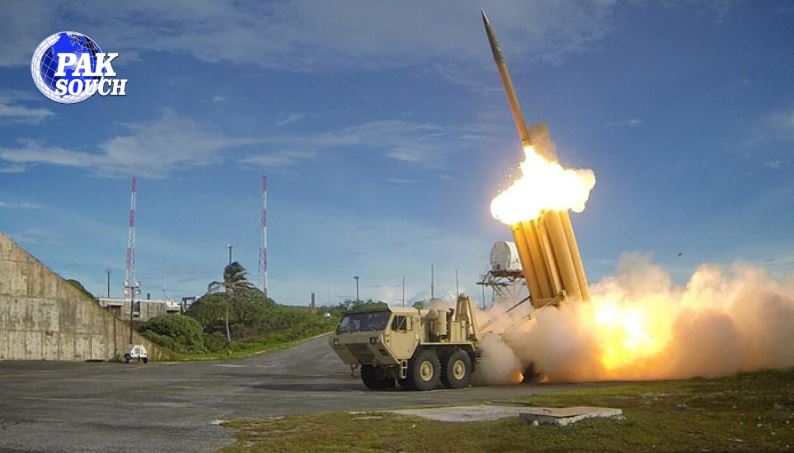
The United States used significantly more missile interceptors than Israel itself during recent hostilities with Iran, according to a report published by The Washington Post citing U.S. defense officials and internal data. The report highlights the scale of American involvement in defending Israel from incoming Iranian missile attacks and underscores the heavy reliance on advanced U.S. missile defense systems.
According to the report, the U.S. deployed more than 200 THAAD (Terminal High Altitude Area Defense) interceptor missiles to neutralize incoming threats aimed at Israel. In addition, over 100 SM-3 and SM-6 interceptor missiles were also launched as part of the broader missile defense operation. These systems are designed to intercept and destroy ballistic missiles at different stages of flight, providing layered protection against long-range attacks.
In comparison, Israeli forces reportedly used fewer interceptor missiles from their own defense systems during the same period. The report states that Israel fired fewer than 100 “Arrow” interceptors, which are designed to counter long-range ballistic missiles, and approximately 90 interceptors from the “David’s Sling” system, which is intended to handle medium-range threats.
Overall, the data suggests that the United States expended a significantly larger number of interceptor missiles than Israel itself in defending Israeli territory. This level of involvement reflects the depth of U.S. military support for Israel’s air defense architecture, particularly during periods of heightened regional conflict involving Iranian missile strikes.
A U.S. defense official quoted in the report warned that if another round of conflict with Iran were to erupt, the United States might be required to deploy even more interceptors. The official noted that Israel has already sent some of its missile defense systems for maintenance and repairs, potentially limiting its immediate defensive capacity.
The same official also remarked that Israel does not possess full independent capability to “fight and win a war” on its own, although this aspect is often overlooked in public discussions. The statement highlights Israel’s reliance on advanced U.S. military technology and logistical support, especially in high-intensity missile defense scenarios.
The report has drawn attention to the scale of modern missile warfare and the growing importance of integrated air defense systems among allied nations. THAAD, SM-3, SM-6, Arrow, and David’s Sling systems represent different layers of defense designed to intercept threats at varying altitudes and ranges, but their effectiveness depends heavily on coordination and supply of interceptor stockpiles.
Military analysts say the reported usage figures also raise concerns about interceptor stock depletion during prolonged conflicts. Advanced missile interceptors are expensive and produced in limited quantities, meaning sustained high-intensity engagements could strain even the most sophisticated defense networks.
The Washington Post report further suggests that the recent conflict served as a real-world stress test for U.S.-Israeli missile defense cooperation. It demonstrated both the effectiveness and the limitations of current systems when faced with large-scale missile barrages, particularly those involving ballistic missiles launched from multiple directions.
While the Pentagon has not publicly confirmed the exact figures, the report adds to ongoing discussions in defense circles about the sustainability of missile defense strategies in future regional wars involving Iran, Israel, and other actors in the Middle East.
About The Author