

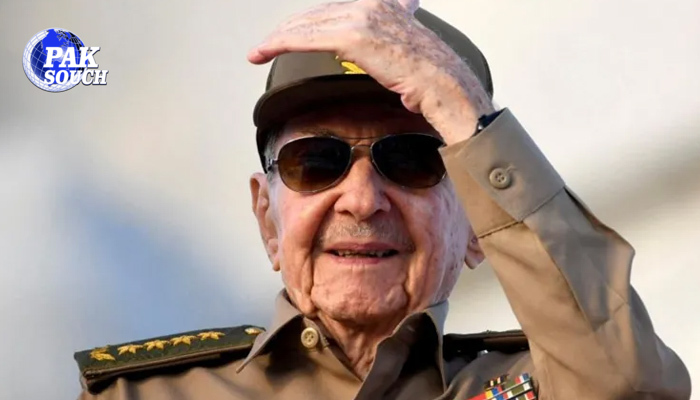
Washington: The United States has formally indicted former Cuban President Raúl Castro on charges related to murder, conspiracy, and the destruction of aircraft linked to a decades-old incident involving American citizens.
According to the US Department of Justice, the indictment accuses Raúl Castro of involvement in the 1996 downing of two aircraft over waters between Cuba and Florida.
US authorities allege that the incident resulted in the deaths of American citizens and included charges of murder conspiracy and destruction of aircraft.
The case relates to a long-standing dispute over the shooting down of planes operated by a Cuban exile group during heightened tensions between Cuba and the United States in the 1990s.
Acting US Attorney General Todd Blanche described the indictment as a “historic moment.”
He stated that this is the first time in nearly 70 years that senior leadership figures of the Cuban government have faced criminal charges in the United States related to violent acts.
“This marks a historic step toward accountability,” Blanche reportedly said while discussing the indictment.
The announcement has triggered strong reactions from both Washington and Havana.
Cuban President Miguel Díaz-Canel rejected the allegations against Raúl Castro, calling them politically motivated and baseless.
He accused the United States of using the case as a possible justification for future military or political pressure against Cuba.
“The accusations are unfounded and part of a political strategy,” Cuban officials stated.
Meanwhile, former US President Donald Trump also commented on the development, calling the indictment “a very big deal.”
Speaking to reporters, Trump criticized Cuba’s political system and said the Cuban people needed support and freedom.
“We are helping bring freedom to Cuba,” Trump said, while also claiming that he did not expect the situation to lead to broader tensions.
The indictment is expected to further strain already fragile relations between the United States and Cuba.
Relations between the two countries have remained tense for decades, shaped by political disputes, sanctions, ideological differences, and historical conflicts dating back to the Cold War era.
Raúl Castro served as President of Cuba from 2008 to 2018 after succeeding his brother Fidel Castro, the longtime revolutionary leader of the country.
Although Raúl Castro formally stepped down from office years ago, he remains one of the most influential figures associated with Cuba’s ruling political establishment.
Legal experts say the indictment is largely symbolic unless Castro travels to a country willing to cooperate with US extradition requests.
However, analysts note that the move carries significant diplomatic and political implications, particularly in the context of US domestic politics and relations with Latin America.
Human rights groups and Cuban exile organizations in the United States have long demanded accountability over the 1996 aircraft incident.
The Cuban government, however, has consistently defended its actions related to the event, arguing that the aircraft involved had violated Cuban airspace and national sovereignty.
Observers say the case could intensify international debate regarding US-Cuba relations, sanctions policy, and the broader political future of the Caribbean nation.
About The Author