


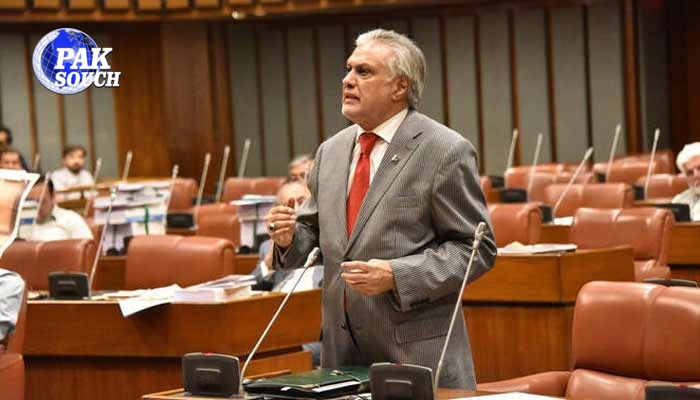
Islamabad: Deputy Prime Minister and Foreign Minister Ishaq Dar has announced that the second phase of the China-Pakistan Economic Corridor (CPEC) has officially begun, describing the initiative as a major step forward in strengthening economic and strategic cooperation between Pakistan and China.
Speaking during a session of the Senate, Ishaq Dar said that CPEC remains the flagship project of China’s Belt and Road Initiative (BRI) and continues to play a vital role in Pakistan’s economic development and regional connectivity.
He stated that the launch of CPEC Phase Two marks the beginning of a new chapter focused on industrial cooperation, economic modernization, technology transfer, and investment opportunities.
“CPEC is the flagship project of the Belt and Road Initiative, and Phase Two of CPEC has now started in Pakistan,” the foreign minister told lawmakers during his address.
Ishaq Dar also reaffirmed Pakistan’s commitment to the “One China Policy,” emphasizing that Islamabad fully supports Beijing’s position on issues related to China’s sovereignty and territorial integrity.
He added that China has consistently supported Pakistan’s sovereignty and national interests on regional and international forums.
The foreign minister further informed the Senate that Prime Minister Shehbaz Sharif will undertake an official visit to China from May 23 to May 26, where he is expected to hold important meetings with Chinese leadership.
According to Ishaq Dar, the visit will coincide with celebrations marking 75 years of diplomatic relations between Pakistan and China, highlighting the long-standing strategic partnership between the two countries.
During the visit, Prime Minister Shehbaz Sharif is scheduled to meet Chinese President Xi Jinping, while discussions are also expected with other senior Chinese officials regarding bilateral cooperation, trade, investment, energy projects, and regional stability.
Observers believe the visit could prove significant for accelerating ongoing CPEC projects and attracting new Chinese investment into Pakistan’s economy, which continues to face financial and developmental challenges.
CPEC, launched in 2015, is considered one of the largest foreign investment initiatives in Pakistan’s history. The multibillion-dollar project includes infrastructure development, highways, railways, ports, energy projects, and industrial zones designed to improve connectivity between China and Pakistan.
The first phase of CPEC primarily focused on energy production and infrastructure construction, including roads, power plants, and the development of Gwadar Port.
Officials say the second phase is expected to emphasize industrialization, agricultural cooperation, information technology, special economic zones, and greater private-sector participation.
Economic experts believe CPEC Phase Two could help create employment opportunities, improve exports, and strengthen Pakistan’s manufacturing sector if implemented effectively.
The project has also been viewed as strategically important for China, providing Beijing with improved trade access to the Arabian Sea through Gwadar Port while enhancing regional connectivity under the Belt and Road Initiative.
However, CPEC has also faced criticism and concerns in some quarters regarding debt sustainability, transparency, and security challenges. Pakistani and Chinese authorities have repeatedly rejected such concerns, insisting that the project is mutually beneficial and essential for long-term economic growth.
Security remains a key issue surrounding CPEC projects, particularly after several attacks targeting Chinese nationals and project sites in recent years. Pakistani authorities have assured Beijing that comprehensive security measures are in place to protect Chinese workers and investments.
The upcoming visit of Prime Minister Shehbaz Sharif is expected to further strengthen political and economic ties between Islamabad and Beijing at a time when both countries are seeking deeper strategic cooperation in trade, regional security, and infrastructure development.
Analysts say the celebrations of 75 years of diplomatic relations will also symbolize the enduring partnership often described by leaders of both countries as an “all-weather strategic cooperative partnership.”
With the formal launch of CPEC Phase Two, Pakistan hopes to move beyond infrastructure development toward broader economic transformation and industrial growth in collaboration with China.
About The Author