Hyderabad: Despite a rapidly growing population, Hyderabad continues to face a severe shortage of modern healthcare facilities, with major government hospitals still lacking advanced medical services and infrastructure even after more than three decades.
With a population exceeding four million, Hyderabad is Sindh’s second-largest city, yet no major new government hospital has been established in recent years. Residents say the healthcare system has failed to keep pace with the city’s expansion, forcing thousands of patients to travel to Karachi for specialized treatment.
Hospitals Built Decades Ago Yet to Be Upgraded
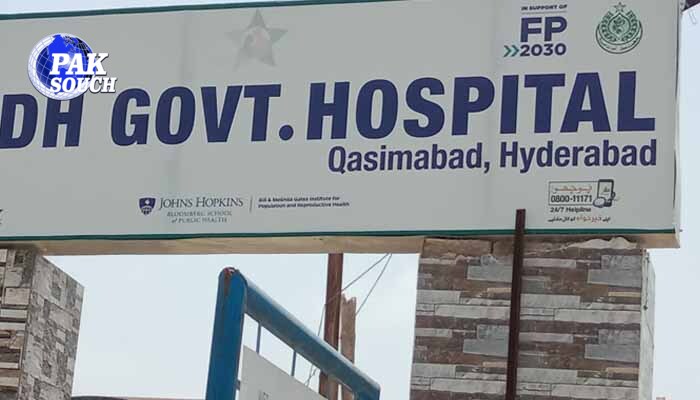
The city’s main secondary healthcare hospitals, constructed around 30 years ago in Hyderabad, Latifabad, and Qasimabad, have still not been upgraded to tertiary-care teaching hospitals.
These include:
- Government Shah Bhittai Hospital, Latifabad
- Government Hospital, Qasimabad
- Government Paretabad Hospital
Due to the absence of upgrades, these hospitals remain unable to provide several critical healthcare services required by the growing population.
Residents and healthcare professionals say these facilities lack advanced operation theaters, intensive care units (ICUs), ventilators, and modern diagnostic machinery.
As a result, patients suffering from serious illnesses or requiring complex surgeries are often referred to Karachi hospitals, increasing both financial and emotional burdens on families.
Pressure Increasing on Liaquat University Hospital
The healthcare crisis has also placed immense pressure on Liaquat University Hospital, which already receives patients from across interior Sindh.
Hospital officials say the facility is struggling to handle the growing influx of patients due to limited resources and staff shortages.
According to the administration, one major reason behind the lack of improvement in secondary hospitals is that they have not been granted teaching hospital status.
Without teaching status, hospitals cannot attract senior professors, specialists, or advanced medical equipment required for modern healthcare services.
Officials say this has created a cycle where the hospitals remain underdeveloped and unable to expand their treatment capacity.
Shortage of Facilities Affecting Public Healthcare
The hospitals operating under the Sindh Health Department reportedly suffer from multiple problems, including:
- Lack of specialized doctors
- Outdated medical equipment
- Insufficient emergency facilities
- Limited ICU beds
- Shortage of ventilators
- Inadequate surgical infrastructure
Because of these shortcomings, much of the patient load is shifted to Civil Hospital Hyderabad, affecting its overall performance and increasing waiting times for treatment.
Healthcare experts warn that the situation could worsen further as Hyderabad’s population continues to grow rapidly due to urbanization and migration from surrounding districts.
Citizens Demand Immediate Action
Residents have urged the provincial government to urgently improve healthcare infrastructure in the city by either constructing new modern hospitals or upgrading existing facilities.
Citizens argue that Hyderabad, being one of Sindh’s largest urban centers, deserves healthcare facilities comparable to those available in Karachi.
Many families complain that traveling to Karachi for treatment is expensive and difficult, particularly for low-income patients.
People have also expressed concern that emergency patients often lose valuable time while being shifted to hospitals outside Hyderabad because of the lack of specialized treatment locally.
Need for Long-Term Healthcare Planning
Medical experts believe Hyderabad requires comprehensive healthcare planning, including the development of tertiary-care teaching hospitals, expansion of emergency services, and recruitment of qualified specialists.
They say investment in healthcare infrastructure is essential not only for Hyderabad residents but also for people from nearby districts who depend on the city’s hospitals for treatment.
Analysts note that strengthening public hospitals could reduce pressure on Karachi’s healthcare system while improving access to quality medical services in interior Sindh.