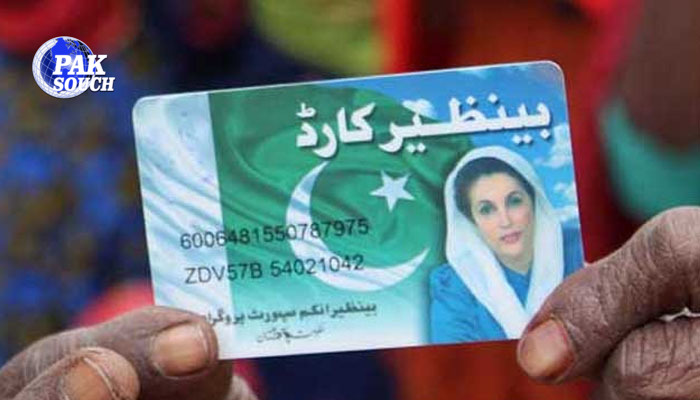
Islamabad: The federal government has begun considering a proposal to transfer the administration of the Benazir Income Support Programme (BISP) to provincial governments, according to Federal Minister Khel Das Kohistani.
Speaking to Geo News, the minister said the discussion emerged in light of the 18th Constitutional Amendment, under which many administrative and social welfare powers were devolved to the provinces.
He stated that since provinces now hold broader authority over social sectors and welfare-related matters, the responsibility for distributing financial assistance should also be handled at the provincial level.
Provinces Also Raising the Issue
Khel Das Kohistani revealed that some provincial governments have themselves raised the matter and expressed interest in greater control over welfare and support programmes operating within their jurisdictions.
However, he clarified that no final decision has been made so far and that the federal government will consult coalition partners and political parties before moving forward with any major policy shift.
“The government will take all stakeholders into confidence before making a decision,” the minister said.
BISP Not Being Abolished
The federal minister strongly denied reports suggesting that the government was considering abolishing the Benazir Income Support Programme altogether.
He emphasized that the programme remains an important welfare initiative for low-income families across the country and that discussions are only related to administrative control and implementation mechanisms.
“There is no proposal under consideration to completely end BISP,” he clarified.
Importance of BISP
The Benazir Income Support Programme is Pakistan’s largest social safety net initiative and provides financial assistance to millions of economically vulnerable families, especially women.
Launched in 2008, the programme was named after former Prime Minister Benazir Bhutto and was designed to help reduce poverty and support low-income households through direct cash transfers.
Over the years, BISP has expanded to include various welfare initiatives such as educational stipends, emergency relief assistance, and nutrition support programmes.
The programme has also received support and recognition from international financial institutions and development organizations for its role in poverty alleviation and social protection.
Debate Over the 18th Amendment
The discussion regarding the transfer of BISP to provinces is closely linked to debates surrounding the 18th Amendment to the Constitution, which significantly increased provincial autonomy.
Following the amendment, sectors such as health, education, and social welfare largely became provincial subjects. Some policymakers argue that welfare schemes like BISP should also be administered by provincial governments to improve efficiency and accountability.
Supporters of decentralization believe provincial governments are better positioned to identify deserving beneficiaries and address local economic challenges more effectively.
However, critics warn that transferring such a large national programme to provinces could create coordination challenges, differences in implementation standards, and unequal distribution of resources among provinces.
Possible Political and Administrative Challenges
Experts say any move to shift BISP management to provincial governments would require extensive consultation, constitutional review, and administrative restructuring.
Since the programme currently operates under a centralized federal framework, transitioning authority to provinces could involve changes in budgeting, data management, beneficiary verification systems, and monitoring mechanisms.
Political observers also note that BISP has long been associated with national-level politics and remains one of the most recognized welfare programmes in Pakistan.
Any changes to its structure are therefore expected to generate significant political debate among coalition partners, opposition parties, and provincial governments.
Public Concerns and Expectations
The possibility of decentralizing the programme may raise concerns among beneficiaries who rely heavily on monthly financial support amid rising inflation and economic pressures.
Many welfare recipients may fear delays or disruptions in payments during any transition process. Analysts believe the government will need to ensure transparency and continuity if reforms are introduced.