


Mahira Khan has shared a very special and heartwarming update with her fans.
The star’s recent Instagram post is appearing to confirm that she is expecting a baby with her husband, Salim Karim.
Mahira shared a picture of herself on Instagram with the simple caption, “we make plans and theres Allah’s plan.”
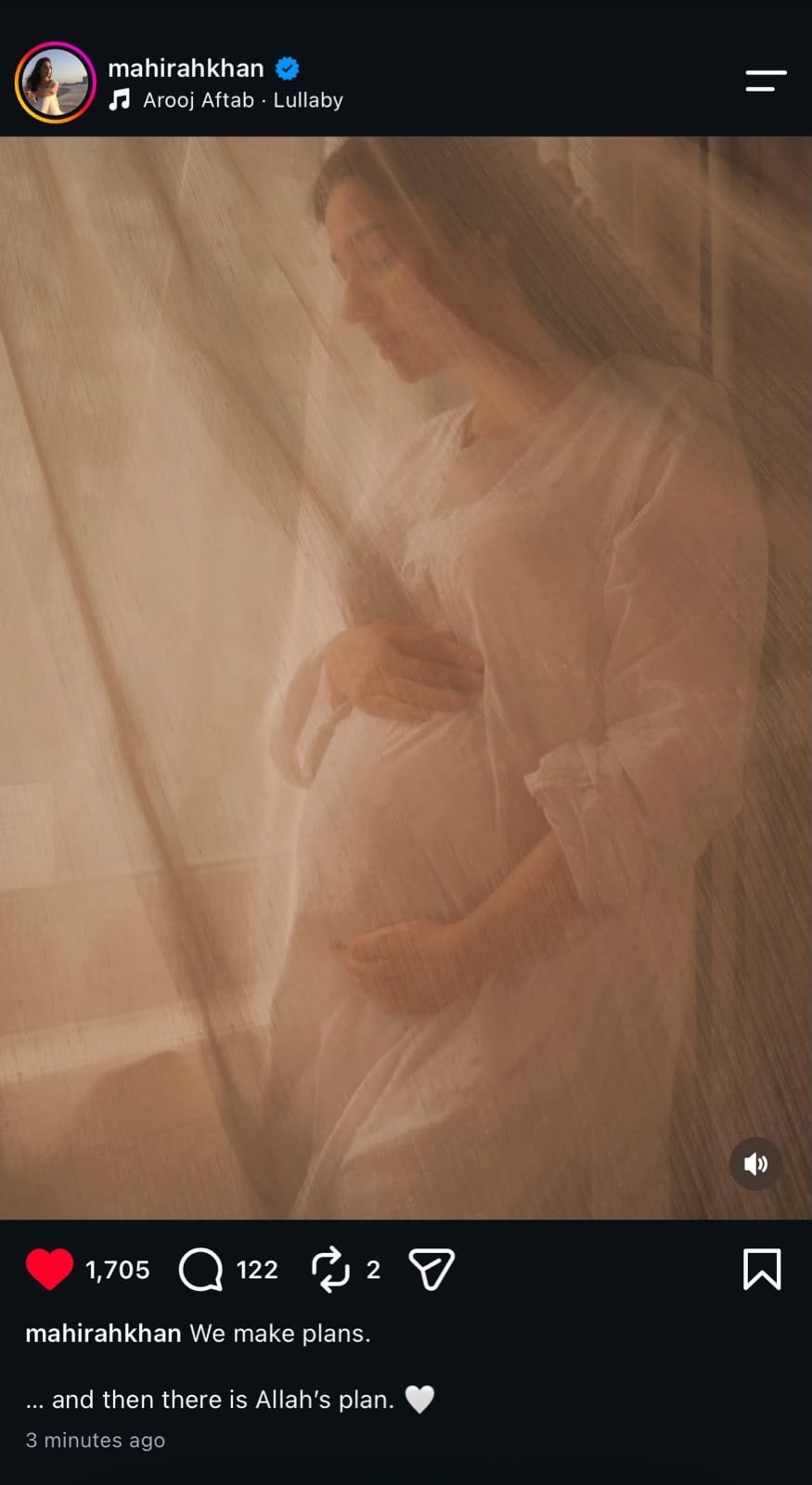
The post, however, quickly caught the attention of her fans, who started sending love and congratulations to the star.
However, the Humsafar drama actress is already a mother to her son, Azlan, from her first marriage to Ali Askari.
Mahira married Askari back in 2007 and they later welcomed their son.
The couple separated and their divorce was finalised in 2016 because of some personal reasons.
Years later, the Bin Roye actress found love again with businessman Salim Karim.
The couple, moreover, got married in a beautiful ceremony in Bhurban in October 2023.
She has become an iconic star not just in Pakistan but in Bollywood as well with her iconic movie role alongside Shah Rukh Khan in Raees.
Now, Mahira’s recent post got fans celebrating her another beautiful moment in life.
About The Author