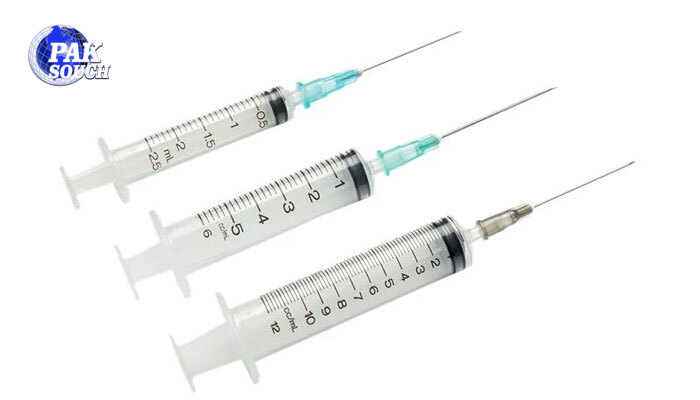
ISLAMABAD: A concerning revelation has surfaced regarding the continued availability and use of reusable syringes in Pakistan, despite an official ban aimed at preventing their circulation in the market.
According to a recent report, fake auto-disable syringes—designed to prevent reuse after a single injection—are still being sold widely. These counterfeit products are reportedly being rebranded and packaged with “auto-disable” labels, even though they can be used multiple times, posing serious public health risks.
The report further highlights that such syringes have been recovered from various cities including Peshawar, Multan, and Jacobabad, indicating that the issue is not confined to a single region but is instead spread across multiple parts of the country.
More alarming details suggest that in the Gadoon Amazai Industrial Zone of Khyber Pakhtunkhwa, a significant portion of reusable or substandard syringes is allegedly being manufactured and distributed. This raises serious concerns about regulatory oversight in industrial production units linked to medical supplies.
Health experts warn that the reuse of syringes—even unintentionally through counterfeit “safety” products—can significantly undermine infection control systems. Such practices increase the risk of transmitting dangerous diseases, including hepatitis B, hepatitis C, and HIV, especially in areas with unregulated medical practices.
Reports also indicate that unqualified practitioners, often referred to as “quacks,” are using the same syringe multiple times for injections, sometimes charging as little as 50 to 100 rupees per procedure. This unsafe practice has further intensified public health concerns, particularly in rural and low-income communities.
Medical specialists stress that auto-disable syringes were introduced specifically to eliminate the possibility of reuse and reduce the spread of infectious diseases. However, the presence of counterfeit versions is effectively neutralizing these safety measures.
The Drug Regulatory Authority of Pakistan (DRAP) has acknowledged the issue, stating that strict action will be taken against those involved in the illegal production and sale of reusable or fake safety syringes. Officials have also indicated plans to intensify market inspections and enforcement operations.
Despite regulatory efforts, enforcement challenges and weak monitoring mechanisms continue to allow such products to circulate in the healthcare supply chain. Experts argue that stronger coordination between regulatory bodies, law enforcement, and healthcare providers is essential to address the issue effectively.
The situation highlights a critical gap in Pakistan’s healthcare safety system, where counterfeit medical supplies not only violate regulations but also directly endanger public health. Authorities are now under increasing pressure to ensure stricter implementation of bans and eliminate unsafe medical practices from the system.