

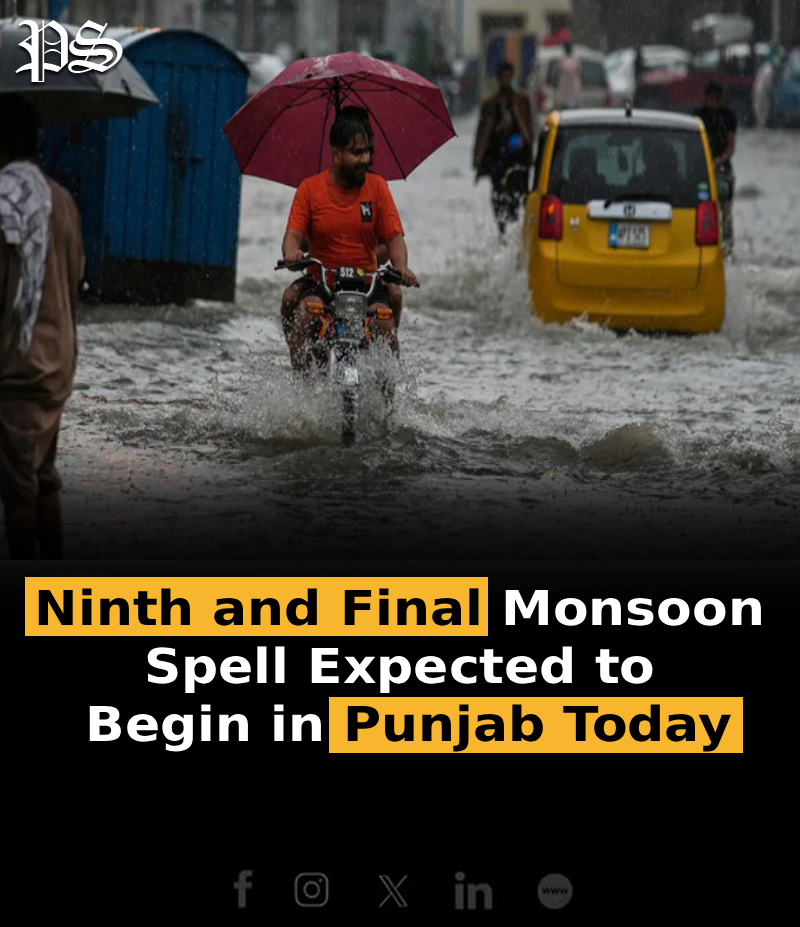
LAHORE: The ninth and final spell of monsoon rains is expected to begin in Punjab today, with rainfall forecast across most districts of the province from September 12 to September 17, according to the Provincial Disaster Management Authority (PDMA).
A spokesperson for the PDMA said the latest monsoon system could bring rain to several parts of Punjab over the next few days. Authorities have issued forecasts for a wide range of districts and urged residents to remain alert to possible weather-related risks.
According to the forecast, Rawalpindi, Jhelum, Chakwal, Talagang and Attock are expected to receive rainfall. Several other districts in central and northern Punjab may also experience showers during the period.
These areas include Lahore, Sialkot, Sheikhupura, Narowal, Mandi Bahauddin, Gujranwala, Gujrat, Wazirabad, Hafizabad, Kasur, Okara, Nankana Sahib, Sargodha, Khushab and Noorpur Thal.
Rain is also expected in parts of southern and western Punjab. The affected areas may include Mianwali, Faisalabad, Jhang, Toba Tek Singh, Layyah, Bhakkar, Sahiwal, Dera Ghazi Khan and Multan.
The PDMA has warned that the weather system could create additional risks in mountainous areas. Murree, the Galiyat region and other hilly areas may face the possibility of landslides following rainfall.
Authorities have particularly expressed concern over urban flooding in major cities. According to the Director General of the PDMA, Rawalpindi, Lahore, Gujranwala and Faisalabad face a risk of urban flooding during periods of heavy rainfall.
Urban flooding can occur when intense rainfall overwhelms drainage systems, resulting in the accumulation of water on roads and in low-lying areas. Previous heavy monsoon spells have caused significant disruption in several urban centres across Punjab, affecting traffic and daily activities.
The latest spell is expected to continue until September 17, although rainfall intensity may vary from one district to another. Some areas could receive intermittent showers, while others may experience heavier rainfall accompanied by strong winds and thunderstorms.
The PDMA has advised relevant departments and local administrations to remain prepared for possible emergencies. Municipal authorities in vulnerable cities are expected to monitor drainage systems and take precautionary measures in areas that are prone to water accumulation.
Residents in low-lying areas have also been advised to exercise caution, particularly during periods of heavy rain. People travelling on roads should remain alert because standing water can reduce visibility and create hazardous driving conditions.
The warning is especially important for residents and tourists in mountainous areas. Landslides can occur without much warning after heavy rainfall, potentially blocking roads and disrupting transportation.
The provincial authorities are also expected to maintain coordination among emergency services, district administrations and other relevant departments during the forecast period.
The anticipated spell comes as Punjab continues to experience monsoon-related weather activity. The PDMA has described the upcoming system as the ninth and final monsoon spell of the season.
With rainfall expected in most parts of the province, residents are being encouraged to follow official weather updates and take necessary precautions. People should avoid unnecessary travel during severe weather and stay away from exposed areas during thunderstorms.
Motorists are advised to drive carefully on wet roads and avoid crossing flooded or waterlogged routes. Residents should also remain cautious around electrical installations and damaged infrastructure during and after heavy rainfall.
In urban areas, the possibility of flooding remains one of the major concerns. Lahore, Rawalpindi, Gujranwala and Faisalabad are among the cities specifically identified by the PDMA as being at risk of urban flooding.
Meanwhile, the possibility of landslides in Murree, Galiyat and other hilly areas adds another dimension to the weather warning. Authorities in these regions are expected to monitor vulnerable locations and respond quickly if roads or settlements are affected.
The PDMA has urged the public to remain vigilant throughout the forecast period and cooperate with local authorities in case emergency measures become necessary.
The weather system is expected to influence Punjab from September 12 through September 17, bringing rain to a broad area of the province. While the spell may provide relief from hot and humid conditions in some areas, heavy rainfall could also result in temporary disruptions.
Residents are therefore advised to remain prepared as the ninth and final monsoon spell gets underway, particularly in districts vulnerable to urban flooding, flash flooding and landslides.
About The Author