

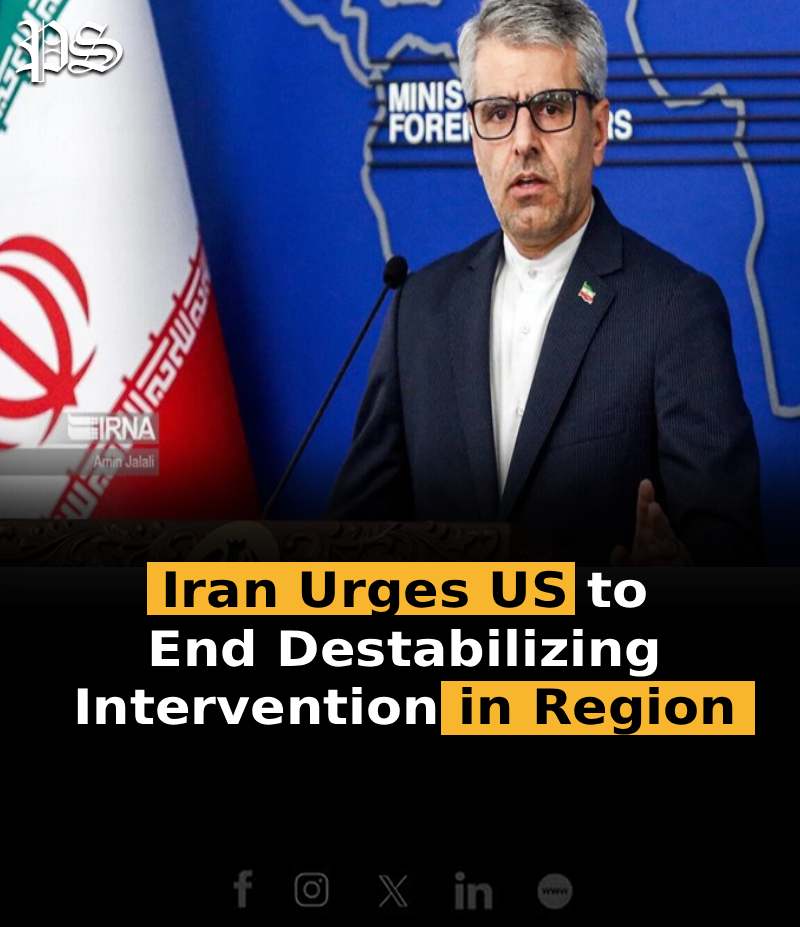
TEHRAN: Iran has called on the United States to end what it described as destabilizing intervention in the region, saying that Washington must change its approach if it genuinely wants to promote peace.
Iranian authorities also rejected allegations made by the US Secretary of State regarding Ansarullah, the Yemeni movement commonly known as the Houthis.
Iranian Foreign Ministry spokesperson Esmaeil Baghaei said Ansarullah is an independent organization that makes its own decisions and does not take orders from any other country.
“Ansarullah is an independent Yemeni organization,” Baghaei said, rejecting claims that the group operates as a proxy for Iran or receives instructions from Tehran.
According to the Iranian position, the roots of instability in the region lie in US military intervention and what Tehran described as Washington’s hegemonic policies.
Baghaei said that if the United States genuinely wanted peace, it should stop policies and interventions that contribute to instability in the region.
He argued that military pressure and external intervention could not provide a lasting solution to the conflict in Yemen.
“Peace cannot be established in Yemen through bombs and external pressure,” the Iranian spokesperson said, stressing that a sustainable settlement required political dialogue.
Baghaei called for genuine negotiations based on a roadmap agreed upon by all relevant parties. He said a political process involving the concerned sides was necessary to establish lasting peace and stability in Yemen.
Iran’s comments came in response to criticism from Washington concerning Ansarullah’s activities and its alleged links with Tehran. The Iranian government has repeatedly rejected the characterization of the Yemeni movement as an Iranian proxy.
Tehran maintains that Ansarullah is an independent Yemeni political and military organization whose decisions are made independently. Iranian officials have also argued that regional conflicts should be addressed through political solutions rather than military intervention.
The dispute reflects broader disagreements between Iran and the United States over the role of regional powers and armed groups in the Middle East.
Washington has repeatedly accused Iran of supporting armed groups across the region, while Tehran has rejected such allegations and criticized the presence and military activities of US forces in the Middle East.
The situation in Yemen remains one of the region’s major security and humanitarian challenges. The country has experienced years of conflict involving multiple political and military factions, with regional powers becoming involved in the conflict.
The Houthis have controlled significant parts of northern Yemen, including the capital, Sanaa, and have been involved in military confrontations with opponents inside Yemen as well as regional and international forces.
The group has also carried out attacks in the Red Sea and surrounding areas, linking some of its actions to the wider conflict in the Middle East. These developments have raised concerns over international shipping and regional security.
Iran has consistently called for political dialogue and an end to foreign military intervention in Yemen. Tehran argues that the Yemeni people should determine the country’s political future through an inclusive process.
Baghaei’s latest comments similarly emphasized negotiations rather than military pressure.
He said all sides should work toward a mutually agreed roadmap and engage in meaningful dialogue to establish peace.
Iran’s position contrasts sharply with the approach of the United States, which has focused on countering attacks by the Houthis and limiting their military capabilities.
The disagreement also highlights the wider strategic rivalry between Tehran and Washington. The two countries have long differed over Iran’s nuclear programme, regional alliances, sanctions and the presence of US military forces in the Middle East.
Iranian officials frequently accuse the United States of pursuing policies that increase instability, while Washington argues that Iranian support for regional armed groups contributes to insecurity.
The latest exchange of statements therefore forms part of a much broader geopolitical dispute.
Baghaei’s remarks also underline Iran’s insistence that regional problems should be resolved by countries in the region rather than through external intervention.
The Iranian Foreign Ministry has repeatedly emphasized sovereignty, national independence and dialogue as key principles for resolving regional conflicts.
The spokesperson said that military action and foreign pressure could not create sustainable peace in Yemen. Instead, he stressed the importance of negotiations involving the relevant parties and based on an agreed political roadmap.
Iran’s call comes amid continuing international efforts to reduce tensions in the Middle East and prevent regional conflicts from escalating further.
A lasting political settlement in Yemen would require addressing the country’s internal political divisions as well as wider regional disagreements.
The Iranian government believes that an inclusive dialogue process could provide a path toward stability and reduce the humanitarian and security consequences of the prolonged conflict.
For Tehran, ending what it describes as foreign interference is also an essential part of achieving lasting peace.
The latest statement from Baghaei therefore combines a rejection of US accusations against Ansarullah with a broader call for Washington to reconsider its regional policies.
Iran maintains that genuine peace cannot be achieved through military pressure, airstrikes or external political demands.
Instead, it argues that diplomacy, dialogue and a mutually accepted political roadmap are necessary to resolve the Yemen crisis.
The exchange between Tehran and Washington is likely to remain part of the broader debate over the future of Yemen and the balance of power in the Middle East, particularly as international efforts continue to prevent further escalation in the region.
About The Author