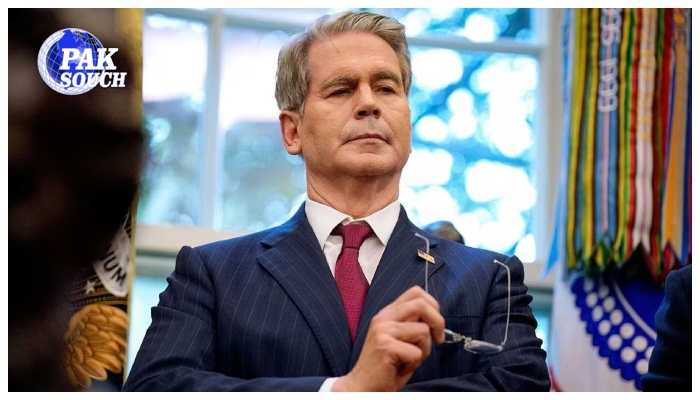
U.S. Treasury Secretary Scott Bessent has claimed that several Gulf allies have approached the United States seeking currency swap arrangements, a financial mechanism typically used to ensure liquidity and stability during uncertain economic conditions.
Speaking during a U.S. Senate hearing, Bessent stated that multiple countries in the Gulf region have expressed interest in accessing such facilities. According to U.S. media reports, the United Arab Emirates (UAE) is among the nations that have reportedly requested a currency swap line.
A currency swap agreement allows a country to temporarily access U.S. dollars in exchange for its local currency, helping stabilize financial markets, support trade, and manage short-term liquidity needs. These arrangements are often used during periods of economic volatility or global financial stress.
Bessent’s remarks have drawn attention, particularly in light of recent statements from UAE officials asserting that the country does not require external financial assistance. Analysts note that requesting a currency swap does not necessarily indicate economic weakness, as such agreements are often precautionary tools used to strengthen financial resilience and deepen bilateral cooperation.
The potential involvement of Gulf economies in such arrangements highlights the ongoing importance of the U.S. dollar in global finance. Even economically strong nations may seek access to dollar liquidity to safeguard against market fluctuations or to facilitate international trade more efficiently.
Experts suggest that currency swap lines can also serve strategic purposes, strengthening financial ties between countries and reinforcing economic partnerships. For the United States, extending such facilities can enhance its influence in global financial systems while supporting allied economies.
However, no official confirmation has been issued by Gulf countries regarding specific requests, and details about the scope, timing, or conditions of any potential agreements remain unclear. Diplomatic and financial discussions of this nature are often conducted quietly and finalized only after extensive negotiations.
The development comes amid broader global economic uncertainty, where central banks and governments are exploring tools to maintain stability and confidence in financial systems.