

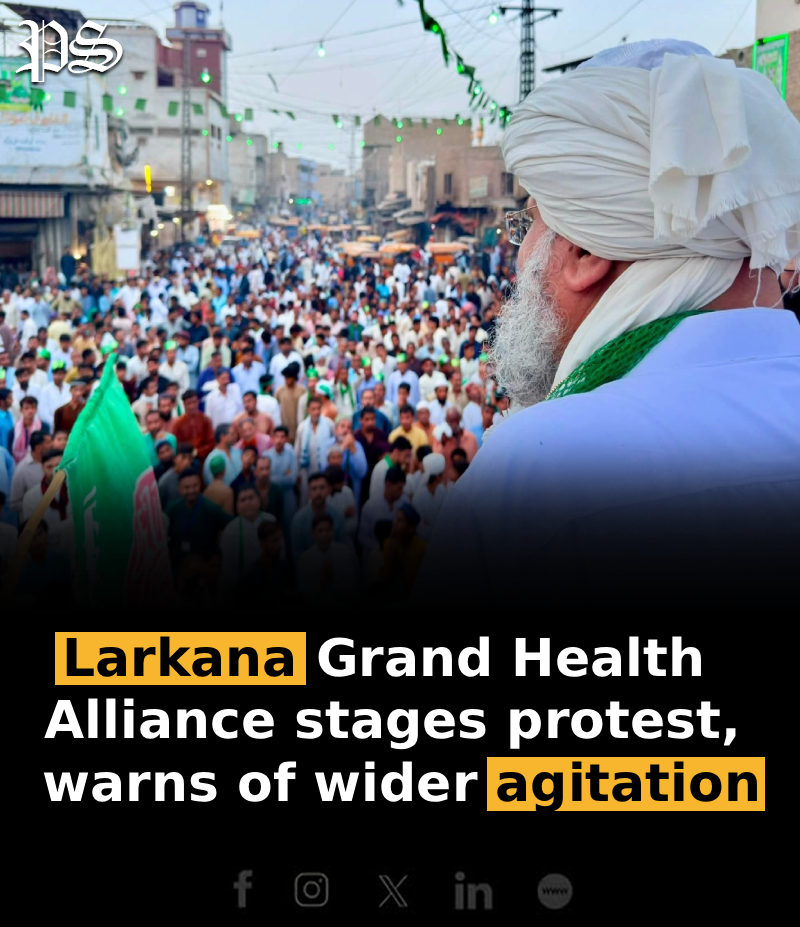
LARKANA (Bureau Report): The Grand Health Alliance staged a protest rally in Larkana on Thursday, demanding acceptance of its long-standing demands and opposing proposed changes in the management and privatization of public healthcare institutions.
The rally started from the Civil Hospital and passed through various roads before reaching the Larkana Press Club, where healthcare workers staged a sit-in and raised slogans. Doctors, nurses, paramedical staff and other employees of the health department participated in large numbers, carrying red flags and banners.
Speaking to the media and addressing a press conference at the Larkana Press Club, Grand Health Alliance Convener Dr Roshan Chandio, Pakistan Paramedical Staff Association Sindh President Shahi Khan Jagirani, Muhammad Sharif Palari, Dr Fazal Muhammad Khoso, Yar Ali Domki and others said the health sector was directly linked to the lives and welfare of the people and should therefore be among the government’s top priorities.
They demanded that government-run health institutions should not be handed over to PPHI or other private organizations. Instead, they said, the government should increase facilities, manpower and financial resources at public hospitals so that citizens could receive quality medical treatment in a timely manner.
The protesters said the healthcare sector was already facing serious challenges, including shortages of staff and resources, security concerns and administrative problems. They urged the government to take practical and permanent measures instead of ignoring these issues.
The health workers also expressed concern over the proposed privatization of healthcare institutions and the possible transfer of administrative affairs of government hospitals to the bureaucracy. They maintained that decisions concerning public healthcare should prioritize patients and healthcare professionals rather than administrative or commercial considerations.
The Grand Health Alliance leaders emphasized that an effective healthcare system could not be established without ensuring the safety and legitimate rights of doctors, nurses, paramedics and other healthcare workers. They said healthcare workers frequently faced security threats while performing their duties and demanded foolproof security arrangements at all government health facilities.
They also called for an appropriate increase in the salaries and allowances of doctors, paramedics and nurses. According to the protesters, better remuneration and working conditions were essential to retaining experienced professionals and improving the quality of public healthcare services.
Another major demand concerned the appointment of senior and experienced doctors to administrative positions. The alliance leaders said competent doctors belonging to the general and management cadres should be appointed to administrative posts on the basis of experience and professional ability.
They further demanded an immediate resolution of the long-standing issues faced by paramedical staff, particularly the implementation of an appropriate service structure and timely promotions. They said employees had repeatedly raised these matters but had not received a permanent solution.
The protesters maintained that strengthening government hospitals would ultimately benefit ordinary citizens, particularly those who could not afford expensive treatment in private hospitals. They urged the authorities to increase investment in public healthcare rather than shifting responsibility to private organizations.
The alliance leaders said their movement was peaceful and constitutional and would continue until their legitimate demands were accepted. They warned that if the government failed to respond positively, protest activities already underway in different divisions of Sindh would be further organized and intensified.
They said the next phase of the movement could include wider demonstrations across the province, adding that healthcare workers would continue raising their voice for the protection of public healthcare institutions and the rights of their colleagues.
The protesters appealed to the Sindh government and relevant authorities to take immediate notice of their demands, hold negotiations with representatives of the Grand Health Alliance and take concrete steps to resolve the problems confronting healthcare workers and public hospitals.
They reiterated that improving government healthcare institutions, protecting medical staff and providing adequate resources were necessary not only for the welfare of healthcare workers but also for ensuring better and affordable medical services for the people of Sindh.
About The Author