


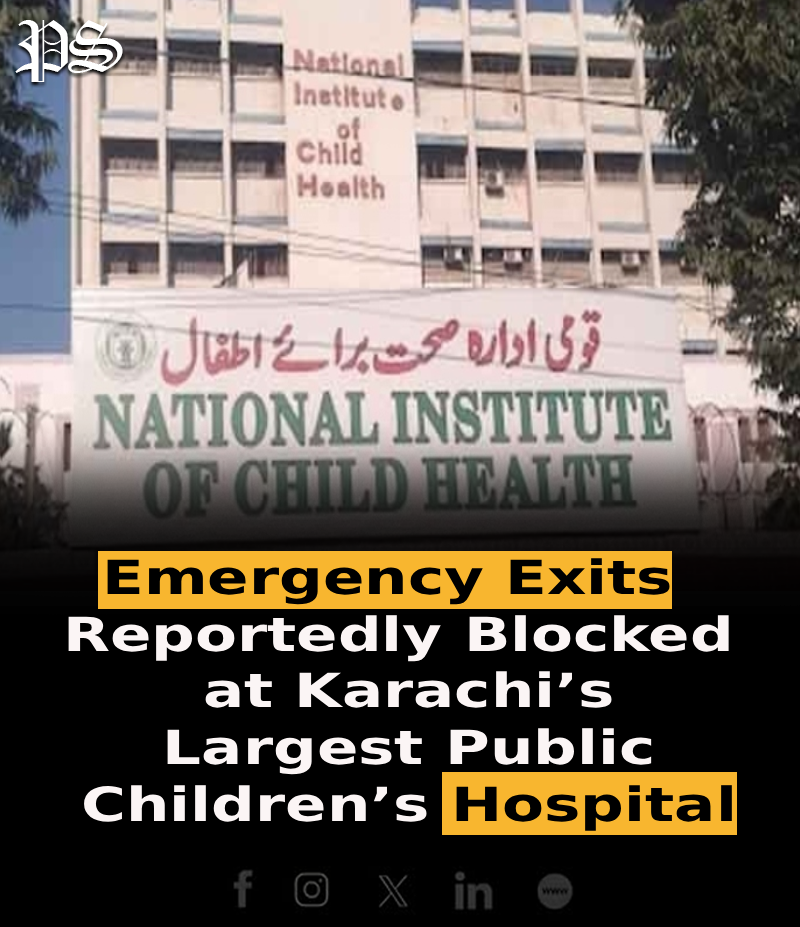
KARACHI — Serious concerns have emerged over fire safety arrangements at the National Institute of Child Health (NICH), one of Pakistan’s largest public-sector hospitals dedicated to the treatment of children.
According to sources, several emergency exits at the hospital have been found closed or inaccessible, raising concerns about the ability of patients, attendants and hospital staff to evacuate safely in the event of a fire or other emergency.
Sources also claim that a number of fire extinguishers installed at NICH are not functioning properly. The equipment has reportedly not undergone proper testing or monitoring for an extended period, raising further questions about the hospital’s emergency preparedness.
The reported condition of the firefighting equipment is particularly concerning because hospitals accommodate large numbers of patients who may be unable to evacuate without assistance. Children, newborns and critically ill patients are especially vulnerable during emergencies because they often depend entirely on medical staff and caregivers for evacuation.
Sources further said that NICH does not have an effective fire alarm system capable of providing adequate warning throughout the facility. A reliable alarm system is considered a critical component of hospital fire safety because early detection can give staff valuable time to evacuate patients and control a fire before it spreads.
Another major concern is the alleged lack of fire safety training among hospital employees. According to sources, doctors, nurses and other staff members have not received fire safety drills or training during the past 10 years.
Regular fire drills are particularly important in hospitals because evacuation procedures are more complicated than in ordinary buildings. Staff must know how to respond quickly, identify emergency exits and safely move patients who may be confined to beds, dependent on medical equipment or otherwise unable to walk.
The reported safety deficiencies are even more alarming given NICH’s history. According to the information provided, the hospital has experienced two major fire incidents during the past six years.
The recurrence of significant fire incidents makes the reported lack of adequate prevention and response measures a matter of serious concern. Questions may now arise over whether previous incidents resulted in comprehensive safety reviews and whether recommendations from those reviews were implemented.
Fire safety experts generally emphasize that hospitals require a combination of functioning extinguishers, accessible emergency exits, fire detection and alarm systems, clearly marked evacuation routes, emergency lighting and regular staff training.
The reported closure of emergency exits could pose an immediate risk during a fire. Blocked or inaccessible exits can create bottlenecks, delay evacuation and potentially expose patients and staff to smoke and flames.
The allegations also raise questions about regulatory oversight. Healthcare facilities are expected to comply with safety standards designed to protect patients and employees, particularly in high-risk areas such as pediatric wards, intensive-care units and operating theatres.
Given the vulnerability of children receiving treatment at NICH, authorities may need to conduct an urgent and comprehensive inspection of the hospital’s fire safety arrangements.
Such an inspection should assess the condition and testing records of all fire extinguishers, the functionality of alarm and detection systems, accessibility of emergency exits, evacuation routes, emergency lighting and the training records of doctors, nurses and other employees.
The hospital could also benefit from regular, documented fire drills involving staff from different departments. Training should include procedures for evacuating children and critically ill patients, who may require additional personnel and specialized equipment.
The reported situation at NICH highlights a broader issue concerning safety standards in public hospitals. Fire safety cannot be treated merely as a regulatory requirement; in a healthcare environment, effective preparedness can determine whether patients and staff are able to escape during a life-threatening emergency.
With two major fires reportedly occurring at NICH over the past six years, the latest allegations have increased the urgency for authorities to verify the hospital’s current safety arrangements and take immediate corrective action wherever deficiencies are found.
About The Author