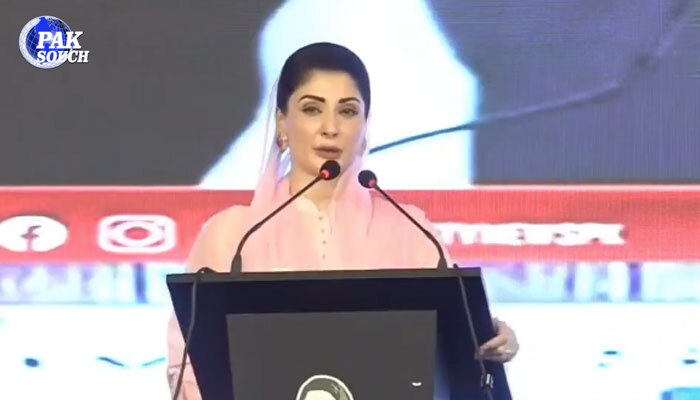
Punjab Chief Minister Maryam Nawaz has said that as a Pakistani she feels deep regret over what she described as the deteriorating condition of children in Khyber Pakhtunkhwa, claiming they are “living in the Stone Age.” She made these remarks while addressing students at the University of Gujrat, where she sharply criticized the province’s governance and drew comparisons with development initiatives in Punjab.
During her speech, Maryam Nawaz said that beyond Attock lies Khyber Pakhtunkhwa, and alleged that children there have “weapons in their hands and abuse in their minds.” She claimed that 13 years have passed in the province without meaningful progress and argued that people there do not even recognize what development looks like. Referring to claims by the provincial leadership that they are spreading awareness, she questioned what kind of awareness was being promoted.
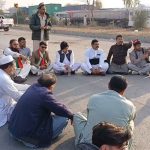
In contrast, she highlighted Punjab’s efforts in technical education and youth empowerment. She said that hundreds of thousands of children in Punjab are receiving technical training and preparing themselves for modern careers. “On one side there is talent and opportunity, on the other there is chaos,” she remarked, adding that such a situation is not something to celebrate. She emphasized that she considers herself a Pakistani first and a Punjabi later, and stated that blocking routes in Khyber Pakhtunkhwa does not significantly impact Punjab’s business activities.
The chief minister stressed that unrest, broken roads, and misbehavior cannot be the destiny of children in Khyber Pakhtunkhwa. She said it deeply saddens her that many people in the province allegedly do not understand the importance of education in the modern era. Addressing the people of Khyber Pakhtunkhwa as her brothers, she urged them to look toward Punjab’s progress and prioritize development and learning for their children.
Maryam Nawaz also spoke about a political opponent currently imprisoned at Adiala Jail, without naming him directly. She said that despite political rivalry, she has never wished harm or deprivation upon him. “If someone is ill, we pray for their recovery. No one wants harm for anyone,” she stated. She added that whatever medical treatment or facilities are required are being provided, and she has never called for denying food or other basic necessities. According to her, if the prisoner receives good meals and medical care, she has no objection.
She urged political workers and leaders to focus on performance, policy, and service delivery rather than personal attacks. She said politics should rise above personal grudges, and acts such as unrest, arson, and violent protests should be rejected. Differences of opinion are natural in politics, she said, but personal hostility and chaos should be “thrown out of Pakistan.”
Turning to youth initiatives, Maryam Nawaz said Punjab’s Generation Z is preparing to conquer the world. She described laptop distribution ceremonies not as routine government events but as celebrations similar to a mother rejoicing in her children’s achievements. According to her, Punjab is investing all available resources in the education and empowerment of its sons and daughters. She expressed satisfaction that the province’s youth are on the right path and receiving their due rights and opportunities.
Reflecting on her personal experiences, the chief minister said that power is temporary and constantly shifting. “Yesterday we were in jail and had no power; today I have authority granted by Allah, and tomorrow it may belong to someone else,” she said. She described power as something that slips away like sand and emphasized that it is accountable not only to the public but also to God.
She recalled that when her father was imprisoned and fell ill, his illness was mocked by opponents. Speaking emotionally about her late mother, she said that when her mother passed away, her father remarked that in this country a person has to die to prove their innocence. She shared that she received the news of her mother’s death while she herself was in jail, and her father came to her cell to inform her.
Maryam Nawaz further stated that despite political differences, neither she nor her family members ever sought to deny basic facilities to their opponents. She mentioned that even during her own imprisonment, she did not demand that others be deprived of television, air conditioning, or proper food. She noted that at one point there was no dedicated women’s jail facility under the anti-corruption authority, and a separate room had to be arranged for her detention.