

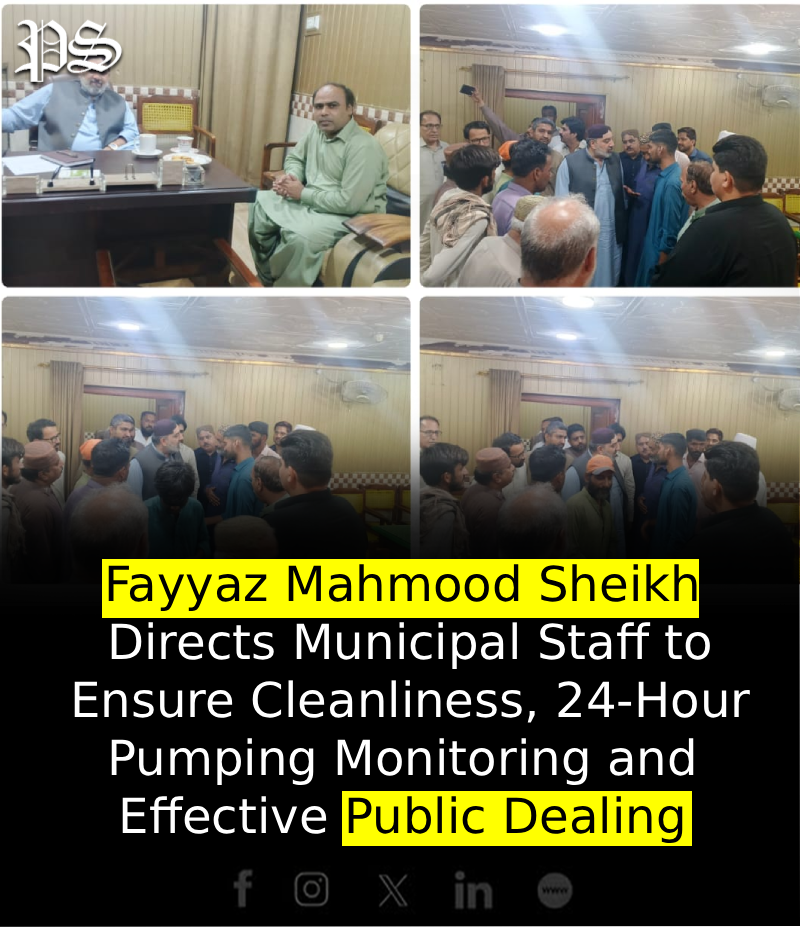
SHIKARPUR — August 17, 2026: Pakistan Peoples Party leader and Chairman Municipal Committee Shikarpur Fayyaz Mahmood Sheikh chaired an important meeting at the Municipal Committee office to review the performance of municipal departments and the overall cleanliness and sanitation situation in the city.
The meeting was attended by Chief Municipal Officer Abid Latif Rajput, officials of the Encroachment Department, focal persons, and heads of various municipal departments. Several agenda items related to municipal affairs, sanitation, public services, and departmental performance were presented and discussed. After detailed consideration, the relevant matters were approved and necessary directions were issued to the concerned departments.
During the meeting, Chairman Fayyaz Mahmood Sheikh reviewed the performance of the municipal staff and emphasized the need for improved cleanliness and sanitation across Shikarpur. He directed the concerned officials to ensure that sanitation operations are carried out effectively and that municipal staff remain active in the field.
The chairman gave special instructions regarding the monitoring of pumping arrangements, directing the relevant staff to ensure 24-hour supervision of pumping operations. He stressed that pumping facilities must be monitored continuously and that any problem affecting drainage and public services should be addressed immediately.
Fayyaz Mahmood Sheikh also emphasized the importance of responsible and respectful public dealing. He directed municipal employees and officials to listen carefully to citizens’ complaints and make every possible effort to resolve their problems promptly. He stated that there would be no compromise on public dealing and that officials must perform their responsibilities with dedication.
The chairman further directed all departmental heads to maintain coordination and ensure proper implementation of the decisions taken during the meeting. He said that municipal departments should work efficiently to improve services and provide relief to the citizens of Shikarpur.
After the official meeting, Chairman Fayyaz Mahmood Sheikh held meetings with members of the public at his Municipal Committee office. Citizens approached him with various problems and complaints. The chairman listened to their concerns and issued instructions to the relevant officials to take necessary action and resolve their issues at the earliest possible opportunity.
He reiterated that the Municipal Committee’s priority is to provide better municipal services, improve cleanliness, ensure effective drainage and pumping arrangements, and facilitate citizens through responsive public service.
The meeting concluded with directions to all concerned departments to remain vigilant, improve their performance, and ensure timely implementation of the decisions taken.
Shahid Gola
Media Coordinator, Sheikh House Shikarpur
About The Author