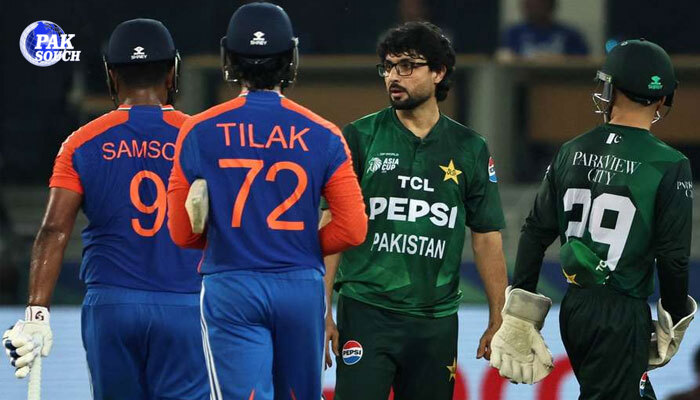
Karachi / New Delhi: Pakistan’s decision to not play against India in the ICC T20 World Cup has triggered a wave of reporting in the Indian media, which is suggesting that Pakistan could face sanctions and financial penalties, and may even risk participation in future tournaments.
According to multiple Indian media outlets, the boycott has prompted the International Cricket Council (ICC) to schedule a virtual board meeting today to discuss the situation. The meeting is expected to determine whether Pakistan will be allowed to continue participating in the ongoing tournament.
Reports claim that the Pakistan Cricket Board (PCB) has not formally informed the ICC about its decision not to face India. The ICC meeting, therefore, will be pivotal in deciding whether Pakistan can remain in the T20 World Cup despite its boycott.
Indian media outlets allege that by refusing to play against India, Pakistan could face a range of consequences, including possible restrictions in future ICC tournaments. Some reports suggest that Pakistan could also face financial penalties, broadcasting claims, and limitations on participating foreign players in the Pakistan Super League (PSL).
The media coverage emphasizes that top ICC member countries may be reluctant to engage in bilateral series with Pakistan if the boycott is upheld, potentially impacting Pakistan’s international cricket calendar.
Specifically, Indian media reports claim that:
Pakistan may face financial fines for not honoring scheduled fixtures.
PCB may be required to compensate broadcasters for revenue losses due to the missed India match.
Participation of foreign players in domestic leagues like the PSL may be restricted.
Future bilateral series with top ICC members could be affected.
Meanwhile, Pakistani authorities have stated that the national cricket team has been allowed to participate in the T20 World Cup. However, the government of Pakistan decided on February 15 that the team would not face India in their scheduled match.
The T20 World Cup is being jointly hosted by India and Sri Lanka from February 6 to March 8. Pakistan’s boycott decision comes amid ongoing political tensions between the two countries, and the issue has become a point of focus in the cricketing and diplomatic spheres alike.
Experts say that the ICC’s regulations require member boards to honor scheduled fixtures, and failure to do so can trigger penalties or disciplinary measures. However, no formal sanctions have yet been announced, and the ICC is expected to deliberate on the matter in today’s virtual meeting.
The PCB has not issued a detailed public statement regarding its decision or any official communication with the ICC, adding uncertainty to the situation. Analysts suggest that the final outcome could influence Pakistan’s participation in the tournament as well as its international cricket relations in the coming months.
While the Indian media has largely framed the situation as a potential crisis for Pakistan cricket, Pakistani officials have emphasized that the decision is in line with the government’s directives and reflects broader national considerations.
Cricket fans across the region are closely watching developments, as the boycott has stirred both political and sporting debates. Social media platforms have seen widespread discussion on the implications for players, broadcasters, and bilateral cricketing ties.
The upcoming ICC board meeting is expected to clarify whether Pakistan will continue in the tournament without playing India, and whether any financial or regulatory sanctions will be imposed. Until then, both the cricketing community and political analysts remain alert to the potential consequences of Pakistan’s boycott.