THE HAGUE: The International Court of Arbitration (ICA) has directed India to submit detailed records related to its hydropower projects constructed on rivers allocated to Pakistan under the Indus Waters Treaty, marking a significant development in the long-running water dispute between the two neighboring countries.
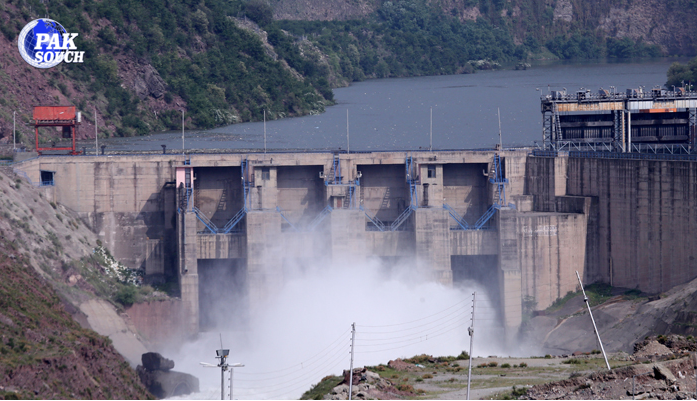
According to the court’s order issued in The Hague, India has been instructed to submit operational log books of the Baglihar and Kishanganga hydropower projects by February 9, 2026. The court further ruled that if India fails to provide the required records, it must formally explain the reasons for non-compliance.
The arbitration court stated that the pondage log books are directly relevant and critical to the case. These records, the court noted, would assist in determining the maximum permissible pondage under the provisions of the Indus Waters Treaty. The data is considered essential for assessing whether the projects are being operated in compliance with treaty obligations.
In its ruling, the court emphasized that interim relief can only be granted by the arbitration court itself, clarifying that a neutral expert does not have the authority to issue interim measures. This clarification holds importance in the broader legal framework of disputes under the Indus Waters Treaty, where both arbitration courts and neutral experts play defined but distinct roles.
The court also directed Pakistan to clarify by February 2, 2026, which specific documents it seeks from India as part of the proceedings. This step is intended to streamline the legal process and ensure that the arbitration focuses on clearly defined and relevant material.
According to the court’s schedule, hearings for the second phase of the case on merits will be held on February 2 and 3, 2026, at The Hague. These hearings are expected to address substantive legal and technical questions surrounding the design, operation, and compliance of the disputed hydropower projects.
Sources familiar with the matter said that a high-level Pakistani delegation, led by the Attorney General of Pakistan, is scheduled to depart for The Hague on Saturday. The delegation will include Pakistan’s Indus Waters Commissioner, Syed Mehr Ali Shah, along with Pakistan’s ambassador to the Netherlands and members of the country’s international legal team.
The presence of senior legal and technical officials underscores the importance Pakistan is placing on the case, which is widely viewed as a critical test of the enforcement mechanisms of the Indus Waters Treaty, a landmark 1960 agreement brokered by the World Bank.
According to sources, Pakistan’s position is that India has misused the hydropower-related provisions of the Indus Waters Treaty. Islamabad maintains that certain design features and operational practices of Indian hydropower projects allow excessive control over river flows, which Pakistan argues is inconsistent with treaty restrictions.
Pakistan has repeatedly expressed concern that the cumulative impact of such projects could affect downstream water availability, particularly during low-flow periods. The submission of operational log books is seen as a key step in evaluating whether India’s projects adhere to technical limits on storage and pondage.
Legal experts say the arbitration court’s order represents a procedural victory for Pakistan, as access to operational data could strengthen its case regarding treaty compliance. However, they caution that the arbitration process is complex and lengthy, with final outcomes dependent on detailed technical analysis and legal interpretation.
The Indus Waters Treaty governs the sharing of six rivers between India and Pakistan and is often cited as one of the most durable water-sharing agreements in the world. Despite several wars and prolonged political tensions between the two countries, the treaty has largely remained intact, though disputes over hydropower projects have intensified in recent years.
Observers note that the court’s emphasis on its exclusive authority to grant interim relief could have broader implications for future disputes under the treaty. It reinforces the arbitration court’s central role in adjudicating contentious issues that go beyond the scope of neutral expert determinations.
As the case moves into its next phase, both sides are expected to present detailed legal arguments supported by engineering data and treaty interpretations. The upcoming hearings in February 2026 are likely to be closely watched by policymakers, legal experts, and regional stakeholders due to the strategic importance of water security in South Asia.
The arbitration proceedings reflect ongoing efforts by Pakistan to seek legal remedies through international forums rather than bilateral escalation. Officials say Islamabad remains committed to resolving water disputes in accordance with international law and treaty mechanisms.