A devastating train accident in southern Spain has claimed the lives of at least 21 people and left more than 100 others injured, according to international media reports. The tragic incident has shocked the country and prompted authorities to suspend train operations in the affected area while a full investigation is underway.
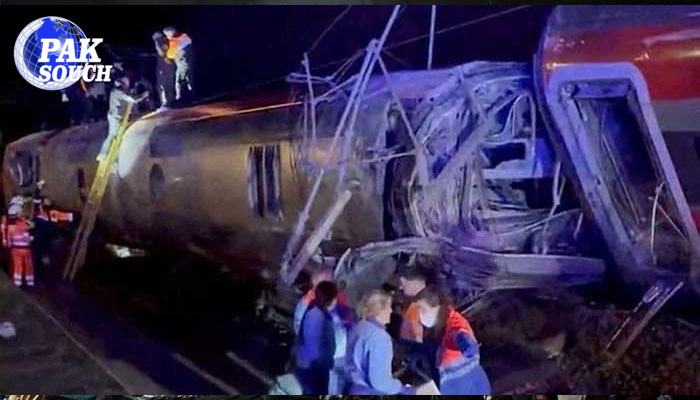
According to the British news agency Reuters, the accident occurred when a high-speed passenger train derailed and then collided head-on with another train coming from the opposite direction. The force of the collision was so severe that the second train also derailed, causing extensive damage to both trains and resulting in a high number of casualties.
Officials confirmed that 21 people lost their lives in the crash. Among the injured, more than 100 passengers sustained various injuries, with at least 21 reported to be in critical condition. Emergency services rushed to the scene immediately after the accident, launching large-scale rescue and medical operations to assist the victims and transport the injured to nearby hospitals.
Authorities stated that the driver of the high-speed train traveling from Madrid to Huelva was also among those killed in the crash. The loss of the train driver has added to the tragedy and raised further questions about the circumstances leading to the derailment and subsequent collision.
At the time of the accident, more than 300 passengers were traveling aboard one of the trains, while the second train was carrying approximately 100 passengers. The high number of people on board both trains contributed to the scale of the disaster, making it one of the deadliest rail accidents in Spain in recent years.
Eyewitnesses described scenes of chaos and devastation following the collision. Train carriages were reportedly twisted and severely damaged, with debris scattered across the tracks. Passengers who survived the crash said they heard a loud explosion-like sound as the trains collided, followed by screams and panic. Many were trapped inside damaged carriages and had to be rescued by emergency responders.
Local residents and first responders were among the first to arrive at the site, assisting passengers and helping rescue teams in pulling injured people from the wreckage. Firefighters, paramedics, police, and civil protection units worked together for hours to stabilize the scene, provide first aid, and ensure that all passengers were accounted for.
Spanish authorities temporarily suspended train operations in the affected region following the crash to allow rescue work and investigation teams to operate safely. Rail services connecting several cities in southern Spain were disrupted, causing delays and cancellations. Passengers were advised to seek alternative transportation while officials assessed damage to the rail infrastructure.
The Spanish government has expressed deep sorrow over the loss of lives and extended condolences to the families of the victims. Senior officials stated that all necessary resources have been mobilized to support rescue efforts and provide medical care to the injured. They also assured the public that a transparent and thorough investigation would be conducted to determine the cause of the accident.
Transport authorities have not yet confirmed what caused the high-speed train to derail. However, investigators are examining several possibilities, including mechanical failure, track conditions, signaling issues, or human error. Data from the trains’ onboard recording systems and signaling equipment is expected to play a crucial role in the investigation.
Spain has one of Europe’s most extensive and modern high-speed rail networks, and train travel is generally considered safe. However, this tragic incident has reignited concerns about rail safety and infrastructure maintenance, particularly on busy routes connecting major cities.
Rail safety experts have emphasized the importance of identifying the root cause of the derailment to prevent similar accidents in the future. They note that collisions involving high-speed trains are rare but often result in severe consequences due to the speed and momentum involved.
Hospitals in nearby cities were placed on emergency alert following the accident to accommodate the large number of injured passengers. Medical staff worked throughout the night to treat burn injuries, fractures, and trauma sustained in the crash. Authorities said that psychological support is also being provided to survivors and families affected by the tragedy.
As investigations continue, flags were lowered in parts of the region as a mark of mourning, and memorial gatherings were held to honor those who lost their lives. Messages of sympathy have poured in from across Spain and from international leaders, expressing solidarity with the Spanish people during this difficult time.
The train crash has left the nation in grief and raised urgent questions about railway safety and emergency preparedness. While rescue operations have now concluded, the focus has shifted to accountability, support for victims, and measures to ensure such a disaster does not happen again.