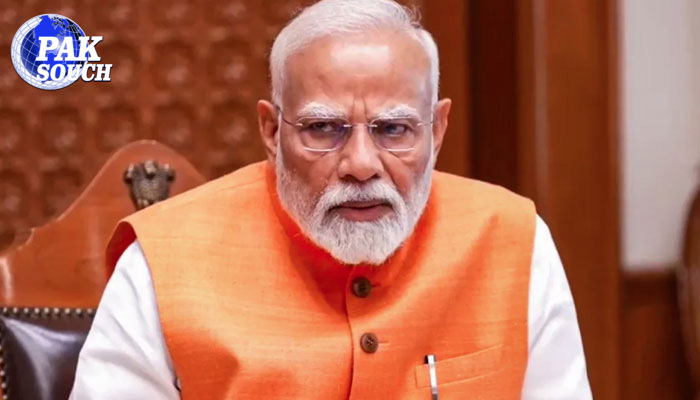
Indian Prime Minister Narendra Modi is facing growing criticism at home following India’s effective withdrawal from Iran’s strategically important Chabahar Port, a move that has sparked sharp reactions from opposition parties and political analysts. The decision, linked to the reimposition of US sanctions on Iran, is being portrayed by critics as a major diplomatic and strategic setback for India.
India’s main opposition party, the Congress, has launched a strong attack on Prime Minister Modi over the issue, accusing him of surrendering India’s national interests under pressure from the United States. The party released a video criticizing Modi’s stance, with the caption stating, “Narendra once again surrendered before Trump.” The video and accompanying statements have gained traction on Indian social media, fueling debate over India’s foreign policy independence.
In its criticism, the Congress party said that Prime Minister Modi, who had earlier presented the Chabahar Port agreement as a major diplomatic success, is now maintaining silence over relinquishing control of the port. “It is unfortunate that Modi bowed before Trump and caused damage to the country’s long-term interests,” the party said, arguing that the withdrawal undermines India’s regional influence and economic ambitions.
Chabahar Port, located on Iran’s southeastern coast, holds immense strategic importance for India. It provides New Delhi with a vital trade route to Afghanistan and Central Asia while bypassing Pakistan, making it a cornerstone of India’s regional connectivity strategy. In 2024, India had formally taken over the management of the port for a 10-year period, a move that was widely celebrated by the Modi government as a diplomatic breakthrough and a counterbalance to China’s growing influence in the region.
However, the situation changed following the reimposition of US sanctions on Iran. Under renewed American pressure, India has now effectively disengaged from the operational management of Chabahar Port. While New Delhi has not issued an elaborate public explanation, reports indicate that the decision was taken to avoid potential economic and diplomatic repercussions from Washington.
Political opponents argue that this move reflects a lack of strategic autonomy in India’s foreign policy. The Congress party has claimed that India’s withdrawal exposes the gap between the Modi government’s rhetoric of an independent and strong foreign policy and the reality of succumbing to external pressure. According to opposition leaders, the decision weakens India’s standing as a regional power capable of pursuing its interests despite global pressures.
The issue has also sparked debate among Indian foreign policy experts. Some analysts believe that withdrawing from Chabahar could have long-term consequences for India’s access to Central Asia and its role in regional trade and connectivity projects. They argue that India invested years of diplomatic effort and financial resources into the port, and stepping back now could erode trust with Iran and other regional partners.
It is worth noting that before the sanctions came into force, India had already transferred its committed investment of approximately $120 million to Iran as part of the Chabahar agreement. With India stepping aside, Iran is now free to utilize this capital independently to continue port operations and development without Indian involvement. This development has further fueled criticism, with opponents questioning whether India will derive any tangible benefit from its financial investment.
Supporters of the Modi government, however, defend the decision as a pragmatic response to geopolitical realities. They argue that maintaining strong relations with the United States is crucial for India’s economic growth, defense cooperation, and global standing. According to this view, risking US sanctions for the sake of Chabahar would have been economically damaging and strategically risky.
Government supporters also point out that India’s engagement with Iran has always been constrained by international sanctions and diplomatic complexities. They argue that New Delhi had little room to maneuver once the US reinstated sanctions, leaving India with limited options to protect its broader economic interests.
Despite these arguments, public criticism continues to mount. Many commentators have highlighted the contrast between the Modi government’s earlier claims of successfully managing relations with both the US and Iran, and the current outcome, which appears to favor Washington at the expense of Tehran. This contrast has become a focal point in opposition narratives accusing Modi of inconsistency and policy failure.
The Chabahar issue has also reignited broader discussions in India about the country’s foreign policy direction. Critics argue that India’s aspiration to become a global power requires the ability to withstand external pressure and pursue independent strategic choices. They warn that repeated compromises could undermine India’s credibility as a reliable partner in regional and international projects.
For Iran, India’s withdrawal represents a setback but not a complete halt to Chabahar’s development. Iranian officials have indicated that the port will continue to operate and expand, potentially with support from other partners. Some analysts suggest that China or regional players could step in to fill the gap left by India, further altering the regional balance of influence.
As political debate intensifies, Prime Minister Modi has yet to directly address the criticism surrounding Chabahar. His silence has given opposition parties more room to shape the narrative, portraying the withdrawal as a symbol of weakened sovereignty and compromised diplomacy.
With general elections and regional political battles always on the horizon in India, the Chabahar Port controversy is likely to remain a talking point in domestic politics. Whether the issue will have lasting political consequences for Modi depends on how the government responds to the criticism and whether it can convincingly justify its decision to the public.
For now, the episode underscores the challenges faced by countries like India in navigating complex global power dynamics. Balancing relations with major powers while safeguarding national interests remains a delicate task, and the Chabahar Port saga has highlighted the political and strategic costs of that balancing act.