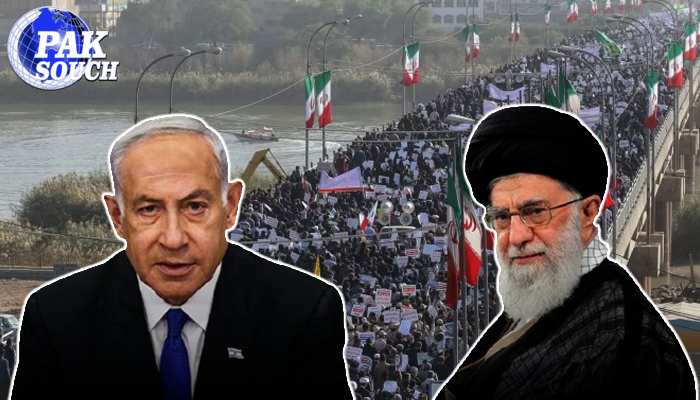
Tel Aviv: Israel has formally expressed support for the ongoing protests in Iran, emphasizing that its concerns are with the Iranian government, not the Iranian people. Israeli Foreign Minister Gidon Saar issued a statement via social media, stating that Israel extends its best wishes to those demonstrating against the regime and supports their right to freedom.
Saar clarified that Israel’s opposition is directed at the Iranian government, which he described as a major exporter of terrorism and extremism. “We have no enmity toward the Iranian people. Our issue is with the Iranian government, which is a problem not only for us but for the region and the international community as a whole,” he said.
Earlier, Israeli Prime Minister Benjamin Netanyahu also commented on the protests, noting that demonstrations advocating freedom have spread across Iran. Netanyahu expressed Israel’s solidarity with the Iranian people, condemning the killing of innocent civilians during the unrest. He stated that Israel observes the situation carefully and supports the Iranian citizens’ struggle for liberty.
During a cabinet meeting, Netanyahu added, “We hope that the Iranian people will soon be freed from oppression and tyranny. When that day comes, Israel and Iran can once again become cooperative partners, working toward a peaceful and prosperous future for their citizens.”
The Israeli leadership has also engaged with the United States regarding the situation. Netanyahu spoke by phone with US Secretary of State Marco Rubio, discussing the Iranian protests as well as the ongoing conflicts in Gaza and Syria. This coordination highlights the strategic alignment between Israel and the US in responding to regional developments, including unrest in Iran.
The backdrop to these statements is the ongoing wave of protests in Iran, now in its third week. According to Iranian human rights organizations, at least 192 people have been killed during the demonstrations over the past two weeks. The protests have drawn significant international attention, with various governments monitoring developments closely and issuing statements of concern.
Analysts note that Israel’s public support for the protesters is intended to signal political and moral backing while emphasizing a distinction between the Iranian people and their government. By highlighting the Iranian regime’s role in regional instability, Israeli officials are framing their support as consistent with broader security and diplomatic objectives.
The statements also serve a diplomatic purpose by reinforcing Israel’s alliance with the United States and aligning international attention on Iran’s domestic unrest. Observers suggest that such expressions of support could strengthen the morale of protesters while sending a warning to the Iranian leadership that its actions are being scrutinized on a global scale.
In conclusion, Israel’s declaration underscores a dual message: solidarity with Iranian citizens seeking freedom and strong criticism of the Iranian government for its role in promoting extremism and suppressing dissent. As protests continue in Iran, both Israel and the United States are closely watching the situation, emphasizing the interplay between domestic unrest and regional security concerns. The international response highlights the geopolitical significance of the protests and the ongoing tension between the Iranian government and the global community.