

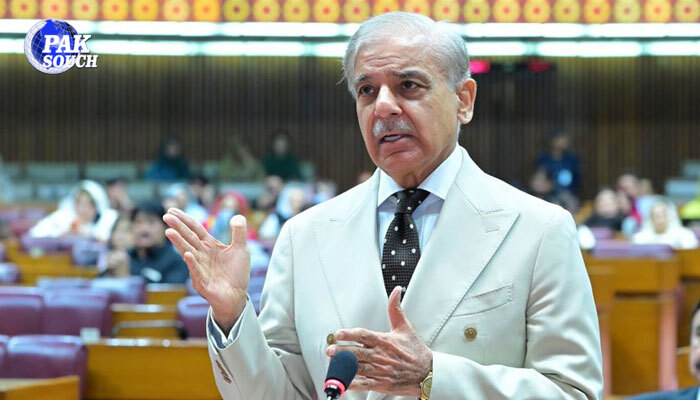
Since the coalition government led by Prime Minister Shehbaz Sharif assumed office following Pakistan’s general elections on February 8, 2024, political commentators have repeatedly claimed that the administration was entering its final months. Despite these recurring forecasts, the government has remained in power, while predictions of its imminent collapse have consistently failed to come true.
Over the past two and a half years, television talk shows, YouTube channels, and political analysts have regularly argued that the coalition government was on the verge of falling. The predicted timelines have shifted repeatedly—sometimes 90 days, sometimes six months, and later entirely new deadlines—but the conclusion has remained the same: the government was supposedly about to be removed. Whenever one deadline quietly passed without producing the anticipated outcome, another would emerge, often tied to developments such as International Monetary Fund (IMF) reviews, the federal budget, economic challenges, coalition disagreements, opposition protests, or speculation about Pakistan’s political power structure.
The latest countdown was introduced by a former television anchor who now operates a YouTube channel. He claimed that the establishment had granted the government six months to create new provinces, implying that failure to do so could threaten its survival. Constitutional experts, however, argue that such a claim is difficult to reconcile with Pakistan’s legal framework. The creation of new provinces is regarded as one of the most demanding constitutional processes in the country. Under Pakistan’s Constitution, any alteration to provincial boundaries requires a constitutional amendment approved by a two-thirds majority in both houses of Parliament, as well as the consent of the concerned provincial assembly by a two-thirds majority. Given the current parliamentary numbers and the absence of broad political consensus among provinces, analysts believe such legislation is politically improbable. Consequently, they argue that the alleged six-month deadline bears little resemblance to constitutional realities.
This latest prediction follows a familiar pattern. Immediately after the 2024 elections, critics argued that the coalition government lacked the political legitimacy to withstand prolonged inflation, IMF conditions, and mounting economic pressures. However, as the administration navigated one challenge after another, earlier deadlines quietly expired and were replaced with fresh predictions. When IMF reviews concluded successfully, attention shifted to the next review. When the federal budget was passed, another anticipated political crisis was presented as the decisive turning point. Likewise, when opposition protests failed to trigger meaningful political change, speculation simply moved to a different date.
As a result, what was presented as a definitive six-month countdown has increasingly resembled a political calendar that repeatedly resets itself. Several politicians have also contributed to these recurring narratives. Among them is a senator who sits on the government benches and is widely perceived as being close to the establishment. On various occasions, he predicted major political upheavals, suggested that significant developments would occur within 90 days, and hinted that decisive changes were imminent. Although his statements generated considerable public debate, none of the predicted events took place, and each missed deadline was eventually followed by another prediction.
More recently, the Pakistan Peoples Party (PPP) has intensified its criticism of the federal government, particularly during the election campaign in Azad Jammu and Kashmir, where tensions between the PPP and its coalition partner, the Pakistan Muslim League (N), have become increasingly visible. While PPP leaders have not specified any date for the collapse of the federal government, their sharper rhetoric has fueled renewed speculation about the coalition’s future. Political observers, however, note that disagreements within governing alliances and campaign-related political attacks do not necessarily translate into the immediate collapse of a federal administration, especially when neither partner appears willing to dissolve the alliance.
Another recurring feature of these predictions has been speculation about an alternative political leadership. Several months ago, a senior journalist claimed that the establishment was preparing a new “wonder boy” to replace Prime Minister Shehbaz Sharif. The assertion generated widespread discussion on television and social media, with commentators attempting to identify the supposed political figure. Despite months of speculation, however, no such individual has emerged.
Similarly, another senior journalist and television anchor argued that the government had been given six months to revive the economy, warning that failure to do so would result in its dismissal. Around the same period, some commentators claimed that the finance minister was about to be removed from office. Nearly ten months have passed since those predictions were made. The government remains in office, and the finance minister continues to serve in his position. The deadlines have repeatedly come and gone, yet the central prediction has remained unchanged. A government that many initially believed would survive only a few months has continued to outlast one forecast after another.
The deadlines and predictions referenced in this report are part of the public record, having been expressed over the past two and a half years through television programs, YouTube channels, interviews, and other public forums. Most individuals have not been identified by name because the purpose of this report is not to target specific personalities but rather to highlight a recurring pattern within Pakistan’s political discourse.
The report does not argue that the Shehbaz Sharif government is immune from political, economic, or coalition-related challenges. Like any administration, it remains vulnerable to changing political circumstances and governance pressures. Instead, it raises a broader question about the nature of Pakistan’s political commentary: when repeatedly announced deadlines pass without producing the predicted outcome, why do forecasts of the government’s imminent collapse continue to return with new dates, new explanations, and the same certainty? The repeated resetting of these political countdowns suggests that speculation itself has become a recurring feature of the country’s political debate, often generating headlines and public discussion even when earlier predictions fail to materialize.
About The Author