

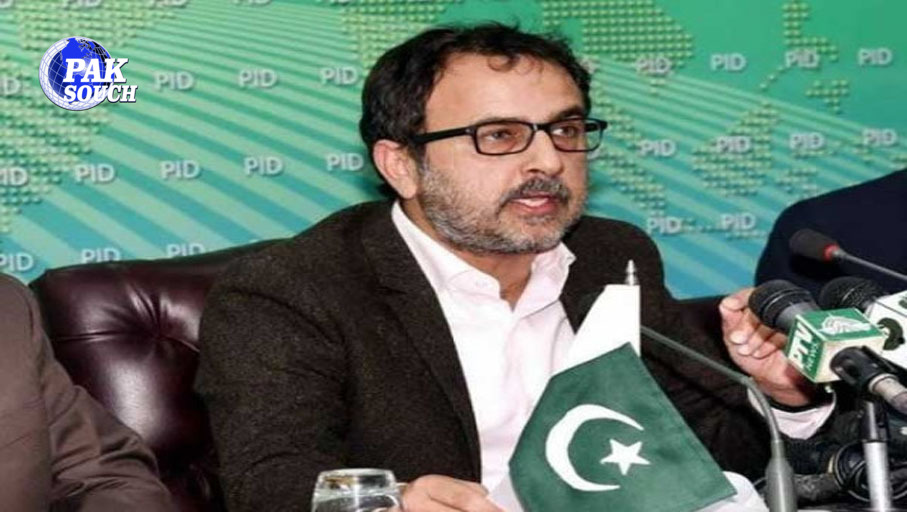
Islamabad: Federal Energy Minister Owais Ahmed Khan Leghari has said that Pakistan’s main energy challenge is not electricity production but its efficient utilization and storage.
Addressing the Solar, Storage and Flexibility 2026 Conference, the federal minister said that Pakistan is going through a historic transformation in the energy sector. He stated that the country’s solar power capacity has reached 38,000 megawatts.
Owais Leghari said that Pakistan now faces the challenge of managing electricity supply effectively, as there is surplus electricity production during the daytime while demand increases in the evening. He emphasized that Battery Energy Storage Systems (BESS) are essential for improving power distribution and maintaining grid stability.
He said that electricity generated from local resources will strengthen Pakistan’s energy independence. He also warned that dependence on imported fuel oil is a risk for the country’s economy and energy security.
The minister said that when RLNG supply from Qatar was affected, Pakistan faced nighttime load management issues, while solar power availability during the day helped improve the situation. He added that the share of clean energy in Pakistan’s electricity generation has reached 55 percent, and the government aims to increase it to 90 percent by 2035.
Owais Leghari said that the target of 90 percent clean energy cannot be achieved through solar and wind power alone without battery storage. He said battery storage will play a key role in making electricity a national asset and balancing the power grid.
He added that the government is focusing on developing the local battery energy storage industry instead of relying only on imported batteries. Local engineering, system integration, and battery management software will also be encouraged.
The minister said that the Ministry of Industries is finalizing a policy for local battery manufacturing, while the government is implementing the National Steering Committee for Battery Energy Storage Systems. Technical and regulatory working groups have also been established for BESS.
He further said that pilot battery storage projects have been approved for power distribution companies, and the data collected from these projects will help shape future regulatory policies.
Owais Leghari said that Pakistan is becoming one of the fastest-growing distributed energy markets in the world. He invited global investors and technology companies to invest in Pakistan, assuring them of a clear and long-term regulatory framework.
He added that the recommendations from the conference will directly contribute to government policymaking. He said Pakistan’s energy future is linked with local solar resources, local engineers, and local battery storage solutions.
About The Author