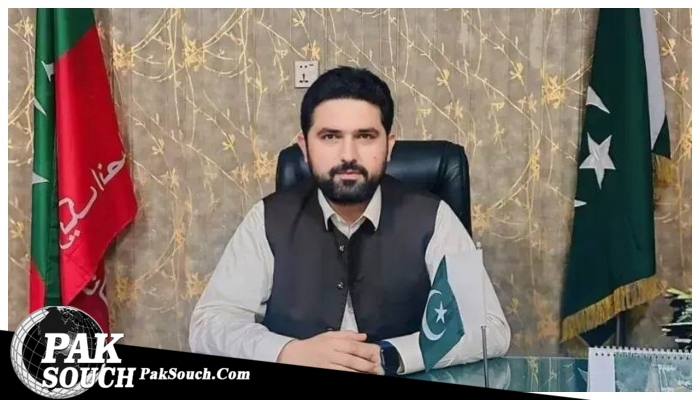
LAHORE: Chief Minister Khyber Pakhtunkhwa Sohaib Afridi has called for political criticism to remain within ethical and moral boundaries, stating that whether it is Pakistan Tehreek-e-Insaf (PTI) or Pakistan Muslim League-Nawaz (PML-N), any wrongdoing should be highlighted in a civilized and responsible manner.
Speaking to journalists in Lahore, Sohaib Afridi emphasized that political disagreement should not cross the limits of decency. He said that constructive criticism is essential for a healthy democratic culture, but it must be based on facts and expressed respectfully. “Wherever PTI is wrong, criticism should be made within moral limits,” he said, adding that the same standard should apply to PML-N and all other political parties.
The Chief Minister stressed that selective accountability and biased narratives weaken democracy. According to him, political debate should focus on policies, governance, and public welfare rather than personal attacks, abusive language, or hatred. He urged political workers and supporters of all parties to promote tolerance and restraint in their political discourse.
Sohaib Afridi further stated that the actions being taken by the government against PTI should not go unquestioned. He said that society as a whole has a responsibility to raise its voice against injustice, regardless of political affiliations. “What the government is doing against PTI should be challenged. People must stand with truth and justice,” he said.
He added that suppressing political voices and restricting democratic expression creates frustration and instability. According to Afridi, Pakistan needs dialogue, inclusion, and respect for democratic norms rather than confrontation and polarization. He urged citizens to support what is right instead of blindly following political loyalties.
The Chief Minister’s remarks come at a time of heightened political tension in the country, where sharp rhetoric between rival parties has become increasingly common. Analysts say Afridi’s call for ethical criticism reflects growing concern over the tone of political debate and its impact on social harmony.
Meanwhile, Punjab’s Information Minister Azma Bukhari strongly criticized Sohaib Afridi, responding sharply to his statements and presence in Lahore. In a sarcastic remark, she said that the Chief Minister had already enjoyed enough sightseeing in what she referred to as “Pakistan’s Europe, Lahore,” and should now return to Khyber Pakhtunkhwa.
“For God’s sake, go back now and pay attention to the people of Khyber Pakhtunkhwa,” Azma Bukhari said. “Listen to their problems and address their issues instead of making political statements from Lahore.”
She further criticized Afridi over his recent social media activity, saying that he appeared pleased after sharing images related to Bangladesh since last night. However, she claimed that in daylight, the so-called street movement had failed to materialize. “In the daytime, the reality of the street movement was exposed. There was no one even to respond to the slogans of the street movement supporters,” she said.
Azma Bukhari accused PTI leaders of making exaggerated claims and relying on social media narratives that do not translate into real public support on the ground. She said the Punjab government remains focused on governance and service delivery rather than what she described as “symbolic politics.”
Political observers say the exchange highlights the deep divisions between PTI and PML-N leaderships, with both sides accusing each other of hypocrisy and misgovernance. While Afridi’s remarks centered on ethical criticism and democratic values, the sharp response from the Punjab Information Minister underscores the confrontational tone that continues to dominate national politics.
Experts believe that calls for moral boundaries in political criticism are increasingly important in Pakistan’s polarized environment. They argue that excessive hostility not only distracts from real issues such as inflation, unemployment, and governance but also damages democratic institutions.
Despite the criticism, Sohaib Afridi reiterated his stance that accountability and free expression must apply equally to all political forces. He said that disagreement is a natural part of democracy, but it should never come at the cost of respect, truth, and social cohesion.
As political tensions continue, the statements from both sides have sparked debate on social media and in political circles, with supporters and critics weighing in on the need for civility versus hard-hitting opposition politics. The episode once again reflects the broader struggle in Pakistan’s political landscape between confrontation and consensus, and between emotional rhetoric and responsible dialogue