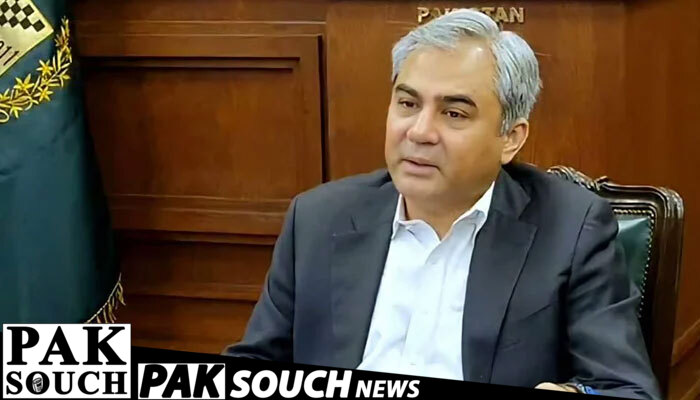
Interior Minister Mohsin Naqvi has strongly warned individuals living abroad who spread fake news through social media, stating that they should not assume they will remain protected forever. Speaking at a press conference in Lahore, the minister emphasized that strict action will now be taken against those responsible for circulating false and misleading information online.
Mohsin Naqvi said that nearly 90% of the news circulating on social media is false, and it is no longer acceptable that anyone posts whatever they want without verification. He announced that the government is preparing a robust crackdown against fake news, ensuring that misinformation and propaganda do not go unchecked.
The minister highlighted the contrast between traditional media and social media, noting that the National Electronic Media operates under strict regulatory mechanisms. “If a TV channel broadcasts incorrect news, PEMRA issues a notice and imposes penalties. Those who spread fake news are not journalists. Freedom of expression is allowed, but the spread of disinformation will not be tolerated,” he clarified.
Addressing matters of national security, Mohsin Naqvi said that defamatory content or baseless allegations against state institutions would not be allowed under any circumstances. “Some individuals sitting in London are making absurd claims about issues within institutions. If they have evidence, they should present it. Otherwise, such irresponsible statements are unacceptable,” he stated firmly.
The interior minister added that some people living outside Pakistan believe they will remain beyond the reach of law while spreading malicious content online. “Those sitting abroad and spreading fake news think they are safe, but that is not possible. Let me tell them clearly: you will return soon, and you will be brought back. You will have to answer for everything you have said,” he warned.
In addition, Naqvi discussed the ongoing removal of undocumented Afghan nationals from three provinces, noting that while the operation continues elsewhere, the Khyber Pakhtunkhwa region appears to be providing unusual protection to certain groups. He stressed that the government’s policy will be implemented uniformly across the country.
Reaffirming the government’s position, Mohsin Naqvi concluded by stating that insulting individuals on social media, spreading false allegations, or targeting national institutions cannot be allowed. The government, he said, will act decisively to ensure that digital platforms are not misused for destabilizing narratives.
This firm stance marks a significant step toward establishing a regulated and responsible digital environment in Pakistan, aiming to protect national security while ensuring factual and ethical communication across all platforms.