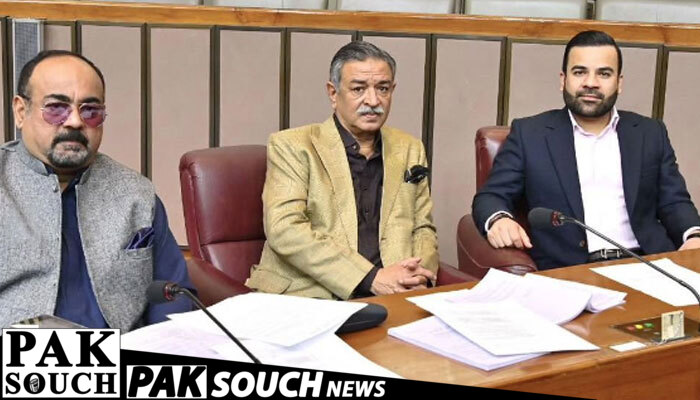
In a striking call for administrative reform, Muttahida Qaumi Movement–Pakistan (MQM-P) Member of the National Assembly (MNA) Arshad Vohra has demanded that Karachi be placed directly under federal control, citing years of inefficiency, corruption, and neglect in the country’s largest city. Speaking during a session of the National Assembly, Vohra painted a grim picture of Karachi’s governance, contrasting it sharply with the rapid pace of development in Islamabad.
“An underpass in Islamabad is completed within three months, while in Karachi the same project takes years,” Vohra said, lamenting the worsening state of urban infrastructure and civic management. He added that Karachi’s citizens are suffering from growing health crises, poor sanitation, and widespread administrative paralysis. “The city’s problems are not being solved — it’s time for the federal government to take Karachi under its administrative control to ensure effective governance,” he asserted.
Vohra also touched on the ongoing constitutional and legal debates surrounding presidential immunity and judicial authority. Referring to recent statements by religious scholar Mufti Taqi Usmani, the MQM-P lawmaker argued that granting lifelong immunity to the President of Pakistan contradicts Islamic principles. “Even the Supreme Court’s standing has been undermined, and we are now debating matters that go against both the Constitution and Islamic teachings,” he added, criticizing what he described as selective application of justice in the country.
The MQM leader’s remarks reflect deep frustration within urban constituencies that have long felt alienated by provincial and federal administrations alike. Karachi, which contributes the largest share of revenue to the national economy, continues to face acute shortages of clean water, electricity, proper waste management, and reliable public transport. Repeated clashes between the provincial government of Sindh, dominated by the Pakistan Peoples Party (PPP), and federal authorities have often left the city caught in a bureaucratic tug-of-war, with little relief for its nearly 20 million residents.
Adding to the debate, MQM-P senior leader and fellow MNA Farooq Sattar criticized mainstream political parties for prioritizing power over public welfare. “The major political parties have always been driven by the lust for power, not by concern for the people. Our legislation has never truly been for the benefit of citizens — that’s the summary of our political history,” Sattar stated.
His comments resonated with many Karachiites who view MQM as the only party consistently advocating for the city’s autonomy and fair treatment. However, critics argue that the MQM itself has been part of the system for decades and shares responsibility for Karachi’s current state. Despite these criticisms, the party continues to emphasize devolution of powers to the local level and often supports greater federal oversight when provincial mechanisms fail.
Political analysts suggest that Vohra’s proposal to bring Karachi under federal administration is not new — similar demands have surfaced periodically, especially during periods of heightened frustration with Sindh’s governance. However, such a move would be constitutionally complex and politically controversial, likely drawing strong opposition from the Sindh government and nationalist groups who view it as an encroachment on provincial autonomy.