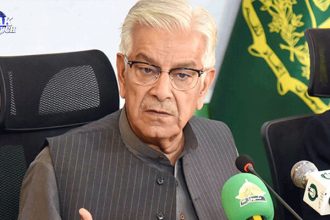
Chairman Pakistan Peoples Party (PPP), Bilawal Bhutto-Zardari, has congratulated the newly elected Mayor of New York, Zahran Mamdani, on his historic victory, declaring it a moment of pride for progressive politics around the world. In his message shared on social media, Bilawal stated that the iconic slogan “Roti, Kapra aur Makaan” – once raised from the streets of Karachi – has now evolved into a universal manifesto recognized from Karachi to New York and beyond.
Bilawal Bhutto emphasized that Zahran Mamdani’s success demonstrates how the struggle for basic rights is not limited to any single region, nation, or people. “The victory of Zahran Mamdani is proof that the demand for bread, clothing, and shelter is not merely a political slogan, but a fundamental right of the masses across the world,” Bilawal said. He added that Mamdani’s progressive campaign, centered on housing justice, workers’ rights, and accessible public services, aligns deeply with the values championed by the late Zulfiqar Ali Bhutto and Shaheed Mohtarma Benazir Bhutto.
Meanwhile, Karachi’s Mayor Murtaza Wahab also extended congratulations to Zahran Mamdani, stating that this victory will open a new chapter of cooperation between major global cities. He expressed hope that Karachi and New York could benefit from greater collaboration in urban development, public welfare initiatives, transport systems, and community empowerment programs.
Zahran Mamdani, who has made history as the first Muslim mayor of New York, is also the youngest person to hold the office, marking a significant moment in the political landscape of the United States. At the age of 34, Mamdani’s victory symbolizes a growing shift toward youth leadership and the expanding influence of immigrant communities in American politics.
According to unofficial results, Mamdani secured 49.6 percent of the vote, outperforming his rival, former Governor Andrew Cuomo, who received 41.6 percent. Analysts say that the high voter turnout among progressive, youth, and working-class groups played a vital role in securing Mamdani’s lead.
Born to immigrant parents of South Asian and East African heritage, Mamdani has been vocal about the challenges faced by low-income families, immigrant workers, and marginalized communities in New York. His political platform included proposals to freeze rent increases, provide free public bus transportation, and establish city-operated grocery stores to combat rising food prices. These policies resonated with progressive voters, particularly in neighborhoods struggling with inflation, housing shortages, and rising living costs.
Observers believe that Mamdani’s victory marks a broader political shift within American cities, where voters are increasingly supportive of social welfare policies and leadership rooted in grassroots activism. His campaign was notable for its multicultural outreach, volunteer-driven organizing, and community-centered messaging.
Bilawal Bhutto’s congratulatory message underscores the ideological link between struggles for economic justice in South Asia and those in Western countries. Political commentators note that the slogan “Roti, Kapra aur Makaan,” introduced in Pakistan in the 1970s, has once again gained symbolic power amidst global debates about rising inequality, housing rights, and fair access to essential services. Bilawal’s statement positions the PPP narrative within a broader international conversation about social justice and equitable governance.
The symbolic value of Mamdani’s election is especially significant for Muslim and immigrant communities in the United States, at a time when issues of identity, representation, and equality remain at the forefront of public discourse. Community leaders in New York have celebrated the milestone as a moment of empowerment and progress for underrepresented groups.
In Pakistan, the news of Mamdani’s victory and Bilawal’s response has sparked discussions about the importance of youth and progressive voices in leadership. Analysts suggest that highlighting global examples of successful progressive governance could energize young voters and social movements within Pakistan as well.
Meanwhile, Mayor Murtaza Wahab emphasized the potential for increased collaboration between Karachi and New York, particularly in the fields of public transport, solid waste management, and municipal administration. He added that exchanges of ideas and expertise between major metropolitan governments could lead to improvements in city services and citizen welfare.
As Zahran Mamdani prepares to assume office, expectations are high that he will move forward with his stated agenda of affordability, accessibility, and equity. Supporters hope that his leadership will inspire similar policies in other cities and contribute to a broader rethinking of urban governance around the world.