


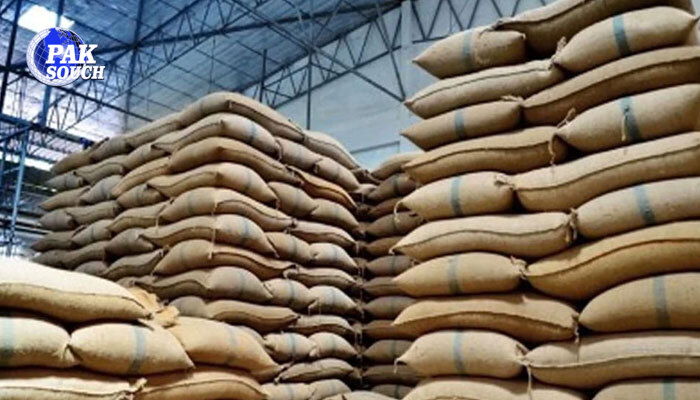
Islamabad: A significant discrepancy in Pakistan’s wheat stocks has emerged, with officials reportedly revealing that 4.5 million tonnes of wheat are unaccounted for in Punjab, while 600,000 tonnes are also missing from official records in Sindh, according to sources familiar with a high-level government meeting.
The reported shortfall has intensified concerns over the country’s wheat supply and raised questions about possible hoarding, inventory management and market regulation. Officials have warned that if the wheat crisis is not thoroughly investigated and addressed, Pakistan’s wheat import bill could rise to as much as US$1 billion.
According to sources, the issue came to light during a high-level meeting where Punjab officials asked representatives from other provinces whether the missing wheat had been transported outside the province. However, officials from the other provinces reportedly said they had no information about such transfers and suggested that the wheat may have been hoarded by private stockists.
The development has renewed concerns over wheat procurement policies and the effectiveness of government oversight during the current marketing season.
Sources said the federal government had fixed the official support price for wheat at Rs3,500 per 40 kilograms (per maund). As a result, private sector buyers reportedly showed little interest in purchasing wheat under the prevailing market conditions.
To encourage greater participation, the Punjab government introduced measures aimed at facilitating private sector procurement. However, private traders reportedly sought access to bank financing to enable large-scale wheat purchases, arguing that affordable credit was necessary to operate effectively.
Meanwhile, wheat prices in Sindh and Khyber Pakhtunkhwa reportedly climbed to around Rs4,500 per maund at the beginning of the harvesting season. Sources further alleged that some hoarders purchased wheat directly from farmers without fulfilling tax and permit requirements before storing the grain in anticipation of higher market prices.
Agricultural experts cited by the sources said that over the past two to three years, Punjab has increasingly shifted away from large-scale government procurement towards a policy that places greater responsibility on the private sector to purchase wheat from farmers. They noted that this transition has prompted debate over whether adequate safeguards were in place to monitor stocks and prevent market manipulation.
The reported discrepancy in wheat inventories has sparked calls for a comprehensive investigation to determine the whereabouts of the missing grain and to assess whether hoarding, administrative shortcomings or other factors contributed to the situation.
No official findings have yet been released regarding the alleged missing wheat, and the claims remain subject to investigation by the relevant authorities.
About The Author