Islamabad (November 2) — Pakistan’s political landscape is abuzz after Prime Minister Shehbaz Sharif formally requested the Pakistan Peoples Party (PPP) to support the proposed 27th Constitutional Amendment, which introduces sweeping changes in judicial, administrative, and financial structures. The revelation came directly from PPP Chairman Bilawal Bhutto-Zardari, who shared details of the government’s proposal through a statement on social media late Friday night.
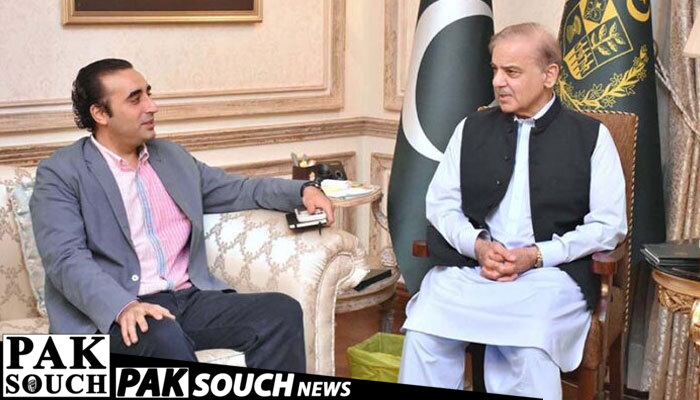
According to Bilawal, a high-level delegation of the Pakistan Muslim League-Nawaz (PML-N) led by Prime Minister Shehbaz Sharif met with President Asif Ali Zardari and himself to discuss the amendment. During the meeting, the Prime Minister requested the PPP’s backing for the bill in Parliament, describing it as “essential for strengthening governance, judicial efficiency, and inter-institutional balance.”
Bilawal’s statement confirmed that the 27th Amendment Bill includes provisions for the establishment of a Constitutional Court, reintroduction of executive magistrates, and formal guidelines for the transfer of judges across provinces. These measures, according to the government, are aimed at improving coordination between the judiciary and the executive, but the proposals have already sparked heated debate among legal and political circles.
The PPP Chairman further disclosed that the amendment also seeks to alter the formula for the National Finance Commission (NFC) Award, which determines the distribution of resources between the federation and provinces. “The protection of provincial shares under the NFC has been removed in the proposed draft,” Bilawal claimed, expressing concern that such a move could undermine the spirit of provincial autonomy guaranteed under the 18th Amendment.
In addition, Bilawal stated that the amendment proposes changes to Article 243 of the Constitution, concerning the command and control of the armed forces, as well as the re-centralization of education and population planning under the federal government — both of which were devolved to the provinces after the passage of the 18th Amendment in 2010.
The proposed Constitutional Court, a key feature of the amendment, would reportedly act as a specialized forum to resolve constitutional disputes, interpret inter-provincial issues, and address matters that currently fall under the jurisdiction of the Supreme Court. Supporters argue that such a court could reduce the case burden on the apex judiciary, while critics fear it could dilute judicial independence or be used to influence politically sensitive cases.
Bilawal also revealed that the amendment seeks to resolve deadlocks in the appointment of members of the Election Commission of Pakistan (ECP) — a recurring issue that has previously delayed general elections and by-elections. The proposed clause reportedly empowers a parliamentary committee to make final decisions if consensus between the Prime Minister and the Leader of the Opposition cannot be reached.
However, the PPP leadership appears cautious. Bilawal announced that the party’s Central Executive Committee (CEC) will convene on November 6, following President Zardari’s return from Qatar, to deliberate on the amendment’s implications and decide whether to support or oppose the government’s proposal. “The final party position will be determined after thorough consultation within the CEC,” Bilawal confirmed.
Political analysts say the amendment could become one of the most consequential constitutional reforms since the 18th Amendment, as it touches sensitive areas of federalism, judicial structure, and provincial rights. The inclusion of clauses affecting resource allocation and administrative authority is likely to reignite long-standing tensions between the center and federating units.
While government sources insist that the amendment is meant to “streamline governance” and “modernize constitutional frameworks,” opposition voices, particularly within the PPP and regional parties, have warned that any attempt to roll back provincial powers will face strong resistance in Parliament and the public sphere.