

Sukkur: Health experts and social activists have called for stronger public and government efforts to reduce tobacco use in Pakistan, urging the establishment of smoking cessation centres, improved support services for smokers seeking to quit, and greater involvement of parents in protecting young people from tobacco addiction.
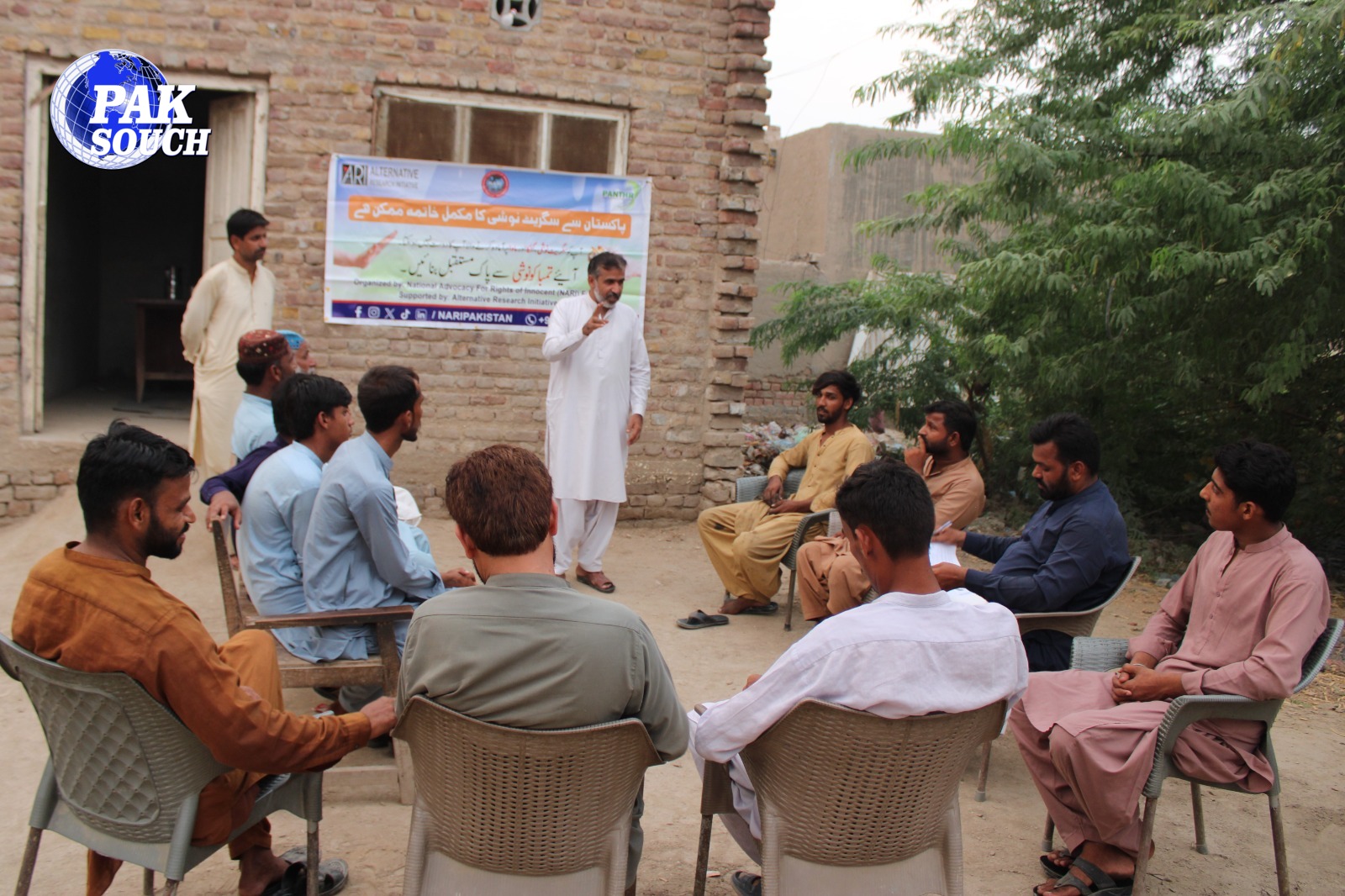
The appeal was made during a meeting on tobacco control organised with the support of the Alternative Research Initiative (ARI) in Sukkur.
Speaking at the event, Anwar Ali Mahar, head of NARI Foundation Sukkur, and Afshan Asghar said smoking is not only a public health issue but also a social and economic challenge that affects future generations.
They stressed that medical centres should be established to help tobacco users quit smoking by providing counselling, treatment, and other support services. They also emphasised that parents, educators, and every member of society have a responsibility to discourage tobacco use and contribute to building a smoke-free Pakistan.
Anwar Ali Mahar said that an estimated 31 million people in Pakistan use tobacco in various forms, highlighting the urgent need for comprehensive smoking cessation programmes.
“Smoking is not merely a health issue. It is a challenge that affects our society, economy, and future generations,” he said.
Advocate Shafiq Khoso noted that although Pakistan has enacted laws to regulate tobacco use, weak enforcement remains a major obstacle.
He said smoking could be significantly reduced if the government ensured proper implementation of tobacco control laws while also providing smokers with medical assistance and public awareness about smoking cessation and reduced-risk alternatives.
Educationist and social activist Hyder Ali Khoso, along with Amjad Mahar, said diseases and deaths linked to tobacco use cost Pakistan an estimated Rs615 billion annually, placing a substantial burden on the country’s healthcare system and economy.
They urged policymakers to study successful international experiences, citing Sweden as an example of a country that has achieved significant reductions in smoking rates.
The speakers recommended that the government develop clear regulations for less harmful nicotine alternatives intended for adult smokers who are trying to quit combustible cigarettes. At the same time, they stressed that such products should remain inaccessible to children and people who do not already use tobacco.
Abdul Waheed Mahar of NARI Foundation Sukkur also called on the government to ensure strict enforcement of tobacco control laws to reduce the availability and accessibility of cigarettes.
He emphasised the vital role of parents in preventing children from taking up smoking, saying families should actively educate young people about the health risks associated with tobacco use.
Participants concluded that reducing smoking in Pakistan will require coordinated action by government institutions, healthcare providers, civil society organisations, educational institutions, and families to promote prevention, strengthen enforcement, and support those seeking to quit tobacco.
About The Author