


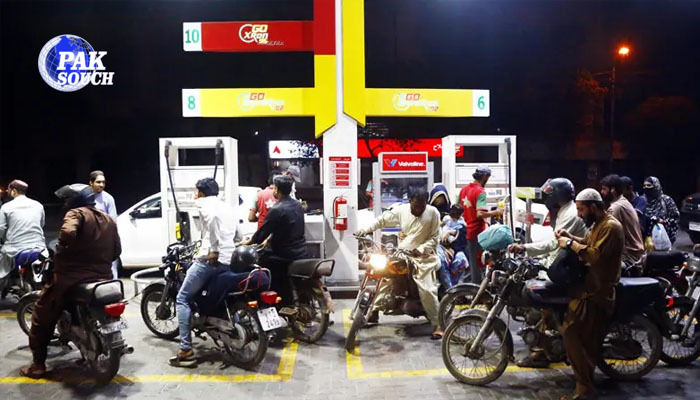
ISLAMABAD: The federal government has announced an increase in the prices of petroleum products, raising the rates of petrol, high-speed diesel, and kerosene oil with effect from July 22.
According to an official notification issued by the government, the price of petrol has been increased by Rs4.93 per litre, while high-speed diesel (HSD) has become Rs7.15 per litre more expensive.
Following the revision, the new price of petrol has been set at Rs320.73 per litre, while the new price of high-speed diesel stands at Rs367.21 per litre.
The government has also increased the price of kerosene oil by Rs6.78 per litre, taking its new retail price to Rs289.37 per litre.
The revised prices came into effect on July 22, in accordance with the official notification.
The latest increase follows periodic reviews of petroleum prices, which are influenced by trends in the international oil market, exchange rate movements, and applicable taxes and levies.
Meanwhile, the All Pakistan Petroleum Pumps Association has announced plans to shut down petrol stations nationwide from midnight, following unsuccessful negotiations with the Ministry of Petroleum.
In a video statement, the association’s General Secretary, Nauman Ali Butt, said talks with the ministry had failed to resolve concerns over the government’s proposed pricing mechanism.
He stated that the association does not accept the proposal to revise petroleum prices on a daily basis and has rejected the government’s proposed daily price adjustment mechanism.
“Daily changes in petroleum product prices are unacceptable,” Butt said, adding that the association opposes the proposed system.
Following the breakdown of negotiations, the association announced that petrol pumps across Pakistan would close for an indefinite period starting at 12:00 a.m., unless the dispute is resolved.
The government has not yet issued an official response to the association’s announcement regarding the proposed nationwide shutdown.
The increase in fuel prices is expected to affect transportation costs and could have broader implications for inflation, as petroleum products play a key role in the movement of goods and services across the country. Authorities are expected to continue monitoring global oil prices and domestic market conditions during future price reviews.
About The Author