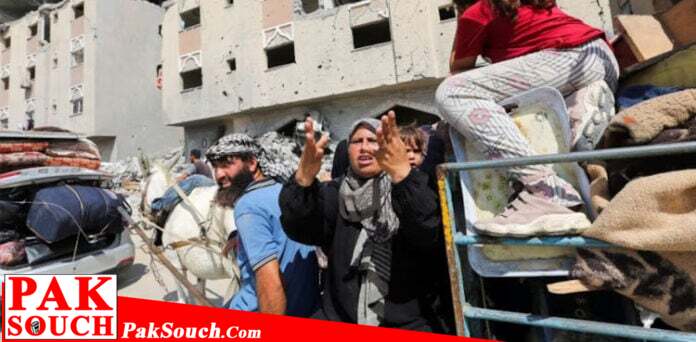
Cairo, October 9, 2025 — According to reports from Egyptian media outlets, the much-anticipated ceasefire agreement between Israel and Hamas has officially come into effect in Gaza. The truce, brokered through intense mediation led by Egypt, Qatar, and the United States, marks a potential breakthrough after months of relentless conflict and humanitarian devastation in the besieged Palestinian territory.
Egyptian state television reported late Thursday that both parties agreed to halt hostilities as of midnight local time. The ceasefire reportedly covers an immediate cessation of aerial bombardments and rocket fire, alongside provisions for the gradual entry of humanitarian aid and exchange of detainees in the coming days.
The Egyptian Foreign Ministry issued a brief statement, expressing hope that the agreement would pave the way for “a comprehensive and lasting peace process that addresses the root causes of the conflict.” Officials in Cairo, who have been at the center of shuttle diplomacy over recent weeks, confirmed that Egyptian security delegations remain stationed in both Gaza and Tel Aviv to monitor compliance.
According to Al-Qahira News, the ceasefire includes three key phases:
- Immediate humanitarian pause, allowing unrestricted aid entry and medical evacuation of the wounded from Gaza.
- Exchange of prisoners and detainees under international supervision.
- Negotiations for long-term stability, to be facilitated by Egypt and the United Nations.
While official confirmation from either Israel or Hamas is yet to be released, Egyptian and Qatari officials insist that both sides have “verbally committed” to the framework. Reports from Gaza suggest a notable silence in the skies since the early morning hours — a stark contrast to the previous nights of heavy bombardment.
Sources within Gaza’s health authorities stated that emergency teams have begun clearing rubble and delivering medical aid to devastated neighborhoods. Meanwhile, convoys of Egyptian and international humanitarian trucks are reportedly lined up at the Rafah border crossing, awaiting final clearance to enter.
International reactions to the news have been cautiously optimistic. The United Nations Secretary-General welcomed the reports, urging “all parties to uphold the ceasefire in good faith and prioritize the lives and dignity of civilians.” The European Union and Arab League also issued statements praising Egypt’s mediation role and calling for sustained efforts toward a political settlement.
In Israel, local media reported that the government’s security cabinet had met earlier in the day to discuss ceasefire guarantees, while military officials confirmed “a temporary pause in operations.” However, they warned that the response would be “swift and decisive” in case of any violations.
For Hamas, senior officials in Gaza were quoted by Egyptian television as saying that their acceptance of the truce was based on “the commitment to open border crossings, facilitate aid delivery, and ensure the protection of Palestinian civilians.”
The ceasefire — if maintained — could mark a crucial turning point after weeks of escalating violence that claimed thousands of lives and displaced countless families. Yet analysts caution that sustaining peace will depend on mutual restraint and the international community’s continued engagement in addressing Gaza’s humanitarian and political crisis.
For now, as calm tentatively returns to Gaza’s battered skyline, the people of the enclave are hoping this truce signals not just a pause in war — but the first step toward a lasting peace and dignity long denied to them.