Gaza — Two years have passed since the start of Israel’s devastating military campaign on October 7, 2023, yet the people of Gaza continue to endure one of the most destructive and prolonged assaults in modern history. What began as a retaliatory offensive against Hamas and other Palestinian resistance factions has turned into a relentless campaign that has left Gaza in ruins and its population on the brink of survival.
The conflict erupted when fighters from Hamas’s military wing, the Al-Qassam Brigades, along with other Palestinian groups, launched a surprise cross-border attack into southern Israel. The assault resulted in the deaths of over 1,100 people and the capture of approximately 240 hostages who were taken back into Gaza. In response, Israel declared war on Hamas and unleashed a massive bombing campaign, vowing to eliminate the group completely.
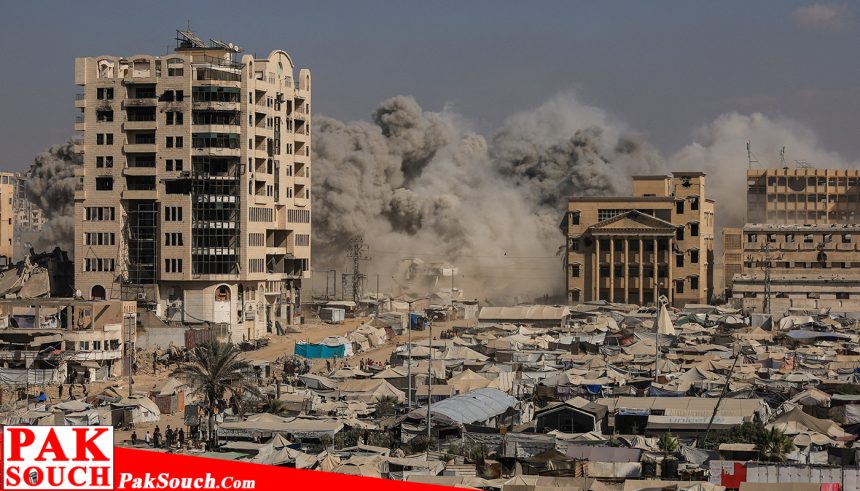
Since that day, Gaza has been subjected to continuous airstrikes, artillery fire, and a suffocating siege that has cut off food, fuel, electricity, and medical supplies. What was once a densely populated strip of land is now a landscape of rubble and displacement. According to humanitarian organizations and independent monitoring groups, nearly 3% of Gaza’s population — more than 70,000 people — have been killed, most of them women and children. Tens of thousands more have been injured or remain missing under collapsed buildings.
The destruction of civilian infrastructure has been catastrophic. Reports indicate that around 90% of all homes and residential buildings have been either completely destroyed or severely damaged. Hospitals, schools, and places of worship have not been spared. The United Nations estimates that less than 10% of Gaza’s medical facilities are still functioning, many operating without basic supplies or power. Thousands of families have been forced to live in makeshift shelters, tents, or the ruins of their former homes.
The two-year blockade has also deepened the humanitarian crisis. Gaza’s 2.3 million residents now face extreme shortages of food and clean water. Famine-like conditions have spread across the territory, with malnutrition and disease rapidly rising. Aid convoys are frequently blocked or delayed at border crossings, while fuel restrictions have crippled hospitals and water treatment plants.
Israel’s military campaign, justified by its government as a counterterrorism effort, has drawn widespread condemnation for its scale and disregard for civilian life. International human rights organizations, including Amnesty International and Human Rights Watch, have accused Israel of committing war crimes and engaging in collective punishment. Despite growing global outrage and repeated United Nations resolutions calling for a ceasefire, the bombardment and ground operations have continued.
In addition to the staggering human cost, Gaza’s social and economic fabric has been obliterated. Universities, media offices, and cultural centers have been targeted, effectively silencing civil life. The World Bank estimates that the enclave’s economy has collapsed entirely, with unemployment exceeding 80%. Experts warn that rebuilding Gaza could take several decades, even if hostilities were to end immediately.
The ongoing war has also had a severe psychological toll on survivors. Mental health professionals report a surge in trauma, especially among children who have witnessed unimaginable violence and loss. Many have lost multiple family members and continue to live under constant fear of renewed attacks.
Despite the devastation, Palestinian resilience remains strong. Thousands continue to call for justice and self-determination, holding on to hope that the international community will eventually intervene to stop the bloodshed.
Two years on, Gaza stands as a symbol of both human endurance and global failure — a place where the struggle for survival has become inseparable from the struggle for freedom. As the conflict enters its third year, the people of Gaza remain trapped between destruction and defiance, waiting for the world to act before an entire generation is lost.