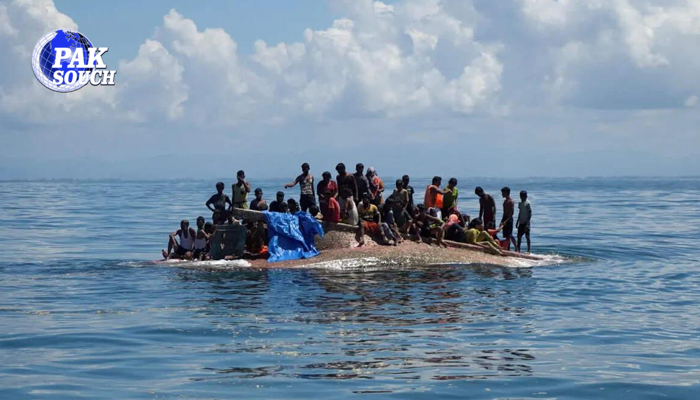
GENEVA: The United Nations has expressed grave concern that more than 500 people may have died after two overcrowded boats reportedly sank off the coast of Myanmar, in what could become one of the deadliest maritime tragedies involving Rohingya refugees in recent years.
According to a joint statement issued by the International Organization for Migration (IOM) and the UN High Commissioner for Refugees (UNHCR), reports indicate that two boats carrying more than 500 passengers capsized near Myanmar’s coastline in recent days.
The UN agencies stressed that the reports are based on preliminary information and that the incidents and casualty figures have not yet been officially verified.
Boats Reportedly Departed from Conflict-Hit Rakhine State
According to the joint statement, initial information suggests that both vessels departed from Myanmar’s conflict-affected Rakhine State in late June.
Most of those on board were believed to be members of the Rohingya, a persecuted Muslim minority that has faced years of violence, displacement, and discrimination in Myanmar.
The UN agencies said that some passengers also began their journey from Cox’s Bazar in Bangladesh, which hosts more than one million Rohingya refugees who fled violence in Rakhine State and continue to live in overcrowded refugee camps under difficult humanitarian conditions.
Hundreds Believed to Be Missing
According to the statement, one of the boats, carrying approximately 250 people, reportedly disappeared shortly after departing.
A second vessel, carrying around 280 passengers, is believed to have sunk near Myanmar’s Ayeyarwady coast on July 8.
If confirmed, the two incidents could result in the deaths of more than 500 people, making them among the most devastating maritime disasters involving Rohingya refugees in recent years.
However, the UN emphasized that search efforts and verification are still ongoing, and the exact number of casualties remains uncertain.
Dangerous Sea Conditions
The UN agencies noted that the voyages took place during a period when sea conditions are typically hazardous, increasing the risks for overcrowded and poorly equipped boats.
They added that recent heavy rainfall and flooding in the region have further worsened maritime conditions, making such journeys even more dangerous.
Humanitarian organizations have repeatedly warned that desperate Rohingya families continue to undertake perilous sea crossings in search of safety, protection, or better living conditions due to the lack of durable solutions to the refugee crisis.
Continuing Humanitarian Crisis
The Rohingya remain one of the world’s largest stateless populations. Hundreds of thousands fled Myanmar following military operations in Rakhine State, while many others continue to live in displacement camps or refugee settlements across the region.
International aid agencies have consistently called for stronger protection measures, expanded humanitarian assistance, and long-term solutions for displaced Rohingya communities.
The latest reported boat disasters highlight the ongoing dangers faced by refugees who attempt irregular sea journeys despite adverse weather and limited resources.
The IOM and UNHCR said they are closely monitoring the situation and continue to work with humanitarian partners and local authorities to gather more information about the reported incidents.
Until official verification is completed, the UN cautioned that the reported casualty figures should be regarded as preliminary estimates, although the agencies warned that the potential loss of life could be catastrophic.
About The Author